


Rabada warns of rising challenges for fast bowlers in white-ball cricket
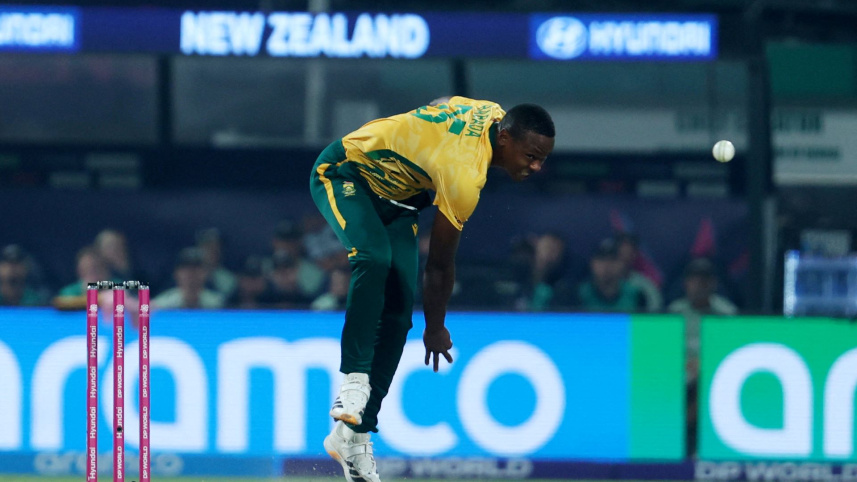
South Africa fast bowler Kagiso Rabada has highlighted the increasing difficulties faced by pace bowlers in contemporary white-ball cricket, citing shorter boundaries, flatter pitches and advanced data analysis as key factors shifting the balance towards batters.
Speaking on the Fast Bowling Cartel podcast, Rabada said conditions in limited-overs formats have reduced the effectiveness of traditional fast bowling methods.

“With 60-metre boundaries and no real bounce, skidding on -- you almost have to have some sort of mystery,” he said.
Rabada pointed out that technological advancements have allowed batters to prepare more effectively than ever before.
“People are literally analysing everything you do. Batsmen get on bowling machines and just learn how to slog a length,” he added.
The 28-year-old noted that conventional length bowling has become less effective in T20 cricket, forcing bowlers to adapt by developing variations.
“It kind of nullifies your traditional length bowler. You almost have to use more of your one-day skills and develop skills that are going to deceive the batter,” he said.
Rabada also reflected on the toughest batters he has faced in Test cricket, singling out Virat Kohli for his consistency and composure under pressure.
“He was probably the most conventional — he wouldn’t necessarily hurt you, but you’d look up at the scoreboard and he’d made an impact. When you got him out, you’d really earned his wicket,” Rabada said.
He grouped Kohli with Steve Smith, Joe Root and Kane Williamson as the most consistent batters of his era.
However, Rabada described Australia opener David Warner as the most dangerous among those he has bowled to.
“If you weren’t on, he could hurt you. He scored in funny areas. You had to be really on it to earn his wicket,” he said.
Rabada’s remarks underline the evolving demands on fast bowlers, with variation and adaptability becoming essential skills in the modern game.
 For all latest news, follow The Daily Star's Google News channel.
Comments