


Trade Disruption, Strategic Response: Bangladesh in the New Global Order
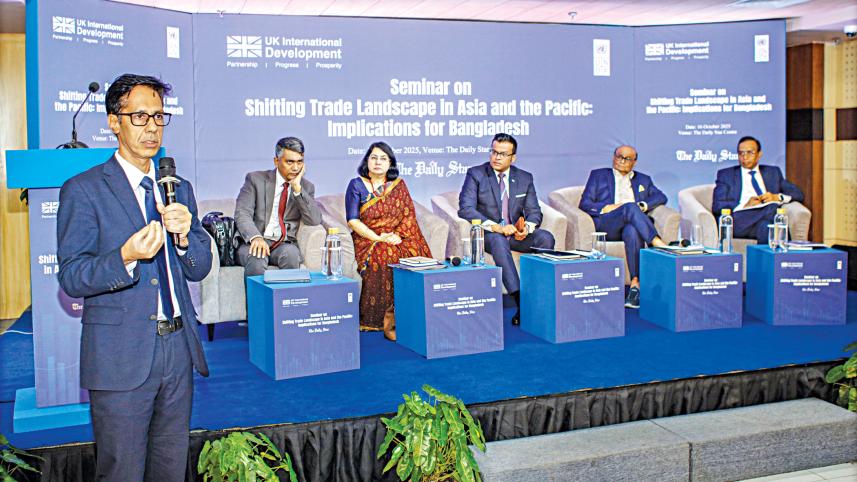
A seminar titled "Shifting Trade Landscape in Asia and the Pacific: Implications for Bangladesh" was held on 16 October 2025 at The Daily Star Centre in Dhaka. Jointly organised by UNDP Bangladesh and The Daily Star, the seminar brought together government officials, trade experts, private‑sector representatives, and academics.
Participants highlighted that rising protectionism from punitive tariffs to fragmented supply chains is reshaping global trade. For Bangladesh, this underscores the need to tap into dynamic Asian markets and reduce dependence on traditional export destinations. Discussions focused on strategies for diversifying trade, rationalising tariff structures, and strengthening competitiveness amid deepening global trade uncertainties.

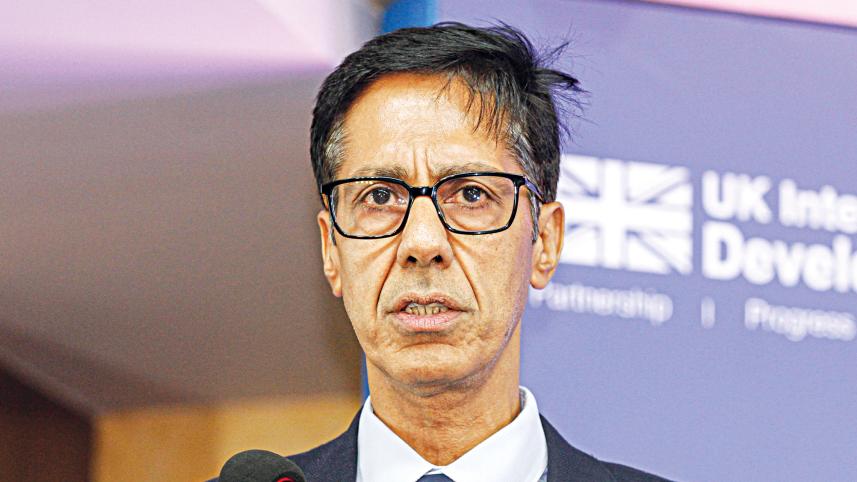
Owais Parray
Country Economic Adviser
UNDP Bangladesh (Keynote Speaker)
The Asia-Pacific region has experienced significant shifts in trade, investment, and economic growth. Starting with gradual trade liberalisation, followed by regional integration initiatives and structural reforms, progress in many parts of this region is quite evident. With rapid technological changes, rising trade restrictions, and the emergence of AI, the region faces both risks and opportunities that demand a careful assessment and strategic adaptation.
Trade patterns across the region vary widely. Some countries such as Singapore, Vietnam, and the Maldives are highly trade-dependent, with trade accounting for a significant share of GDP. External trade as a share of GDP for Indonesia, Bangladesh, and Pakistan is relatively smaller, reflecting both historical development paths and size of the domestic market. Recent shifts, including US reciprocal tariffs, have disrupted traditional export flows, prompting countries to diversify markets and strengthen intra-regional trade. ASEAN, for example, has increasingly integrated forward and backward linkages, producing more final goods regionally rather than merely assembling components for export to other destinations.
Investment trends also reflect these adjustments. Countries such as Singapore and Vietnam continue to attract substantial FDI, particularly in services and manufacturing, while Indonesia is scaling up domestic industries through targeted industrial policies. Technology diffusion, especially in AI and digital trade offer opportunities but also bring with them uncertainties. Policymakers are navigating how to harness these innovations while mitigating risks against the backdrop of global debates on de-globalisation and industrial policies.
Asia-Pacific's economic trajectory remains strong. The region contributes roughly 40–50% of global GDP, 60% of global GDP growth, and a growing share of the global middle class, which is projected to reach 3.5 billion by 2030. Yet growth is uneven, with some countries advancing rapidly while others continue to face structural constraints. Domestic production capabilities, workforce skills, and investment in technological adoption are critical factors that will shape competitiveness and economic resilience.
Looking ahead, uneven industrial development among countries in the region and policy implementation gaps may limit benefits from regional integration. However, opportunities exist to leverage intra-regional trade, diversify export markets, and build domestic capabilities in manufacturing and services. Technological adoption, and human capital development remain key to sustaining growth and resilience in an evolving global environment.
In summary, Asia-Pacific's experience shows that proactive and smart policies can turn disruptions into dynamism. While external shocks and policy uncertainties present challenges, the region's long-term growth potential, technological diffusion, and expanding middle class provide a strong foundation. A new generation of industrial and trade policies are critical for economies in this region to navigate through this fast-moving landscape to write the next chapter of Asia's journey towards a greener and inclusive economic development.
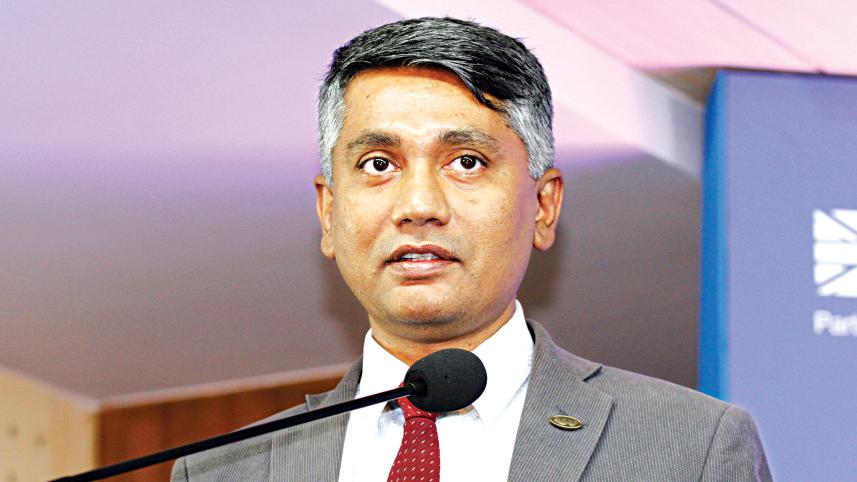
Dr Mohammad Mahfuz Kabir
Research Director, Bangladesh Institute of
International and Strategic Studies (BIISS)
(Panel Discussant)
Over the past few years, global trade has experienced a pronounced shift from openness to protectionism, particularly under the resurgence of tariff-based policies initiated during the Trump administration. The so-called "Asian miracle," which once defined East and Southeast Asia's rapid integration into global value chains, is now challenged by new barriers that threaten the momentum of export-led growth models. The rise of reciprocal and punitive tariffs has also disrupted the progress of multilateral negotiations under the WTO, pushing nations toward bilateral and regional trade arrangements.
Bangladesh's export economy has been directly impacted by these developments. The imposition of a 20 percent tariff on key export items to the United States has placed additional pressure on the country's competitive edge. In response, Bangladesh proposed several measures to strengthen trade relations, including increasing imports of US commodities such as maize, wheat, scrap iron and steel, oilseeds, and cotton, as well as addressing non-tariff barriers.
The negotiation process was primarily government-led, with indirect inputs from private sector bodies such as importers and chambers of commerce. Importantly, the engagement focused solely on tariffs rather than a comprehensive trade agreement. Discussions continue on the feasibility of future frameworks such as a Free Trade Agreement (FTA) or a Comprehensive Economic Partnership Agreement (CEPA), both of which could offer more stable access to the US market and beyond.
As Bangladesh approaches its LDC graduation, the evolving trade landscape demands a recalibration of strategy. Diversification of export destinations, particularly in the Middle East, Latin America, and East Asia has become a strategic priority. Ongoing negotiations with Japan, South Korea, the UAE, and Malaysia aim to establish bilateral and regional partnerships to safeguard post-graduation market access. While immediate export gains remain uncertain amid global economic slowdown, the broader focus on long-term trade resilience and negotiated market integration positions Bangladesh to adapt to the emerging realities of a more fragmented global trading system.
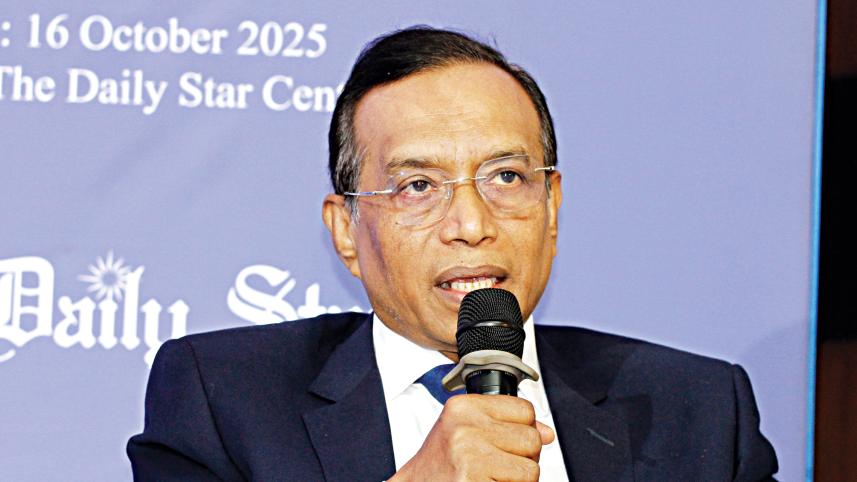
Md Hafizur Rahman
Administrator Federation of Bangladesh
Chambers of Commerce and Industry (FBCCI)
(Panel Discussant)
Global trade dynamics have undergone a marked transformation in recent years, reflecting a growing wave of protectionist tendencies among developed and developing economies. The period leading up to 2024 witnessed an unprecedented rise in protectionist measures from an estimated six billion to over two trillion dollars driven by countries employing trade remedy instruments such as anti-dumping, countervailing, and safeguard measures. This trend indicates an unmistakable shift away from the liberalisation that once defined globalisation, culminating in the United States' imposition of reciprocal tariffs that reshaped the discourse around fair and open trade.
A key concern emerging from this new trade environment is the weakening of the multilateral trading system under the WTO. The declaration of "national emergency" by the United States under Article 21 of GATT has exposed loopholes in the WTO's rule-based system. While the article allows exceptions during times of war or national crisis, it lacks precise definitions, enabling broad interpretation and unilateral use. This has reignited global debate over WTO reform and the need to safeguard the institution's integrity. Although the United States has disrupted the functioning of the WTO Appellate Body, the organisation's framework continues to underpin most global trade relations, as 165 of 166 member states remain aligned with its rules.
 For all latest news, follow The Daily Star's Google News channel.
 Despite challenges, the WTO remains indispensable due to its comprehensive coverage that regional or bilateral arrangements cannot fully replicate. Agreements such as the CPTPP, RCEP, and ASEAN frameworks demonstrate potential but remain limited in scope and slow in implementation. Bilateral agreements, while faster to negotiate, often expose smaller economies to asymmetric power dynamics and compromise on policy space. Bangladesh's eagerness to sign FTAs must therefore be balanced with strategic caution, ensuring negotiations are informed, gradual, and reflective of national interests.
As Bangladesh approaches LDC graduation in 2026, the need to recalibrate its trade strategy has become urgent. The comfort derived from current tariff advantages is temporary, given their unilateral nature and lack of predictability. Without a stable and rule-based framework like the WTO creates uncertainty, which could hinder long-term export-oriented investment. Strengthening engagement within the WTO, forming coalitions, and leveraging diplomatic and economic advocacy are critical steps for Bangladesh to sustain its influence within multilateral forums.
Domestically, parallel reforms are required to enhance competitiveness and reduce trade costs. Bangladesh's logistics performance remains significantly lower than regional peers such as India and Vietnam, driven by inefficiencies in licensing, certification, and regulatory duplication. Reducing bureaucratic layers such as redundant trade licenses and import-export registration requirements would help streamline trade operations. Implementing the Trade Facilitation Agreement provisions in full could substantially lower transaction costs and strengthen export competitiveness, particularly in markets affected by rising tariffs.
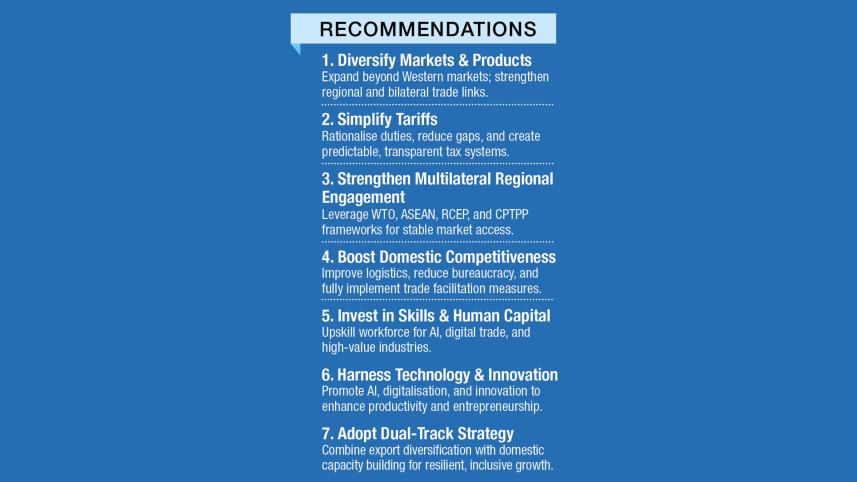
Looking ahead, diversification beyond traditional Western markets will be vital. Expanding engagement with Asian economies, including those within ASEAN and East Asia, can open new opportunities and reduce vulnerability to market-specific shocks. Through a dual strategy: active multilateral participation and internal capacity enhancement, Bangladesh can navigate the shifting global trade order while securing a more resilient and inclusive economic future.

Dr Zaidi Sattar
Chairman and Chief Executive
Policy Research Institute of Bangladesh (PRI)
(Panel Discussant)
Global trade has experienced significant disruption in recent years, with the introduction of reciprocal tariffs marking a major departure from long-established principles of comparative advantage. This shift, particularly evident since April 2025, has altered the basis of international trade, with countries now engaging in negotiations and exchanges influenced more by reciprocal tariff advantages than by efficiency or production capacity. For Bangladesh, this evolving landscape presents both challenges and opportunities.
Bangladesh maintains one of the highest tariff structures globally, with average import duties around 28% and total trade taxes reaching approximately 54%. Such a system complicates the country's ability to engage in free trade agreements (FTAs), whether bilateral or regional. In contrast, regional groupings such as ASEAN operate with significantly lower average tariffs of around 5%, highlighting the gap that must be addressed if Bangladesh aims to participate effectively in reciprocal trade arrangements. The complexity of the tariff structure further complicates trade. Multiple overlapping duties: customs, regulatory, supplementary, and value-added taxes have created a system that deviates from WTO norms. While initially intended to be trade-neutral, many of these duties now function as protective measures. A notable disparity also exists between tariffs on inputs, around 13%, and outputs, approximately 45%, resulting in a high effective rate of protection that affects competitiveness and production incentives.
Historical experience suggests that rationalisation of tariffs can yield positive outcomes. In the 1990s, Bangladesh implemented trade liberalisation and tariff reduction measures, which lowered nominal tariffs by approximately half. During this period, customs revenues increased significantly due to higher import volumes, and trade and GDP growth expanded. This demonstrates that tariff rationalisation, when combined with complementary structural reforms, can enhance trade efficiency without compromising revenue.
Current policy discussions emphasise the need to revisit and complete these reforms. Rationalising tariffs, reducing the gap between input and output duties, and transitioning toward more predictable and transparent tax systems are central to enhancing competitiveness. Strengthening multilateral engagement, alongside domestic trade facilitation measures, can position Bangladesh to navigate a fragmented global trade environment effectively. By addressing these structural challenges, the country can maintain export growth, attract investment, and integrate more fully into the evolving global trading system.
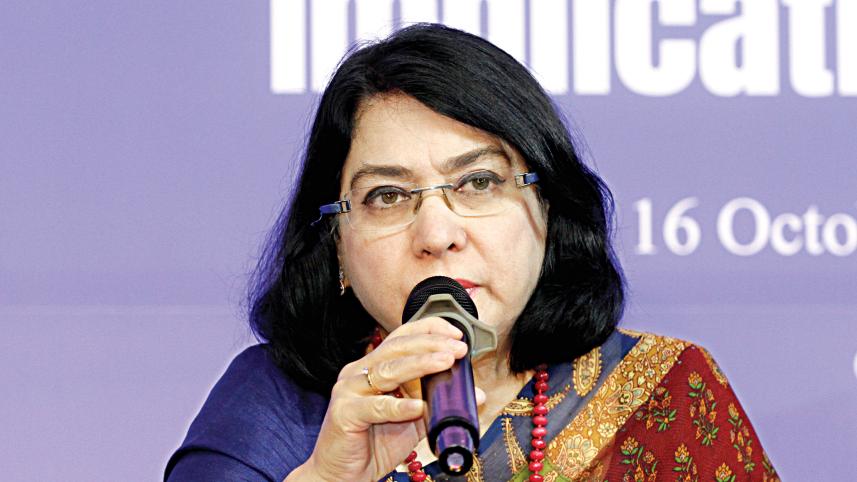
Dr Fahmida Khatun
Executive Director
Centre for Policy Dialogue (CPD) (Panel Discussant)
Global trade has undergone significant shifts in recent years, marked by disruptions that have altered the traditional dynamics of international commerce. The recent report titled "Disruption, Diversification, and Divergence" captures these changes, emphasising the relevance of this evolving trade landscape for Bangladesh. The report and speakers highlighted that the global trade order has shifted from a system based on comparative advantage to one increasingly shaped by reciprocal tariff arrangements, especially since April 2025, a disruption with major implications for Bangladesh's tariff reform and export strategy. Historically, engagement in global trade has brought economic, social, and technological gains to participating countries. Multilateral systems such as the WTO were established to facilitate liberalised trade and maximise these benefits. However, the effectiveness of the multilateral trading regime has declined over time, with many countries increasingly turning to bilateral or plurilateral agreements as global protectionism intensifies.
For Bangladesh, these changes have direct implications. The country's export-led growth, particularly in ready-made garments, has benefited from past global frameworks, such as the Multi-Fibre Arrangement, and supportive domestic policies like bonded warehouses and back-to-back letters of credit. These combined factors allowed Bangladeshi entrepreneurs to expand exports more successfully than many other least developed countries. However, the current trade environment requires countries, including Bangladesh, to reassess strategies and adapt to new realities, as global trade is essential for economic growth and no country can be entirely self-sufficient. Competitiveness and demand in international markets remain crucial for continued export performance.
Continuing an export-led growth strategy is important, but it should be complemented by strengthening the domestic economy. Bangladesh's large population offers considerable potential for domestic consumption, which can contribute significantly to GDP growth if disposable income and productivity increase. Skills development, particularly in response to technological changes such as artificial intelligence, is critical to improving labor productivity, creating new employment opportunities, and maintaining competitiveness in key industries like garments and pharmaceuticals.
Additionally, tariff rationalisation remains a key priority. A complex structure heavily reliant on indirect taxes limits private sector investment and reduces export competitiveness. Simplifying tariffs and creating a more predictable trade environment, along with improving infrastructure, reducing bureaucratic barriers, and promoting technological adoption, are essential steps.
In conclusion, Bangladesh's strategy should combine a robust domestic economy with a continued focus on export-led growth. Investments in human capital, technology, and enabling domestic policies will allow the country to navigate the disrupted global trade landscape, enhance competitiveness, and sustain economic growth while generating employment opportunities.

Tanvir Mahmud
Senior Governance Specialist
UNDP Bangladesh
Global trade is facing significant shifts, driven by rising tariffs, fragmented supply chains, and complex geopolitical dynamics. For Bangladesh, navigating this changing landscape requires a dual-track strategy: outward adaptation through diversified markets and products, and inward resilience by strengthening domestic capacity. Empowering entrepreneurship is central to this approach, ensuring that businesses can access finance, build skills, and overcome bureaucratic barriers. Building an entrepreneurial mindset in public institutions is essential to overcome coordination gaps and ensure collective action toward national development.
Technology, particularly artificial intelligence, offers opportunities to enhance productivity, innovation, and competitiveness. At the same time, national capabilities and institutions must be strengthened to negotiate effectively, remove investment barriers, and respond strategically to global developments.
Inclusive and sustainable growth remains a priority. Trade and investment policies should protect workers, farmers, and young entrepreneurs while fostering innovation and social security. As Bangladesh approaches LDC graduation, leveraging human capital, technology, and strategic partnerships will be critical to ensuring that the country's economic transformation is equitable, resilient, and forward-looking.
The panel discussion was moderated by Syed Yusuf Saadat, Project Economist, Transformative Economic Policy Programme (TEPP) for UNDP Bangladesh.
Comments