


Who will seal off these wells of death?
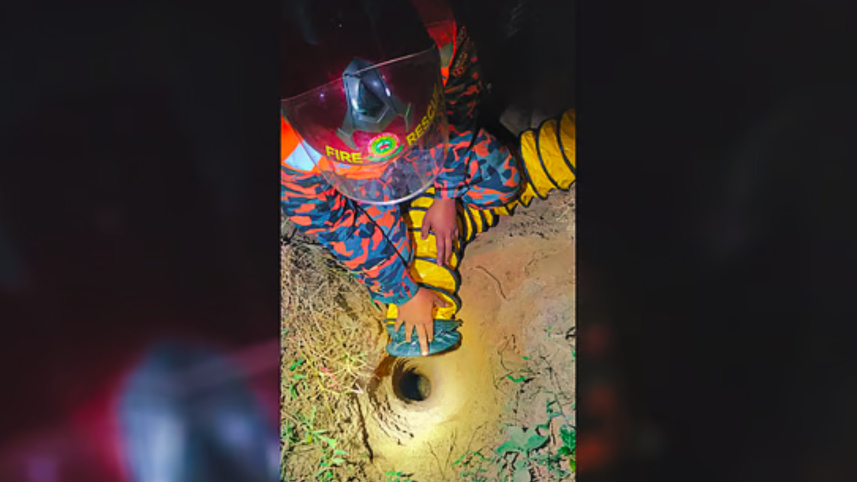
As I began writing this, a community in Raozan, Chattogram, was desperately trying to rescue a boy named Misbah, trapped in the depths of an abandoned tube-well pit. Villagers, later joined by the fire service, mounted a frantic search to pull him out. They hoped that little Misbah would find his way back to his mother’s arms. He did not. As a newspaper headline later read: ‘Body of 3-year-old recovered 4 hours after falling into pit.’ By then, of course, he was dead. I sat in silence after reading the news, overwhelmed by profound sadness, asking myself: How irresponsible can the authorities be?
Not long ago, on December 10, two-year-old Sajid fell into an abandoned 30-foot-deep tube-well pit in Tanore, Rajshahi. After 32 agonising hours of searching, rescuers could only retrieve his lifeless body. The nation also wept over that heartbreaking incident. The government was stirred into action, giving assurances that measures would be taken to prevent such incidents from happening again. But barely six weeks later, another identical tragedy unfolded in a different unattended deep well shaft.

One may also recall the story of four-year-old Jihad in this connection. In 2014, the boy fell into a disused tube well belonging to WASA in Shahjahanpur, Dhaka. About 23 hours after his fall, rescuers brought out his lifeless body. The incident created such an uproar that it seemed the authorities would finally take responsibility and implement necessary safety measures. They did not. One after another, similar incidents continue to occur, whether in abandoned or unsecured sewer lines or in forsaken tube wells.
I have spent my entire career in water supply and sanitation, working for a UN agency focused on children. And I have consistently raised alarms about the dangers of both abandoned and open wells. Newspapers published articles aimed at raising awareness and influencing policy directions. Yet there has been no concerted national initiative to address the decommissioning of non-functional tube wells. The fundamental understanding that defunct and abandoned tube wells should be properly decommissioned remains absent from official policy.
It is not just child deaths that result from abandoned wells. These neglected structures are causing damage to our precious groundwater aquifers. Many tube wells are installed every year by both government and private entities, and many more become dysfunctional. These wells act as direct conduits, allowing contaminated, bacteria-laden surface water to seep down and pollute invaluable groundwater reserves. So, just as installing a tube well is important for a community, decommissioning it with equal seriousness is also critical.
Beyond tube wells, another death trap for children in rural areas is the unprotected, wide-mouthed pat kua (traditional wells). These wells, 20 to 40 feet deep, also claim lives. But despite repeated tragedies, the authorities have failed to take corrective action. Through abandoned tube wells and open sewer lines, they are effectively allowing preventable deaths and injuries to occur, while simultaneously degrading the environment and endangering our water table.
We must reverse this trend. It is imperative that the government undertake a comprehensive national survey to identify all abandoned water and sanitation installations and systematically decommission them. Clear protocols must be established for proper decommissioning, including filling, capping, and monitoring these structures. A dedicated unit or task force could be created within the relevant ministry to ensure this. The government should also engage communities and NGOs with experience in water and sanitation management. Public reporting mechanisms should also be established, allowing citizens to alert authorities to hazardous wells. Additionally, policies should mandate that all newly installed tube wells are registered, tracked, and monitored over their lifetime, with funds earmarked for eventual decommissioning.
The importance of raising awareness and teaching basic safety practices to children and families is also crucial. Despite what it may seem to the families struck by such tragedies, these are not unpredictable “acts of God.” They are acts of criminal negligence—a direct result of institutional apathy and lack of accountability. The tears shed for Sajid and Jihad have evidently evaporated without leaving a trace of meaningful action. Now, we mourn Misbah. The question is, how many more little children must we lose before the authorities finally seal these gaping holes of death on our land?
Md. Firoj Alam is a development consultant.
Views expressed in this article are the author's own.
Follow The Daily Star Opinion on Facebook for the latest opinions, commentaries, and analyses by experts and professionals. To contribute your article or letter to The Daily Star Opinion, see our guidelines for submission.
 For all latest news, follow The Daily Star's Google News channel.
Comments