


When law arrives after the video spreads

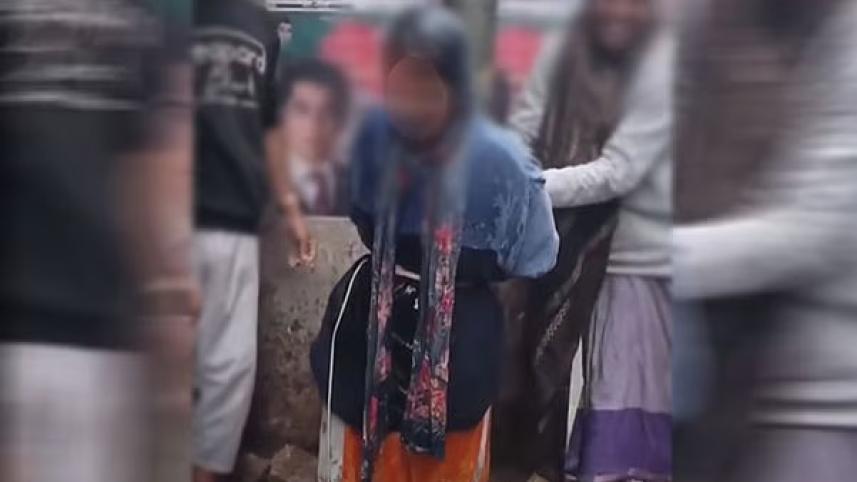
On a winter morning in Dhaka's Gulshan, a place better known for embassies, cafés and the illusion of order, a woman was tied to an electric pole and doused with water. The cold was real, the humiliation public, the violence spectacular enough to be recorded, edited and circulated for collective consumption. By the time the video reached our phones, the act had already done its job. It had entertained, shocked, outraged and, in a disturbingly large number of cases, amused. Only later did the state wake up, as it often does these days, alerted not by conscience but by virality.
The official explanation now unfolding is familiar, almost ritualistic. The woman was suspected of theft. She had entered a madrasa. Stories emerged about changing identities, contradictory statements, and moral suspicion layered upon criminal suspicion, all of which served to render the victim suitably ambiguous, morally complicated, and perhaps even "deserving" of what followed. This is an old social reflex. When violence shocks us too deeply, we rush to muddy the character of the violated, hoping it will soften our discomfort.

But strip away the justifications, and the image remains stubbornly simple: a woman restrained in public, punished by a crowd, while others watched, filmed and participated. No warrant, no police station, no court, no due process. Just rope, water and the confidence that nothing serious would happen to the perpetrators. That confidence, more than the rope or the water, is the most disturbing element of this story.
We are told that five people have been arrested, some of them minors, all connected to the institution where the incident occurred. The news has been framed as swift action. Yet, it is difficult to ignore that this action by law enforcers arrived only after the video went viral. Before that, there was silence. In a society increasingly governed by algorithms, justice now seems to require trending status.
This dependence on virality reveals a deeper malaise raising the question: had no video, no outrage, no digital echo chamber been amplifying the scene, would the incident have mattered? Or would it have quietly dissolved into the vast archive of unrecorded humiliations endured daily by the poor, homeless, and the nameless?
The justification offered by those involved follows a predictable script. Punishment administered in the name of discipline, protection and social order. The crowd, as always, believed itself righteous. After all, what is a little public humiliation when compared to the alleged crime of theft? Especially when the accused is a woman with no visible social protection, influential relatives, or immediate defenders.
There is something profoundly convenient about mob justice. It is fast, emotionally satisfying and requires no paperwork. It allows ordinary people to play judge, jury and executioner, all before breakfast. It also provides a moral spectacle, one that reinforces power hierarchies and reminds the vulnerable of their place. In that sense, tying a woman to a pole is not merely punishment. It is a performance.
Educational institutions are meant to resist such impulses. They are supposed to cultivate restraint, empathy and respect for the rule of law. Yet here, students and teachers themselves appear at the centre of the act. This is not an anomaly but a symptom of a broader educational failure, one that prioritises rote obedience over ethical reasoning and moral responsibility. When education becomes detached from humanity, it produces graduates fluent in discipline but illiterate in compassion.
It would be comforting to treat this as an aberration, an unfortunate deviation from our values. But recent years suggest otherwise. Beatings, lynchings, public shaming and crowd-led punishment have steadily entered the social mainstream. Each incident is followed by familiar statements of regret and resolve, only to be replaced by the next spectacle.
What makes this case particularly unsettling is its setting. Gulshan is not a remote village where state presence is minimal and desperation high. It is one of the most policed and privileged areas of the capital. If such an act can unfold here, in daylight, near institutions of religious and moral learning, it raises uncomfortable questions about the depth of our collective moral erosion. Geography, it seems, no longer offers protection from barbarity.
The language used to describe the woman repeatedly as a thief, a liar, a social outsider also deserves scrutiny. It subtly shifts attention away from the violence inflicted upon her and redirects it towards her supposed character flaws. It reassures society that the real problem is not the act, but the person it was done to.
This is where the cruelty becomes systemic. Once we accept that certain people are morally disposable, extraordinary violence begins to feel ordinary. The law, instead of being a shield, becomes a distant abstraction, selectively applied and easily bypassed. The crowd, emboldened by precedent and impunity, steps in eagerly.
The lack of knowledge about the whereabouts of the victim adds another layer of discomfort. Is she safe? Has she received medical or psychological support? In a system obsessed with perpetrators and process, victims often disappear quietly, their suffering acknowledged only as a footnote.
We are repeatedly reminded that the law will take its course. This phrase has become a kind of national lullaby, soothing enough to quiet outrage without demanding real accountability. Yet the same law often moves slowly, selectively and unevenly, especially when the victims are marginalised and voiceless.
If we are honest, the most frightening aspect of this incident is not that it happened, but that it felt familiar. We have seen variations of this story before, with different victims and slightly altered justifications. Each time, we express outrage, promise reflection and then we move on.
Societies do not collapse overnight. They erode gradually, normalising cruelty one incident at a time. Today it is a woman accused of theft. Tomorrow it may be someone else, accused of something equally unproven. The law will arrive late. The victim will disappear.
When violence becomes acceptable order begins to rot. When humiliation is treated as justice, justice loses meaning. And when society learns to look away, barbarity no longer needs accountability.
The question, then, is not whether arrests have been made or investigations initiated. The real question is whether we are willing to confront the culture that made this incident possible, predictable and, for a brief moment, entertaining. Without that reckoning, the electric pole in Gulshan will not remain an isolated symbol. It will become a warning we chose to ignore.
H. M. Nazmul Alam is an academic, journalist, and political analyst. Currently, he teaches at International University of Business Agriculture and Technology (IUBAT), and can be reached at nazmulalam.rijohn@gmail.com.
Views expressed in this article are the author's own.
 For all latest news, follow The Daily Star's Google News channel.
 Follow The Daily Star Opinion on Facebook for the latest opinions, commentaries, and analyses by experts and professionals. To contribute your article or letter to The Daily Star Opinion, see our guidelines for submission.
Comments