


Remembering Mark Tully, the trusted chronicler of 1971

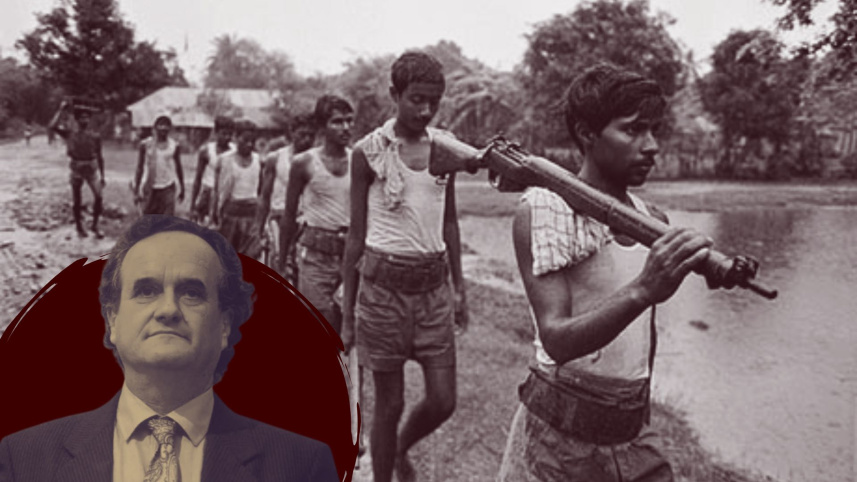
Sir William Mark Tully, well known in the Indian subcontinent as Mark Tully of the BBC, was a friend of Bangladesh. Interested in theology and history in early life, he was the main commentator for the BBC World Service of the Liberation War, which was not only decisive for Bangladesh but also changed the borders of the subcontinent. Alongside the bloody events of 1971, various events in Bangladesh, India, Pakistan, and Myanmar have been known to the world for 30 years through Mark Tully’s commentary. On his demise, India’s popular media, The Wire, referred to him as a fearless titan of journalism. The BBC referred to him as a “chronicler of modern India”. And we Bangladeshis can call him a “trusted chronicler of 1971” for his role during our Liberation War.
Mark Tully was born in Kolkata’s Tollygunge in West Bengal in 1935. After completing studies in London, he joined the BBC in 1964. He was the bureau chief of the New Delhi office for 22 years. During Operation Searchlight on March 25, 1971, Tully was stationed in London. Tully worked to collect information from sources in Kolkata and Delhi to broadcast the truth of the atrocities to the world.

The first report on the genocide committed in Bangladesh was published by Mark Tully’s friend, Simon John Dring, a young journalist for The Telegraph. On March 30, the British newspaper published Simon’s report titled “Tanks Crush Revolt in Pakistan: 7,000 Slaughtered, Homes Burned.” After its publication, all other influential media outlets in the world started publishing reports on our issue. This mounted international pressure on Yahya Khan. To handle the situation, Pakistan invited a group of foreign journalists to visit Dhaka. Mark Tully came to Dhaka in the last week of April 1971 with this group. He arrived on the condition that he should be allowed to work freely. During this two-week visit, he travelled by road to Rajshahi, witnessing burned villages and evidence of massacres. After this trip, he returned to London via Delhi to continue his reporting, which included an important document of the Liberation War of Bangladesh.
During the visit, he also went to Old Dhaka, which was home to a significant Hindu population. At the time, reports were surfacing that the Hindu community was being systematically targeted by the Pakistani military. His first stop was Shakhari Bazar, the site of a brutal massacre. While Tully was documenting the devastation, he was detained by West Pakistani police. However, he was eventually released with the assistance of a Bangalee officer-in-charge at the police station.
After Mark Tully returned to London, martyred journalist Nizamuddin Ahmed, who worked as a stringer for the BBC, cooperated with him from within Bangladesh. In addition, Tully also gathered firsthand intelligence from the families and contacts of BBC Bangla staff in London. Serving as the primary voice of the BBC World Service during the conflict, his exhaustive work became a monumental contribution to the international understanding of the liberation movement.
Tully remained a man of professional ethics and modesty following the events of 1971. He frequently maintained that he was simply a journalist fulfilling his duty. When he was later formally honoured by the Bangladeshi government for his contributions, he said that he did not feel comfortable with such an honour.
The contribution he made in 1971 is unforgettable. After his death on January 25, 2026, his mortal body may have merged with nature through his cremation at Delhi’s Lodhi Estate crematorium, but his work will guide professional journalists for generations to come. He has written several books in his 90-year-long life. Among them, Amritsar: Mrs Gandhi’s Last Battle and No Full Stops in India are particularly noteworthy.
Rahat Minhaz is assistant professor of mass communication and journalism at Jagannath University, Dhaka. He can be reached at minhaz_uddin_du@yahoo.com.
Views expressed in this article are the author's own.
Follow The Daily Star Opinion on Facebook for the latest opinions, commentaries, and analyses by experts and professionals. To contribute your article or letter to The Daily Star Opinion, see our guidelines for submission.
 For all latest news, follow The Daily Star's Google News channel.
Comments