


Extortion capitalism and the economics of control

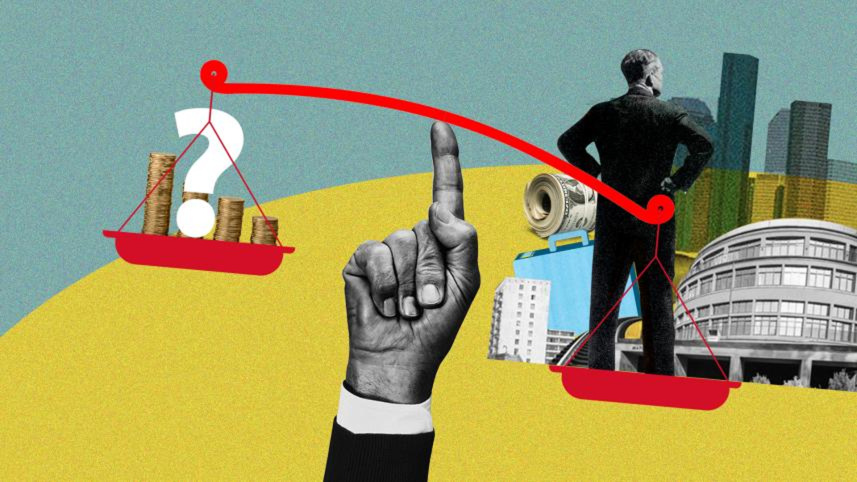
In its idealised form, an economic system such as capitalism—often known for rewarding productivity, risk-taking, and innovation— is one in which profits follow value creation, competition disciplines excess, and institutions protect exchange. Yet across much of the developing world—and in several middle-income economies—what operates under the label of capitalism increasingly functions through coercion rather than production. Markets exist, money circulates, and transactions occur, but the logic animating them has shifted. Value is no longer primarily created; it is extracted. This is not a mere market failure, but a sophisticated, predatory mutation of the system.
This phenomenon draws from my ongoing research identifying ten slightly overlapping faces of capitalism, each shaped by institutional design and power relations. One of these distorted offspring I describe as “extortion capitalism”. It emerges when systematic coercive extraction replaces productive accumulation as the dominant economic logic. In such systems, the pursuit of profit is no longer tethered to efficiency, innovation, or service delivery. It is anchored instead in control over permits, roads, ports, files, licenses, and ultimately, fear. The gatekeeper replaces the entrepreneur; the innovator, by the enforcer.

In Bangladesh, extortion is not a marginal deviation or an underground aberration; it is embedded in the very architecture of everyday economic life. Transport operators, traders, contractors, and small businesses face payments that are neither taxes nor fees, but compulsory extractions enforced through political muscle, bureaucratic discretion, or outright intimidation. Economic survival depends less on entrepreneurship than on compliance with informal toll regimes. The price of doing business is not innovation, but submission. Markets function, but they function as corridors of rent extraction rather than arenas of competition.
The abstraction becomes concrete when one examines mass-contact state institutions. The Bangladesh Bureau of Statistics Citizen Perception Survey 2025, as reported by The Daily Star on December 25, 2025, shows that nearly one-third of citizens paid bribes to obtain public services, with the Bangladesh Road Transport Authority and passport offices emerging as the most corruption-prone interfaces. These are not elite gateways; they are universal points of contact that citizens must face repeatedly. When routine access to mobility and legality itself depends on informal payments, coercion ceases to be episodic and becomes structural. The citizen is not paying to break the law, but to access it. Formal compliance costs more than informal negotiation. In such a setting, corruption is not merely a moral failure; it is an economic toll. Citizenship becomes conditional, and a silent lesson is learned: voice does not work—money does.
A closely comparable pattern appears in Nigeria, where police checkpoints, port clearances, fuel distribution, and public procurement operate as layered extraction points. Businesses factor bribes into operating costs much as they would electricity. Political power becomes a mechanism for monetising access to markets rather than regulating them. The distinction between public authority and private predation blurs, producing an economy where compliance is rewarded more reliably than competence.
In Pakistan, the mechanism is more institutionalised but no less coercive. Access to land records, utilities, and judicial relief frequently requires unofficial payments mediated by politically connected intermediaries. Elections rotate elites and slogans evolve, yet the extraction structure remains remarkably stable. What persists is not ideology but incentive: controlling chokepoints yields higher returns than producing goods.
The logic becomes starkly visible in Haiti, where armed groups openly control roads, ports, and fuel depots. Tolls are imposed on movement, trade, and basic survival. While the institutional form differs from South Asia or West Africa, the economic principle is identical: income is generated through coercive control rather than production. The absence of a functioning state does not eliminate capitalism; it mutates it into a raw system of enforced extraction.
In Afghanistan, this system has persisted across radically different regimes. Whether under warlords, transitional governments, or religious authority, trade routes are taxed, and households coerced. The continuity reveals an uncomfortable truth: extortion capitalism is not tied to doctrine. It is tied to the profitability of coercion. A hybrid version is evident in Myanmar, where businesses face overlapping demands from military-linked firms and informal enforcers. Participation requires continuous payments, crowding out efficiency and innovation. Capital accumulation becomes defensive rather than productive—aimed at survival, not expansion. Even in Venezuela, access to foreign exchange and licences has long depended on political loyalty and unofficial payments. As output shrank, the state compensated not by reforming, but by tightening control over remaining economic arteries.
These countries differ in culture and geography, yet they converge on a common pattern. When coercive extraction becomes more profitable than production, capitalism mutates. Markets still exist, prices still signal scarcity, and money still changes hands, but the engine has changed. Value creation gives way to predation. Entrepreneurship narrows into rent-seeking. Innovation withers because its returns are appropriated before they can compound. Labeling this simply as “corruption” understates the problem. Corruption implies deviation from a norm; extortion capitalism is a stable economic equilibrium. Once entrenched, it does not self-correct through market forces because the market itself has been repurposed as an extraction device.
Recognising this pattern is essential because policy remedies fail when the diagnosis is wrong. Privatisation, deregulation, and investment incentives cannot work where coercion—not competition—sets the rules. Development strategies premised on market efficiency collapse when the market rewards access over ability. Understanding extortion capitalism is therefore not an academic exercise. It is a prerequisite for meaningful reform—and for distinguishing capitalism’s productive potential from its most corrosive deformation. Until we dismantle the checkpoints of coercion, we are not building markets; we are merely financing their hijackers.
Dr Abdullah A Dewan is professor emeritus of economics at Eastern Michigan University in the US. He can be reached at aadeone@gmail.com.
Views expressed in this article are the author's own.
Follow The Daily Star Opinion on Facebook for the latest opinions, commentaries, and analyses by experts and professionals. To contribute your article or letter to The Daily Star Opinion, see our guidelines for submission.
 For all latest news, follow The Daily Star's Google News channel.
Comments