


An election of narratives and least scrutiny

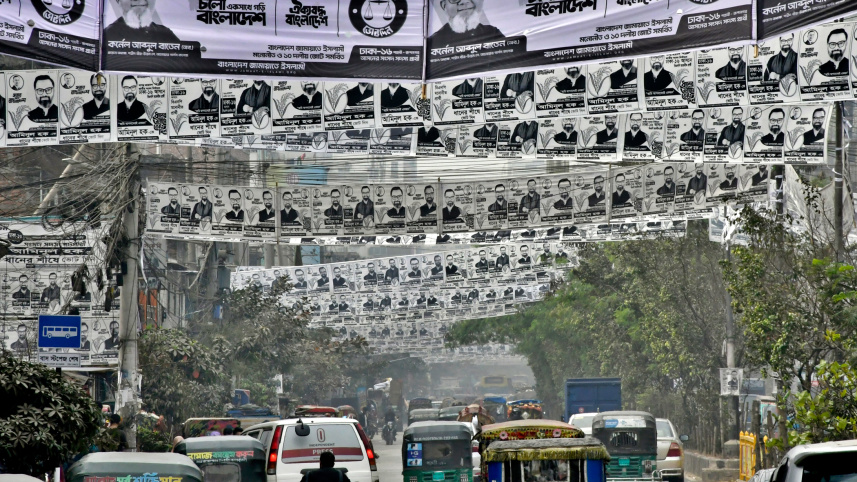
Now that campaigning for the February 12 national election has officially ended and the manifestos of all major parties are before the nation, this is the moment—before we head to the polls—to pause and reflect on whether the plans and pledges we have heard have been adequately scrutinised. By global standards, this election so far appears to have relied almost entirely on competing “narratives” crafted and sold by parties and their leaders. Campaign strategists have been largely successful in pushing their respective narratives and counter-narratives, leaving us—the voters—with little choice but to judge personalities and rhetoric rather than policies and substance.
In a democracy, elections are meant to be the ultimate test of politicians, rooted in public accountability. Town hall meetings and meaningful engagement with the media—including interviews and press conferences with question-and-answer sessions—are central to that process. Unfortunately, none of the party leaders offered the opportunity to be examined by their constituents or by journalists acting on constituents’ behalf.

The late unveiling of manifestos by all major parties—whether by choice or due to poor planning—meant that the campaign largely devolved into a contest of personalities rather than a comparison of policies. This was further compounded by negative campaigning marked by name-calling and demeaning labels, more reminiscent of sledging than serious political debate. Had there been town hall Q&A sessions, citizens could have asked probing questions: who is financing costly helicopter rides between rallies when one party accuses another of extortion? Or, why is a political alliance once deemed justifiable now being used as grounds for ostracism based on past allegiance? There could be myriad other questions about both politicians and their positions that remain unanswered—not because constituents failed to ask them—but because candidates and party leaders failed to create sufficient space for those questions to be raised, tested, and answered in the first place.
Tailored election messages are undoubtedly important, but they are often vague, making the accompanying pledges difficult to assess. While it is true that the two leading contenders—the BNP and Jamaat-e-Islami—published policy papers ahead of their manifestos, there was little substantive public discussion of those documents. As a result, there was no real pressure to address criticisms or incorporate new ideas into more realistic, measurable action plans. Unsurprisingly, many experts now view these manifestos as laden with over-ambitious and hollow promises.
These concerns are amplified by the current global economic climate. US President Donald Trump’s weaponisation of tariffs and shifting geopolitical dynamics across Europe, Latin America, the Middle East, and Asia have made export growth more difficult, imports more uncertain and expensive, and the prospects of attracting investment or aid increasingly bleak. Economists have rightly pointed out that many of the political pledges or projections—job creation, accelerated growth, and expansive social security—are unlikely to be realised during the next parliamentary term.
On the political front, while the manifestos broadly reflect commitments made under the July National Charter, sharp differences remain in interpretation and emphasis. As the Charter forms the foundation of a post-authoritarian transition, disagreements over its future trajectory have intensified. Islamic parties see it as an opportunity to establish moral governance, while liberal forces emphasise the values and ideals that shaped the birth of Bangladesh. There is also disagreement over the agenda of the referendum that is taking place alongside the general election. The Jamaat-NCP alliance has questioned the BNP’s sincerity in implementing the Charter, citing its note of dissent on certain provisions, despite BNP leader Tarique Rahman’s call for a “yes” vote. These accusations underscore the need for deeper probing of leaders across both camps.
A particularly disturbing late development in the campaign was the vague and unexplained warnings from top leaders of multiple parties about “conspiracies” to steal the election, without naming any alleged conspirators. These claims may simply be rhetorical attempts to undermine opponents, but they have nonetheless generated fears of potential violence. Such fear risks discouraging voter turnout, which would be the most undesirable outcome of all. Alternatively, if these apprehensions are based on credible intelligence, particularly given the risks posed by a segment of the supporters of the fallen Awami League regime, the public have a right to know. Clearer public messaging and greater interactions with the media could have addressed these concerns and eased anxieties.
Finally, one critical issue remains unaddressed: are the competing parties prepared to respect the people’s verdict and concede defeat if necessary? In our “winner-takes-all” political system, opposition forces have historically struggled to play their rightful role—sometimes due to arrogance, at other times because of humiliation, exclusion, and the dominance of majoritarianism. This is one of the root causes of the repeated crises that have plagued Bangladesh’s democratic experiment since the end of military rule in 1990. Before electing our representatives in this post-uprising moment, the public deserves to know whether future leaders are willing to respect opposition voices and, when necessary, shoulder that responsibility themselves.
Unfortunately, in the absence of meaningful media scrutiny and critical public engagement, voters are being asked to place their trust in carefully engineered narratives. This election is likely going to be one where politicians have faced the least scrutiny. There is no real way to test them before casting our ballots—and that, ultimately, is the most troubling feature of this election.
Kamal Ahmed is consulting editor at The Daily Star. He led the Media Reform Commission under the interim government. His X handle is @ahmedka1
Views expressed in this article are the author's own.
Follow The Daily Star Opinion on Facebook for the latest opinions, commentaries, and analyses by experts and professionals. To contribute your article or letter to The Daily Star Opinion, see our guidelines for submission.
 For all latest news, follow The Daily Star's Google News channel.
Comments