
Living in occupied Dhaka: Diaries from 1971
The story of the birth of a nation does not inscribe itself only through victory; rather, it is imprinted on lives lived through thousands of sacrifices, silent battles, and unbowed courage. This truth is reflected in the stories of the 1971 Liberation War. The war was not fought only with arms, but also with the hearts of the people of this country. From March 25, 1971, to December 16, 1971, the people of this land stood against genocide to achieve freedom from what was then West Pakistan.
The history of the war is often remembered through leaders' guidance, battlefield strategies, and military achievements. But the most crucial part—how daily lives were transformed by conflict—often remains unheard. Daily routines were disrupted, destroyed, or entirely reshaped. People from different walks of life experienced the war in different ways, and each life took a different turn. In an effort to preserve these experiences, many documented their day-to-day lives in diaries, which today allow us to relive the war through their eyes, preserved in words.
 For all latest news, follow The Daily Star's Google News channel.
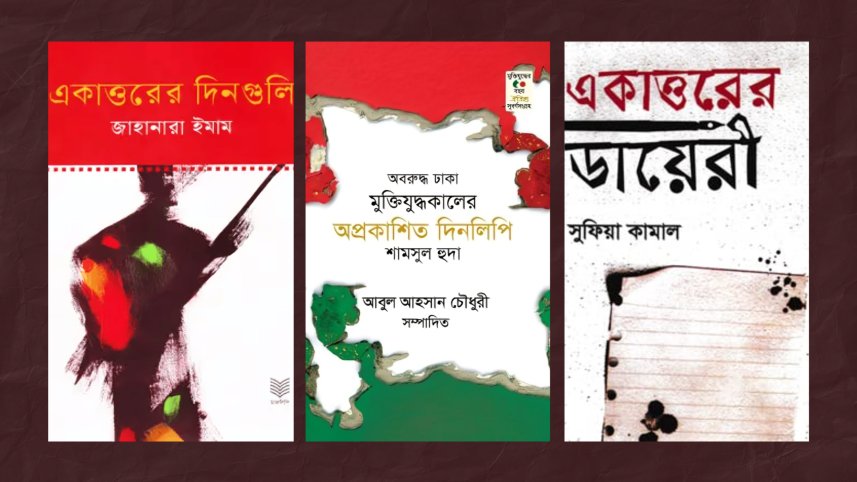
 Through three defining works—Ekattorer Dinguli, Abaruddha Dhaka, and Ekatturer Diary—we see how the war shaped lives, bodies, moral choices, and national consciousness beyond the battlefield. These narratives emerge from the perspectives of a mother, an intellectual, and a poet and cultural icon.
Ekattorer Dinguli (1986)
Jahanara Imam (1929–1994), also known as Shaheed Janani or the Mother of Martyrs, was a Bangladeshi writer and activist. Ekattorer Dinguli is her personal diary, covering the period from March 1, 1971, to December 17, 1971, and documenting daily life in occupied Dhaka. The diary records the gripping fear and uncertainty of life during the Liberation War. Rather than offering a chronicle-style, war-report-based account, it captures the emotional climate of the time, highlighting curfews, sudden raids, unexpected bombings, and fragile hopes of freedom, while showing how civilians attempted to maintain a sense of normalcy amid war.
Ekattorer Dinguli portrays the Liberation War through the lens of motherhood, revealing how maternal courage became a form of resistance. Everyday acts of care and endurance are transformed into historical testimony, underscoring the deeply human role of mothers in shaping the nation.
The central narrative revolves around her son, Shafi Imam Rumi. A brilliant student with aspirations for higher education, Rumi makes the irreversible decision to leave home and join the Mukti Bahini, the guerrilla resistance force formed to fight the Liberation War. His transformation from student to freedom fighter reflects the choices of countless young people who risked—and often lost—their lives for the country. Through Rumi's decision, Jahanara Imam presents the painful reality of motherhood during war, marked by a duality of pride and constant fear for a child's life.
This suffering deepens when Rumi is captured and never returns, followed by the death of her husband just days before the war ends. Imam channels this grief into resilience, activism, and the preservation of memory, demonstrating that motherhood during war extends beyond the private sphere into moral and national responsibility.
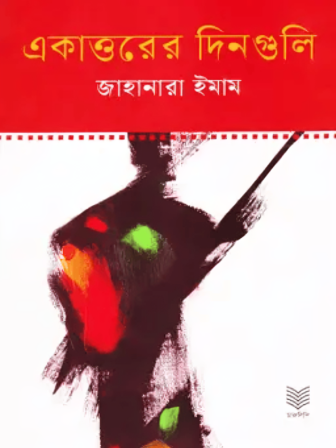
Thus, Ekattorer Dinguli portrays the Liberation War through the lens of motherhood, revealing how maternal courage became a form of resistance. Everyday acts of care and endurance are transformed into historical testimony, underscoring the deeply human role of mothers in shaping the nation.
Abaruddha Dhaka (2019)
Muhammad Shamsul Huda, a devoted teacher and intellectual, kept a diary during the Liberation War, chronicling his life in Dhaka under military occupation. The diary was later compiled and edited by Dr Abul Ahsan Chowdhury and published in 2019 as Abaruddha Dhaka. It offers a day-to-day account of life in a besieged city, vividly capturing the immediacy of events and civilian experiences during wartime.
Instead of focusing on military engagements or political manoeuvres, the diary centres on the everyday lives of civilians navigating curfews, fear, and uncertainty. Persistent food shortages, power failures, distant gunfire, sudden raids, and the unceasing anxiety of survival reshape ordinary routines. Alongside these are rumours, reports of atrocities, and small acts of courage, revealing the moral and human dimensions of life in a city under siege. Through Huda's observations, the bravery, unity, and quiet determination of ordinary residents emerge, as do the moral failures and decline of the occupying authorities.
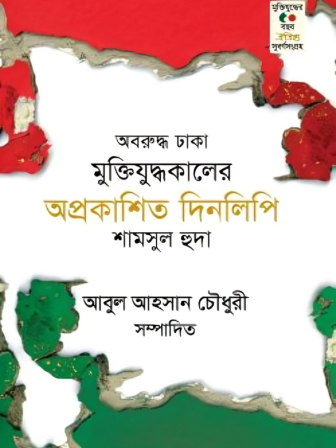
The diary's central theme lies in the continuity of everyday life amid extreme danger. By recording both external realities—violence, curfews, destruction—and internal experiences—fear, grief, hope, and reflection—it presents Dhaka as a microcosm of the wider struggles of war. Abaruddha Dhaka thus offers a direct, unfiltered, and deeply human portrayal of the Liberation War, transforming ordinary observations into a valuable historical record of endurance and survival.
Sufia Kamal writes vividly about curfews, sudden military raids, shortages of food and necessities, and the pervasive uncertainty of daily life. She records visits from friends, intellectuals, and fellow activists, showing how people exchanged information, preserved social and cultural networks, and maintained dignity amid chaos.
Ekatturer Diary (1989)
Begum Sufia Kamal (1911–1999), a celebrated Bangladeshi poet, writer, and activist, was a pioneering figure in the country's cultural and political movements. Ekatturer Diary, written during the war, documents daily events in Dhaka and its surroundings.
Sufia Kamal writes vividly about curfews, sudden military raids, shortages of food and necessities, and the pervasive uncertainty of daily life. She records visits from friends, intellectuals, and fellow activists, showing how people exchanged information, preserved social and cultural networks, and maintained dignity amid chaos. She highlights how small yet meaningful acts—such as literary discussions, community solidarity, and the upholding of ethical values—became forms of resistance.
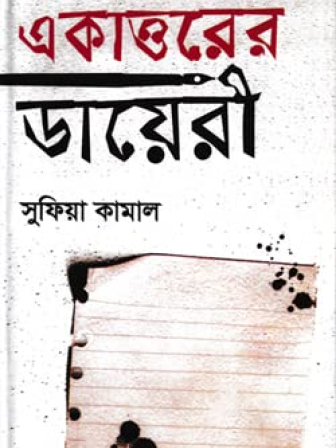
The diary also foregrounds her moral reflections. Beyond physical hardship, Sufia Kamal engages deeply with the ethical responsibilities of witnessing violence, preserving cultural memory, and documenting collective struggle. Personal concerns intertwine with broader social and political observations, creating a powerful record of civilian endurance marked by fear, resilience, hope, and courage.
Ekattorer Dinguli, Ekatturer Diary, and Abaruddha Dhaka remind us that the Liberation War did more than give birth to a nation; it transformed lives, shaped moral choices, and forged resilience. Viewing 1971 through these personal narratives deepens our understanding of the past and urges us to honour every voice that contributed to the struggle for freedom, each from their own position.
Sumaiya Ferdous is a sophomore majoring in Biotechnology in the Department of Mathematics and Natural Sciences at BRAC University. She can be reached at sumaiyaferdous755@gmail.com.
Send your articles for Slow Reads to slowreads@thedailystar.net. Check out our submission guidelines for details.
Comments