


A rights record that weakens confidence
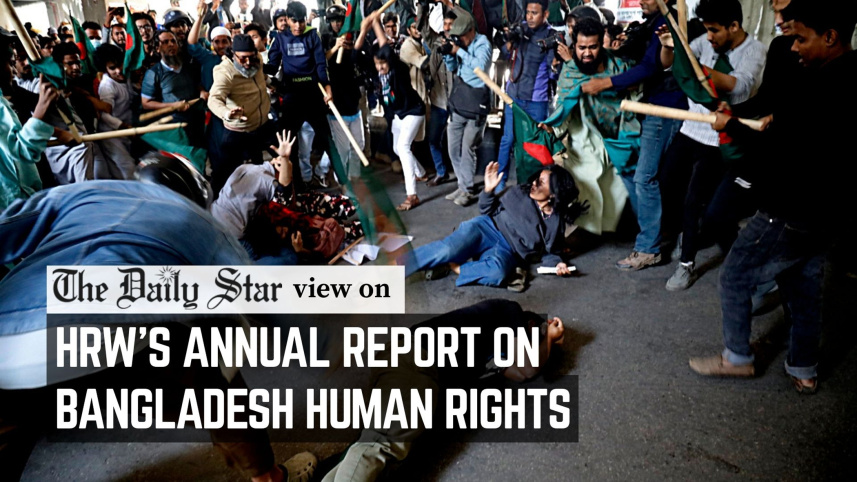
The annual Human Rights Watch (HRW) report on Bangladesh, released last week, provides a rundown of the various forms of human rights abuses that took place within the country throughout 2025. It gives us a stark picture of how poorly the interim government performed in delivering sustained justice and reforms during its nearly ended tenure. This may likely erode trust in institutions, and, most relevantly, weaken confidence in security preparedness ahead of Thursday’s election. Taken together, the HRW report demands scrutiny and answers.
The interim government’s most glaring failure in separating itself from the last regime’s operations is the stacks of arbitrary cases and arrests it has allowed to take place, unchallenged. As the HRW report states, hundreds of Awami League leaders, activists, and supporters remain in jail, with courts routinely rejecting bail petitions. Under the so-called Operation Devil Hunt, headed by the home affairs adviser, at least 8,600 people were arrested last year, while many others were detained using the Special Powers Act and Anti-Terrorism Act, the report reads. Additionally, restrictions on freedom of expression and association remained in 2025. Numerous attacks were carried out on journalists, often by non-state actors such as political party members and violent mobs, and a “temporary” ban was imposed on the Awami League’s activities, going so far as prohibiting online speech in support of the party.

The HRW report also highlighted instances of violence against religious and ethnic minorities, and the continued plight of Rohingya refugees, many of whom reported a near total lack of access to protection, legal assistance, and medical care. Global cuts to foreign aid and the influx of new arrivals exacerbated these threats to the Rohingyas’ livelihoods. The report cited a damning statistic since the interim government took charge in August 2024: at least 40 people killed by law enforcement, including 14 who allegedly died due to torture. During the last year, around 8,000 people had also been injured due to political violence, while 81 were killed, the report adds. When the interim government was formed, we hoped for a fair and accountable administration. But as months passed, we observed with disappointment a general attitude of denial and situational unawareness among multiple advisers and representatives of the government. With the country’s most-awaited national election just days away, we urge that the interim government realises its role in maintaining law and order and actively ensures the safety of all stakeholders, including voters, candidates, polling officers, and journalists. Conflict surrounding such a high-stakes election may seem inevitable, but the government must fulfil its utmost obligation to prevent bloodshed and foster a democratic environment on Thursday.
 For all latest news, follow The Daily Star's Google News channel.
Comments