


When auditor appointment rules are disregarded

Audit practice is governed by two regulatory frameworks. The first consists of domestic laws covering the appointment, reappointment and removal of auditors, the convening and adjournment of AGMs, auditor rights and powers, and statutory requirements for financial statements. In practice, International Financial Reporting Standards are applied to ensure global alignment in content and disclosures. The second framework relates to the technical conduct of audits, guided by applicable laws, regulatory directives and the International Standards on Auditing.
This analysis focuses only on auditor eligibility, specifically issues surrounding appointment, reappointment, removal and AGM requirements.

In many cases, except for listed companies, banks, financial institutions and insurance companies, where auditors are replaced under regulatory directives after three years, the removal procedures set out in Section 211 of the Companies Act, 1994, are not properly followed. The law requires that an auditor may be removed only at an AGM, through a special notice, and with an opportunity for the incumbent auditor to address the members.
In practice, companies often appoint a new auditor at the AGM without observing these requirements, leaving the outgoing auditor unaware of the reasons for removal. In some instances, auditors are improperly removed at an EGM in the middle of the year following disagreements over professional judgment, despite the Act providing no authority for auditor appointment or removal outside an AGM.
Such non-compliance can lead to the appointment of lower-quality auditors, particularly where existing auditors raise professional or quality concerns. Outgoing auditors generally issue professional clearance in line with ethical standards but often refrain from highlighting the legal non-compliance to avoid unnecessary conflict.
A casual vacancy in the office of an auditor is dealt with separately under the Companies Act, 1994. As a general rule, the board may fill such a vacancy. However, where it arises from an auditor’s voluntary retirement before the AGM without consenting to reappointment under the proviso to Section 210(1), the board’s authority is restricted. In this situation, the proviso to Section 210(7) requires the vacancy to be filled by the members at the AGM, ensuring shareholder oversight and statutory compliance.
It is also observed that auditors are sometimes appointed for multiple pending financial years at the same time, which is inconsistent with statutory requirements. Keeping accounts, audits and regulatory filings pending for several years is unlawful, and conducting audits for multiple years in one exercise undermines transparency and financial accountability. Under the Companies Act, auditors must be appointed annually at each AGM to hold office from that AGM until the next, unless lawfully removed as discussed earlier.
Only where a court directs the presentation of outstanding audit reports for the condonation of delayed AGMs may auditors be appointed for multiple years in accordance with that order. In the absence of a specific court directive, there is no legal basis for appointing auditors for several years at once.
In summary, the statutory framework makes it clear that auditor appointment and removal are matters vested exclusively in shareholders at the AGM, except in cases of casual vacancy, which may be filled by the board in line with Section 210(7). The Companies Act, 1994, provides no authority for appointing or removing auditors at an EGM, or for appointing auditors for multiple pending years without a court directive.
To uphold audit quality, transparency and professional integrity, auditors and regulators must ensure strict compliance with these legal provisions and refrain from accepting or endorsing practices that deviate from statutory requirements.
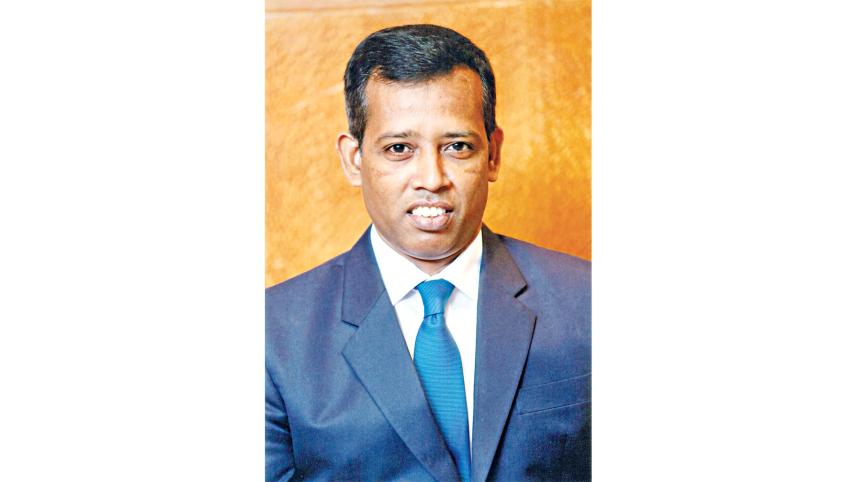
The writer is a fellow member of ICAB and a partner of Basu Banerjee Nath & Co, Chartered Accountants
 For all latest news, follow The Daily Star's Google News channel.
Comments