


US visa suspension: Green card pending, hope expired

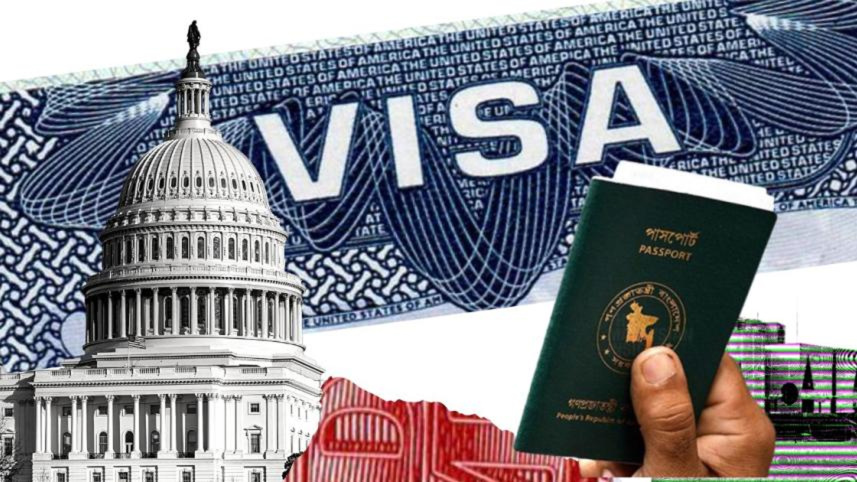
The United States has announced that it is suspending immigrant visa processing for Bangladeshis. Not forever, it insists. Just for now. A pause. A reassessment. A temporary inconvenience. Much like when your phone freezes mid update and politely informs you not to turn it off, even though your entire life is currently stuck behind a spinning wheel. This pause applies only to immigrant visas—the permanent kind—involving families, futures, and the radical idea of living in the same country as your spouse. Non-immigrant visas remain unaffected. Students are still welcome. Tourists can still queue for selfies. Temporary workers can still fill labour shortages, provided they remember to leave quietly afterwards. Permanence, however, has been flagged for further thought. This distinctive policy reflects a global shift.
The justification offered—a concern about misuse and welfare dependency—is familiar and carefully vague. These phrases float around immigration policy like incense, creating the impression of seriousness without the burden of evidence. Bangladeshis, it turns out, are suddenly a welfare risk. What is being paused here is not a process. It is a set of assumptions people were encouraged to build their lives around. Immigrant visas are not impulse purchases. They involve years of paperwork, background checks, interviews, and waiting that require both patience and money. Many of the people affected are not applicants at the beginning of the queue—they have already been approved, and their lives are already halfway packed. Their children already know which country they are moving to, just not when.

This is where the pause stops being administrative and starts being borderline cruel. Legally, the United States can do this. Immigration law gives the executive sweeping discretion. Courts have repeatedly affirmed that no foreign national has a right to a visa, no matter how many conditions they satisfy. Approval does not equal issuance. Expectation does not equal entitlement. The law is clear. And that clarity is precisely the issue here. Because in almost every other area of public administration, inducing reliance matters. If a state sets criteria, approves compliance, and leads individuals to believe an outcome will follow, abruptly withdrawing that outcome demands justification in line with doctrines on legitimate expectation, procedural fairness, and proportionality. Immigration law, however, is the exception that swallows the rule. It exists in a moral vacuum, and so families are told to wait. Again.
The most revealing aspect of the pause is who it does not affect. Temporary mobility remains welcome. You may come for a few years and study, work, spend, contribute and be useful. What raises concern is permanence, which means roots leading to rights or political presence. And political presence means people who stop being grateful and start being equal.
America, it seems, is comfortable with Bangladeshi labour but not with Bangladeshi families. There is also an uncomfortable racial logic that nobody wants to say out loud. Pauses are rarely framed as discrimination. They are framed as neutral administrative action. But neutrality does not mean evenly distributed harm. When entire categories of people are restricted while others move freely, policy becomes a mirror of fear rather than fact. Bangladeshis are not assessed as individuals in this process. They are assessed as probabilities. Overstayers. Dependants. Risks. Never mind that the same countries eagerly recruit Bangladeshi doctors during health crises and celebrate diversity at conferences. The enthusiasm cools when diversity asks for permanence.
Timing makes this worse. Children risk ageing out of eligibility. Spouses remain separated indefinitely. Parents wait through illnesses and birthdays, and funerals are attended over video calls. A pause with no end date is not neutral when life continues to move forward.
Back in Bangladesh, the American Dream is still being sold aggressively. Coaching centres advertise pathways. Consultants promise a strategy. Families repeat advice to do things properly, follow the rules, and trust the process. Nobody mentions that immigration systems are not queues. They are gates. And gates open and close based on domestic politics that migrants have no influence over.
This pause also exposes a deeper hypocrisy. Bangladesh is routinely advised to improve governance, reduce migration pressure, and build opportunities at home. At the same time, when Bangladeshis attempt to migrate legally, through formal channels, following every rule, the system reminds them that legality does not guarantee welcome. It only guarantees compliance.
So, where does this leave Bangladeshi families, whose loved ones in the US completed all the immigration procedures? They are floating in a space where plans exist, but timelines do not. The pause may lift. Or it may quietly extend. Or it may be replaced by another review with a new name and the same effect. Until then, families will adapt, because adaptation is what we do best. Expectations will be lowered. Timelines will be redrawn. Children will be taught resilience instead of hope.
As America reassesses the application, like it always does, Bangladeshi families will survive. We always have. But let us stop pretending this is a neutral policy or harmless administration. This is power, exercised politely, legally, and without accountability, over people who did exactly what they were told. The real lesson here is not about visas. It is about trust.
Barrister Noshin Nawal is a columnist for The Daily Star. She can be reached at nawalnoshin1@gmail.com.
Views expressed in this article are the author's own.
Follow The Daily Star Opinion on Facebook for the latest opinions, commentaries, and analyses by experts and professionals. To contribute your article or letter to The Daily Star Opinion, see our guidelines for submission.
 For all latest news, follow The Daily Star's Google News channel.
Comments