


US-EU tensions over Greenland may have serious effects for us

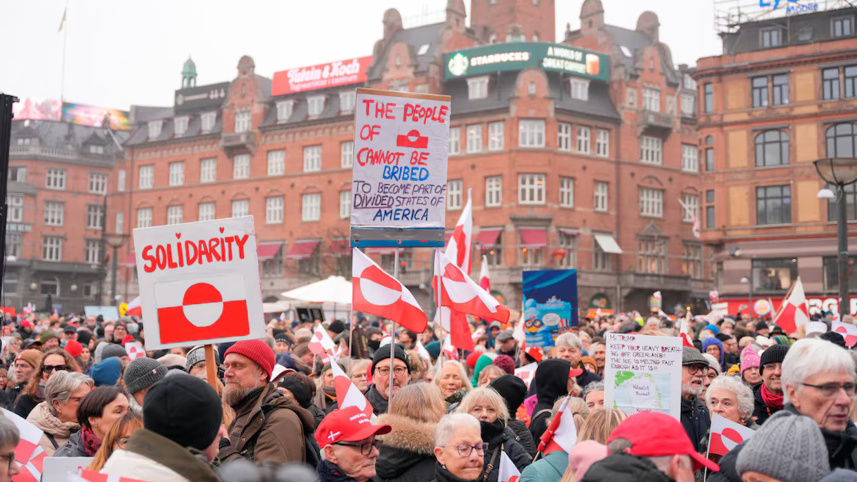
We are now justifiably focused on the upcoming general election, which will hopefully give us an elected and accountable government and restart our journey towards democracy.
However, the world is focused on something else. It wants a restoration of the existing world order, or a more rational one than the one we are forced to face now. Europe’s latest dilemma—physical attack by Russia on the east and the threat by the US to take “full control” of the island of Greenland on the west—has changed the world as we knew it after the Cold War. Europe may have been prepared militarily, economically, psychologically, and emotionally for aggression from Russia. But to be threatened by their most trusted ally—which, after World War II, has stood by them and which, through the Marshall Plan, has helped rebuild their devastated countries—is something these nations find extremely hard to live with. Thankfully, US President Donald Trump’s statement in Davos on Wednesday, that he will not use force to acquire Greenland, may have calmed European nerves a bit. But the shock still persists, and so does a serious doubt about the reliability of the transatlantic alliance.

Europe’s shock started with a sudden and irrational imposition of US tariffs, that too without any discussion or negotiations (the latest report says that Nato members have been exonerated from that). They were, and are, also disturbed by President Trump’s thoughts on peace in Ukraine. Is it to allow Russia to keep the territories conquered so far? What price will Ukraine have to pay for peace? Russia is clearly the aggressor here, but Trump’s attitude towards President Vladimir Putin does not seem to indicate that he thinks so.
A major breach of trust factor between Western allies occurred when Trump “invited” Canada to become the 51st state of the US. Any citizen of an independent country would have found it insulting, as the Canadians rightly did. The Davos speech by Canadian Prime Minister Mark Carney clearly illustrates how ruptured their relationship is now, and the long-term impact President Trump’s policies is likely to have on Canada.
The reason we cite Canada is because it shows how a close ally of the US, and an extremely close trading partner for decades, has begun to move away. The Canadian leadership has been talking about a trade strategy of moving away from heavy dependence on the US and seeking diversification.
The members of the North Atlantic Treaty Organization (Nato), whose protection its members enjoyed for the last eight decades, are now in danger of being bullied by its principal founder with the threat of occupying part of the territory of one of its members: Denmark. The Nato Charter says that an attack on any one of them is to be considered an attack on all. So, how the US’s demand for the ownership of Greenland will ultimately work out is the central question in all European leaders’ minds. Yes, at Davos, President Trump said he would not use force, but he reiterated the US’s need for the Danish territory.
What Trump has set in motion is to make meaningless the most important pillar on which the modern international system functions: the notion of national sovereignty. +
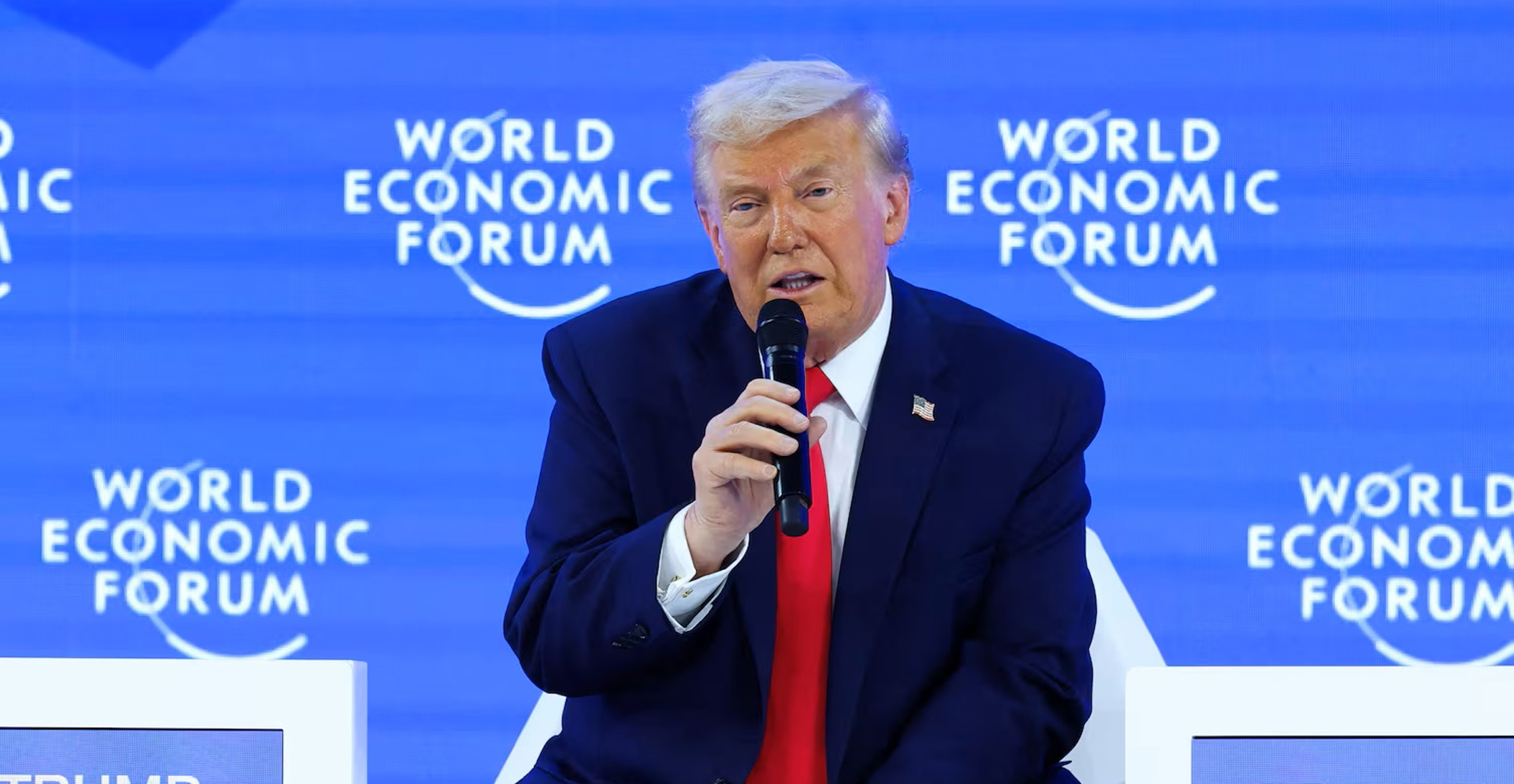
US President Donald Trump attends the 56th annual World Economic Forum (WEF) meeting in Davos, Switzerland on January 21, 2026. Photo: Reuters
The Peace of Westphalia of 1648 initiated the modern-day practice of interstate relations, though the concept was more centred around the rights of the state and the ruler. The notion of popular sovereignty was articulated by philosopher Jean-Jacques Rousseau, who stated that “sovereignty resides with the people.” Thus, the focus was shifted from the ruler to the people, a crucial transition towards making democracy meaningful. Through the process of decolonisation and the idea of self-determination of nations and peoples, the principle of people-centred sovereignty got further currency.
The defeat of Adolf Hitler and Benito Mussolini and the total destruction of fascism after World War II greatly strengthened the notion of sovereignty, which was given the most widespread acceptability with the formation of the United Nations, whose founding Article 2(1) clearly states, “The organisation is based on the principle of sovereign equality of all its members.” This means that all states, large or small, are legally equal with i) territorial integrity, ii) political independence, and iii) legal personality, all three of which are to be treated as inviolable.
Without a firm and irrevocable recognition of the rights and obligations of all countries, big and small, the international order as we know it will not survive. And if that happens, we will see the return of the “rule of the jungle” at the state level, with the most powerful ones having the arsenal with unimaginable destructive capacity, not to mention nuclear weapons. Because of the rise of the destructive powers, in an overall sense, the demise of a law-based international order will mark the beginning of the end of our civilisation. It is an existential question that we are now facing.
The Russian attack and occupation of Ukraine’s territory stand as a total violation of the idea of national sovereignty. The abduction of Venezuela’s president and his wife, and President Trump’s declaration that the US will “run” Venezuela for as long as necessary, are again a very dangerous breach of the notion of sovereignty. Trump’s wish to take over Greenland, a territory belonging to Denmark (which may not materialise as recently indicated), has added to concerns about the transatlantic treaty’s stability. The Wall Street Journal’s report on Wednesday that the US plans a regime change in Cuba by the year’s end, and similar other rumours concerning other Latin American countries, are adding to global concerns about the rights of nations to exist as independent states. All this further jeopardises the very structure on which the modern international system operates.
Our civilisation’s most laudable “journey”, among a few others, has been that from “might is right” to the notion that what is morally, ethically, and legally right is far mightier than might itself. The fundamental precondition for the modern international system to operate and survive is a rules-based international system in which every country has equal rights and every country, however powerful, obeys the same laws. The post-World War II world has more or less proven its validity.
We must never lose sight of the fact that the modern world’s prosperity, the rise in global wealth (however maldistributed), and the spread of the notion of universal human rights, freedom of speech, and democracy all depend on the rules-based international system. Equally important is the right of every nation to be the owner of its natural resources, which is dependent on an international order. If this collapses, then big powers will wreak havoc on smaller countries, and we will have nowhere to go to seek redress. It will mean a return to the colonial era, during which natural resources of the colonies were looted and indigenous people were literally turned into slaves—something which, whatever be the price, developing countries will never accept.
What does all this mean for countries like ours?
Specifically, the most important area of concern for Bangladesh is that the two contesting parties of the present tension, the US and the EU, are the two biggest markets for our ready-made garment export, which accounts for 80 percent of our export earnings. If these two destinations become embroiled in various trade issues, tariff wars, and, God forbid, military confrontation, then the impact on us will be an economic disaster.
If the relations between the EU and the US become volatile, it is not inconceivable that special conditions may be imposed on us by one side or the other, such as arbitrary taxes, forced price reduction, or a ban if we trade with certain countries that are blacklisted by some other, etc. Thus, the absence of a rules-based international trading order will be a serious threat to countries like ours.
It is not inconceivable that geopolitical factors may come into play. We may come under greater pressure to choose sides. Our own region may become a playground for others. The Indo-Pacific zone, South China Sea, Bay of Bengal, etc may become pressure points of our foreign policy. We may be asked not to accept investment from countries that are not in the good books of a powerful one. When power becomes the final arbiter instead of rights, the needs and demands of smaller countries like us are likely to be flouted.
The groups that are celebrating at the moment are the arms producers and suppliers. Every European country is increasing their defence spending. Asia is not far behind. Even smaller countries are falling in line in this regard. We, whose resource constraints are well-known, could end up doing the same.
Just when the whole world should be diverting its resources to fight climate change, we are spending many times more in preparing to destroy ourselves in the name of protection. What the present situation is doing is diverting our attention and resources from serving humanity to serving the spread of suspicion, instability, hatred, and, if not war, then definitely rearmament. Experience of the past decades proves that it is the wrong policy to pursue. Having seen and experienced all that, how can we repeat the same scenario? How can we be so short-sighted?
 For all latest news, follow The Daily Star's Google News channel.
 Greenland may be far in distance, but not so far in terms of geopolitics and geoeconomics.
Mahfuz Anam is the editor and publisher of The Daily Star.
Views expressed in this article are the author's own.
Follow The Daily Star Opinion on Facebook for the latest opinions, commentaries, and analyses by experts and professionals. To contribute your article or letter to The Daily Star Opinion, see our guidelines for submission.
Comments