


The rickshaw artist
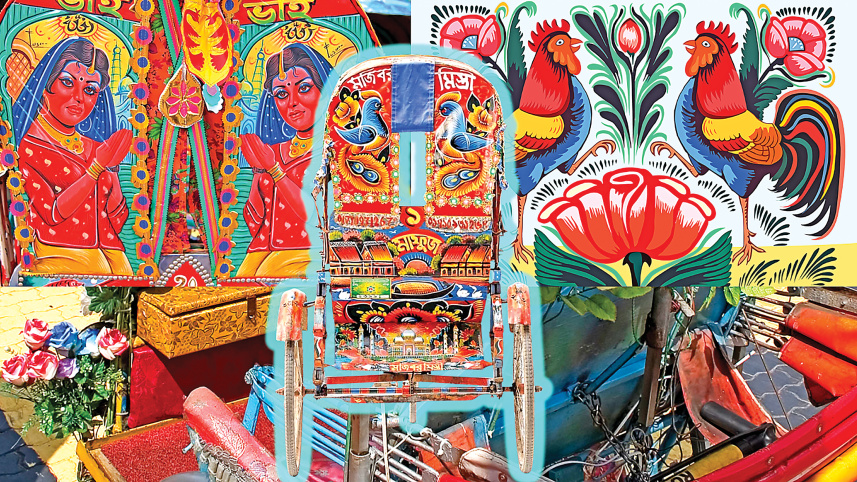
In Dhaka, the traffic doesn’t run; it limps. At seven in the morning, the buses are full, coughing black air, CNGs wheezing past, rickshaws threading between them like colourful tops. From the expressway above, you’d think the city is having a stroke, but downtown it’s just another evening.
Aminul pedals one of those needles. His rickshaw is older than his marriage, older than his daughter, and far more famous. The hood is painted with a single continuous scene: a river view at sunset, a tiger drinking beside a girl in a red sari, cranes in construction straight into the smog of Dhaka. Tourists photograph it when the light is right. Local boys call it “the moving cinema.”
 For all latest news, follow The Daily Star's Google News channel.
 Tonight, a greyish blue sky is hovering above. Aminul whistles as his bell is busted, a thin tuneless sound that repulses people away rather than attract them, perfect for parting the crowd. His shirt sticks to his back like glue. He is 42 and feels sixty until the wheels turn, then he feels 16 again.
At the corner of Elephant Road a woman flags him. She is maybe 25 years-old—a university badge hangs from her neck, earphones in—an exhausted kind of beauty that belongs only to this city.
She climbs on without bargaining; that alone tells him she’s late for something that matters. “Hatirjheel,” she says, voice almost lost under the horns.
He nods and pushes off. The rickshaw groans like it’s personally offended. They crawl through Kakrail, past the mosque spilling light and men onto the pavement, past biryani smoke thick enough to chew. She takes out one earphone. Polite.
“Bhai, your rickshaw is incredible. Who painted it?”
“My daughter,” he lies, because the truth is too long for one ride.
Actually he painted it himself, night after night under a single bulb, using brushes made from his wife’s old hair and colors bought with money meant for the gas bill. He painted what he remembered from his village before the river ate half of it, before he came to Dhaka with two shirts and a promise.
The girl leans forward. “What’s the tiger drinking?”
“Moonlight,” he says.
She laughs, surprised, and the sound is so light it almost lifts them out of the jam. At Hatirjheel, the lake is a black mirror holding a thousand broken bulbs. She tells him to keep the change and as walks away; she touches the painted tiger’s head, her hand shaking like it might bite any minute.
Aminul watches her disappear into the neon. Then he looks at his hands on the handlebars: cracked, stained with cobalt and crimson that will never quite wash out.
The traffic exhales. He rings the broken bell anyway—a dull clunk—and pedals back into the breathing city.
One day, he thinks, he will paint the girl with the red earphones into the scene, somewhere between the tiger and the cranes: just a small figure, running late, carrying the whole exhausted evening on her shoulders.
Dhaka will understand.
“The rickshaw artist” was awarded the first prize in the flash fiction segment of the creative writing competition at NSU DEML 2025 Winter Fest.
Comments