


SWIFT weaponisation shattered the global financial trust
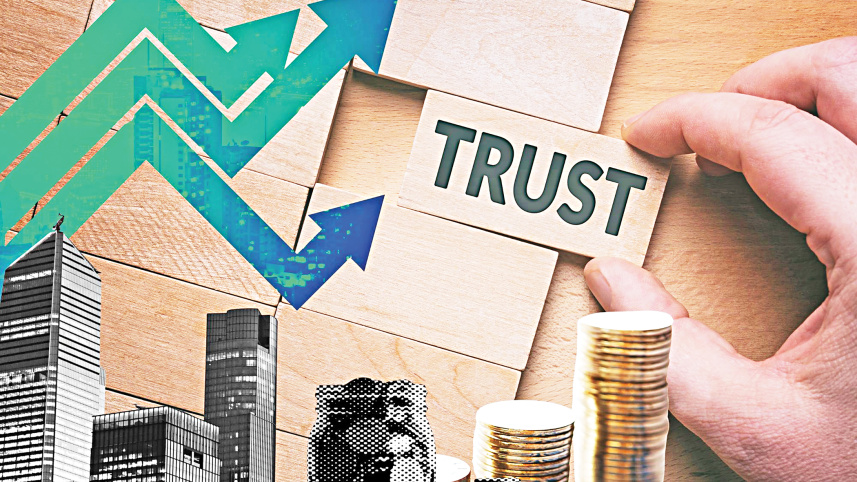
As we stand at the threshold of 2026, the global economy is not merely navigating a cycle of inflation or shifting trade balances; it is grappling with a fundamental dissolution of the invisible glue that holds the modern world together: mutual trust. While analysts often focus on interest rates and supply chains, I suggest that we are witnessing a systemic breakdown where the “minimum requirement” for international stability—trust—has been discarded, leaving the global world in significant trouble.
For decades, the global economy functioned on the assumption that even rivals would adhere to “standard norms”. However, as we transition into this difficult new year, it has become clear that these norms have been shattered, and the consequences are manifesting in every corner of the financial and geopolitical map.

The Weaponisation of Finance and the End of Regularity
The current crisis can be traced back to a series of pivotal decisions that prioritised immediate geopolitical pressure over long-term systemic stability. A primary catalyst was the disconnection of Russia from the SWIFT system in 2022. At the time, this was viewed as a necessary sanction, but it can be argued that it was a foundational mistake that “broke up the trust”. By preventing a major global actor from making payments in a “regular economic manner,” the international community effectively signalled that the global payment infrastructure was no longer a neutral utility, but a political weapon.
This loss of trust is like “putting toothpaste back in the tube”—once it is out, it is nearly impossible to reverse. When nations realise they can be arbitrarily cut off from the global financial system, the incentive to participate in that system evaporates. This has directly led to a world where the global economy struggles to “come to a sense” because the basic mechanics of international commerce are now mired in suspicion.
The Threat to Sovereign Security: A Precedent of Fear
The erosion of trust deepened with the recent proposals by European entities to confiscate Russian sovereign and federal assets. Although certain nations, such as Belgium—the host of the primary clearing house—resisted these requests to protect the integrity of their financial institutions (more importantly to avoid legal backlash from Russia!), the mere attempt has fundamentally weakened the global economic foundation.
This raises a chilling question for the global market: if the property of a superpower can be targeted for confiscation, “who else is going to keep money in this world?”. This breach of trust has created a chilling effect, signalling to every nation—regardless of their size—that their assets are only as secure as their current political alignment with Western powers. This realisation is driving a massive relocation of global financial capital. We are now seeing the rise of new financial hubs in the UAE, Singapore, and Hong Kong. These locations are positioning themselves as the new centres of the financial world specifically because they promise to “keep the trust” that has been abandoned by traditional Western nations.
The Fracture of Allied Relations: When Friends Become Strangers
Perhaps the most alarming development in this era of distrust is its expansion beyond warring factions to historically ironclad alliances. For example, there has been a dramatic shift in the relationship between Canada and the United States. Previously, the border between these two nations “virtually did not exist,” characterised by friendly travel and integrated economies.
However, as of 2025, this trust has been “broken unequivocally” by the political rhetoric in the U.S. when President Trump spoke about potential annexation of Canada or its absorption as a “51st state”. The atmosphere has turned from cooperation to caution. This isn’t just political theatre; it has tangible economic impacts. Canadians have largely stopped crossing the border with their previous frequency, and the spectre of unfavourable tariffs has replaced the “standard norms” of North American trade.
This pattern of broken trust is a global contagion. It is evident in the friction between Europe and America, as well as in the tariff-driven tensions between the United States and South American nations like Brazil and Venezuela. When the “Western world” is in an uproar and friends are “losing trust on each other,” the entire global framework begins to buckle.
A Leadership Deficit in a World Without Norms
The outlook for 2026 is “pretty difficult” because we currently lack leaders who are “conciliatory” or willing to prioritise diplomacy over escalation. In the past, historical precedents like the Magna Carta served as tools for rebuilding trust, even among warring parties. Today, however, there is an absence of a “minimum requirement of sanity”.
Leaders of major superpowers—from the U.S. and Russia to China and India—face a world where personal animosity often overrides statecraft. When leaders “hate each other” and accuse one another of direct attacks, the room for diplomacy vanishes.
The Road to 2026: A Duty to Rebuild
I conclude that 2026 must be a year of rebuilding trust. This is not a sentimental request but an economic necessity. The global economy cannot return to a state of growth and stability if nations are constantly bracing for the next confiscation, the next payment disconnection, or the next surprise tariff.
Leaders must recognise that they have a “duty to rebuild trust”. This requires moving beyond personal narratives to re-establish a “minimum sanity” in international relations. Without a return to “standard norms” of what to do and what not to do, the world will remain a collection of isolated, suspicious actors rather than a functional global economy.
The stakes could not be higher. As we look at the fractured landscape of 2025, it is clear that the road back to a better world starts with a simple, yet Herculean task: making the decision to trust once again.
To understand the gravity of our situation, consider trust as the lubricant in a complex machine. When that lubricant is removed, the gears—representing international trade, sovereign assets, and allied cooperation—begin to grind against each other, creating heat and friction that eventually cause the entire mechanism to seize up. Once those gears are damaged by the heat of conflict and the friction of suspicion, simply adding more lubricant later may not be enough to make the machine run smoothly again; the parts themselves may need to be entirely replaced.
 For all latest news, follow The Daily Star's Google News channel.
 Professor A K Enamul Haque, PhD, is Director General of the Bangladesh Institute of Development Studies (BIDS).
Comments