


‘Relations between Jamaat and US a warning sign’: Says Farhad Mazhar
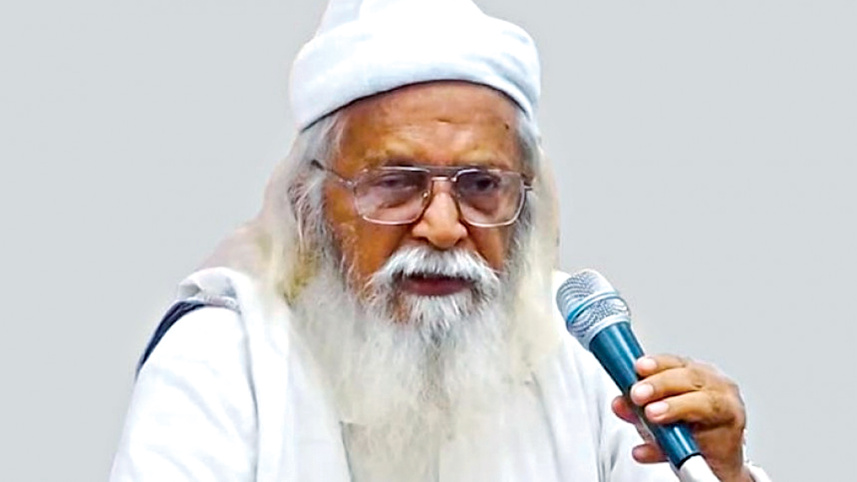
Poet and columnist Farhad Mazhar yesterday described the reported relationship between Jamaat-e-Islami and the United States as a “dangerous warning sign”.
He made the remarks while responding to a question at a discussion titled “Nationwide gas, electricity and safe water crisis: what society should do”, held at the Jatiya Press Club.

A journalist referred to a report published on Thursday by the US-based The Washington Post, which said the United States was seeking “friendship” with Jamaat-e-Islami and would impose a 100 percent tariff on Bangladesh if Jamaat attempted to implement Sharia law. The journalist sought Farhad Mazhar’s reaction.
In response, Farhad Mazhar said every political party in Bangladesh is connected to the United States in some way, either directly or indirectly.
He argued that following the July uprising, what he described as a “constitutional counter-revolution” has been portrayed internationally as a regime change in favour of the US.
“Even before the mass uprising, and even before Gono Odhikar Parishad, I said removing Sheikh Hasina was not the main issue. The US would do that anyway. Our task was to think about how to build a new Bangladeshi state,” he said.
Farhad Mazhar said international law has little meaning in practice. Citing former US President Donald Trump’s actions, he called it a harsh reality.
“Amid this situation, my concern is simple -- how do I survive with 17 crore people? I do not want to be dragged into any war,” he said.
He also questioned why political discourse often focuses on opposing India while remaining silent on what he described as US imperialism.
Farhad Mazhar said Jamaat had not opposed the proposed stabilisation force being sent to Gaza and claimed this showed Jamaat’s policy alignment and relationship with the US.
“That is why the United States is making these statements in advance. I see this as a very dangerous warning sign,” he said.
He also urged people not to create divisions between the army and the public.
He said the uprising was based on solidarity among students, citizens and soldiers, noting that soldiers come from farming and working-class families.
“Any attempt to separate them from the people would be dangerous.”
On Gaza, he said participation in any international military initiative in favour of Israel and the US would not be acceptable to the public.
Speaking on state reform and elections, Farhad Mazhar said, “If elections are held without uprooting the looting system, the resulting government will not belong to the people,” he said, adding that state-building should come before elections.
The discussion was organised by a platform called Gono Obhutthan Suraksha Mancha. Other speakers included Ahmed Ferdous and Mohammad Romel, an organiser of Bhabboithoki.
 For all latest news, follow The Daily Star's Google News channel.
Comments