


Rein in brick kiln growth in Satkania
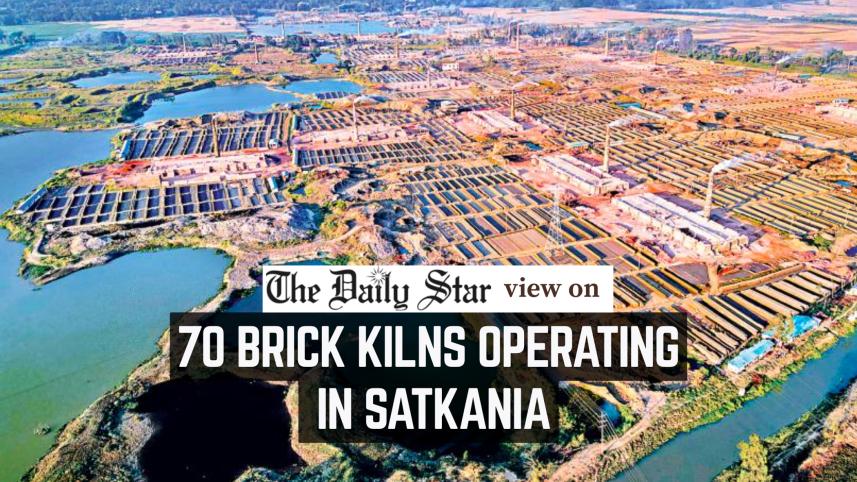
We are alarmed by the unchecked expansion of brick kilns along the Dhaka-Chattogram Highway, particularly in Satkania upazila. Once home to lush hill forests and fertile farmlands, the area is now dominated by rows of brick kilns. Similar trends have been reported in the neighbouring upazilas of Patiya, Chandanaish and Lohagara. Despite clear provisions in the Brick Manufacturing and Kiln Establishment (Control) Act, most kilns in these areas continue to use fertile topsoil from agricultural land, excavate hills, and emit toxic smoke with little fear of consequences. A recent report in this daily shows that at least 70 brick kilns operate in Satkania alone, 41 of them illegally, highlighting the routine flouting of regulations.
Reportedly, both licensed and illegal kilns are stripping fertile topsoil from farmlands and hills to produce bricks, undermining food security in an already land-scarce country. According to the local agriculture office, at least 75 acres of cultivable land have been damaged over the past five years. Farmers report declining yields as smoke, soot and ash blanket their fields, forcing many to abandon traditional crop farming. Hill-cutting to supply soil for kilns continues openly in areas such as Aeochia union, increasing the risk of landslides during the monsoon. Despite claims of surveillance and sporadic enforcement by the authorities, action remains weak and inconsistent, as locals say. Restrictions on burning firewood and coal are also frequently violated. Locals complain that fruit trees no longer bear fruit, homes must remain shut during the kiln season, and entire communities are forced to live under a toxic haze.

Another report by this daily recently highlighted how brick kilns continue to operate in Bandarban, despite being prohibited in the hill districts by a High Court directive. Clearly, the current government measures are failing to address the problem.
Therefore, the government must act decisively. Illegal brick kilns should be permanently closed, while syndicates involved in illegal soil extraction must be dismantled and held accountable. At the same time, strict monitoring is essential to ensure that licensed kilns comply with environmental laws. Protecting fertile land and vulnerable hills must be treated as a priority. Equally urgent is the transition from traditional, polluting brick kilns to cleaner, more sustainable construction alternatives. Achieving this requires both a clear policy shift and rigorous enforcement. If decisive action is not taken now, the cost will be far too high on our agriculture and the environment.
 For all latest news, follow The Daily Star's Google News channel.
Comments