


Regulate battery- run rickshaws
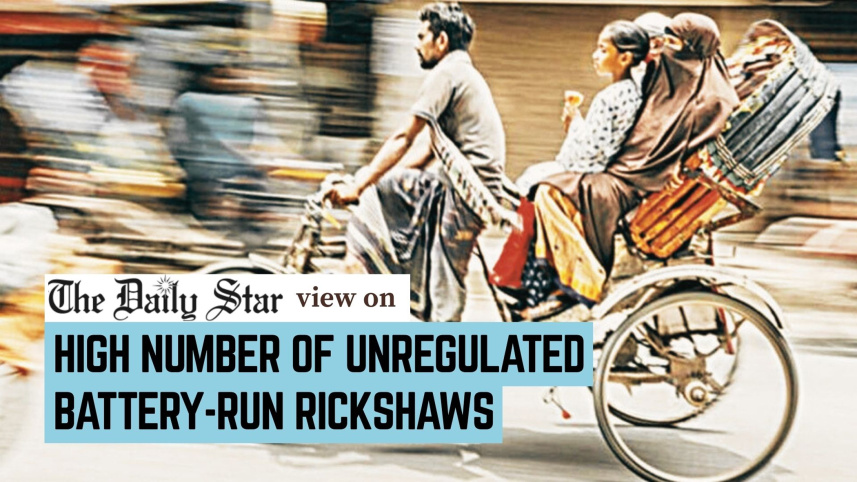
Rickshaws—both pedal-driven and battery-powered—remain an indispensable part of Dhaka’s urban mobility, especially for short trips. They provide livelihoods to hundreds of thousands and fill gaps left by inadequate public transport. A new study, however, shows that the largely unregulated nature of these rickshaws is creating serious problems for road safety, drivers’ welfare, and the environment. According to the study, 97 percent of battery-powered rickshaws and nearly 86 percent of pedal rickshaws operate without registration, which is alarming.
The study shows that around 30 percent of passengers using battery-powered rickshaws have experienced accidents, compared to 18 percent for pedal rickshaws, with injuries being more severe in the former. Faster speeds, inexperienced drivers, and poorly built vehicles together make rickshaws risky on Dhaka’s already crowded roads. The study has also found that battery-powered rickshaws are attracting younger and mostly new drivers, many of whom have no prior experience driving pedal rickshaws. While the battery-powered vehicles generate higher gross daily income, high rental fees and dependence on microfinance loans leave most drivers financially vulnerable. In fact, drivers who rent battery rickshaws often earn less than pedal rickshaw drivers, increasing the risk of debt and exploitation in this informal system.

However, from the passenger perspective, the appeal of battery-run rickshaws is understandable. Most trips in Dhaka are under two kilometres, and more than 80 percent of users prefer these rickshaws for their speed and lower cost. Although these vehicles are often blamed for traffic congestion, experts point out that congestion is mainly caused by poor traffic management, roadside encroachments, and a lack of proper investment, which have reduced average traffic speeds to near walking pace. Still, allowing millions of unregistered rickshaws to operate freely adds to the disorder on the roads and makes coordinated planning difficult. More importantly, convenience cannot come at the cost of safety and environmental health. Improper disposal and recycling of rickshaw batteries threaten soil, water, and even the food chain, a serious issue that demands attention.
The government must urgently act to regulate the battery-powered rickshaw sector. What is needed is a comprehensive framework that ensures mandatory registration, vehicle fitness standards, driver training, and strict enforcement of traffic and environmental rules. At the same time, regulation must be accompanied by broader employment strategies so that battery rickshaws are not treated as a default solution for unemployment. Rickshaws will continue to play a big role in Dhaka’s transport ecosystem for the foreseeable future. Only through proper regulation can the interests of both drivers and the public be safeguarded.
 For all latest news, follow The Daily Star's Google News channel.
Comments