


Rangpur region: Sugarcane cultivation shrinks by 97pc in 5yrs

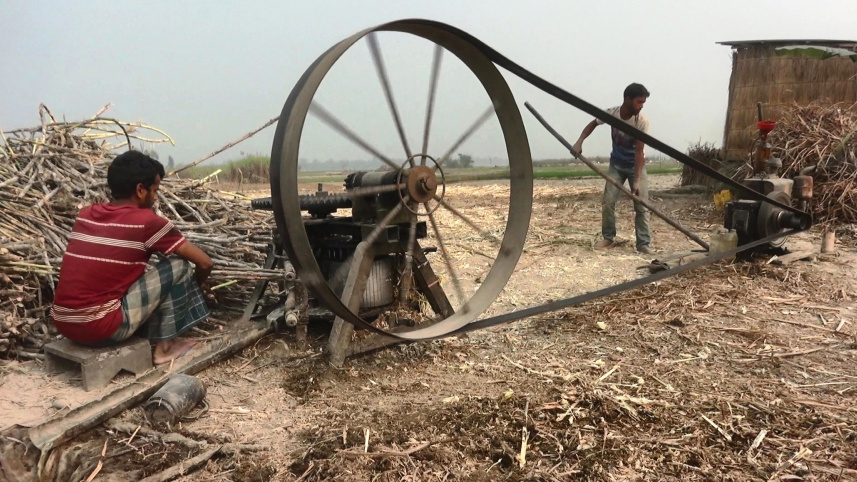
Sugarcane cultivation, once a key cash crop in the Rangpur region, has shrunk by more than 90 percent over the past five years following the closure of local sugar mills.
Data from the Department of Agricultural Extension show that sugarcane was cultivated on 36,500 hectares of land in the region in 2020. By 2025, the figure had fallen sharply to just 890 hectares.

At present, sugarcane cultivation has almost disappeared from plain lands and is limited to small pockets in shoal areas, DAE officials said.
With mills shut down, farmers are now forced to produce only molasses from sugarcane, making it difficult to recover cultivation costs. As a result, many have shifted to other crops.
Farmers said an average of 40-45 tonnes of sugarcane is produced per hectare, yielding around 80-90 kilogrammes of molasses from each tonne of sugarcane juice.
The cost of cultivating sugarcane and processing molasses per hectare is around Tk 2.5 lakh. Even at current market prices, molasses sales are no longer sufficient to cover production costs.
“Even four to five years ago, I used to cultivate sugarcane on seven to eight bighas of land. This year, I planted sugarcane on only two bighas,” said Nazir Uddin, 56, a farmer from Char Kharua in Lalmonirhat Sadar upazila.
He said across the entire char, only six farmers, including himself, are still growing sugarcane on a total of 13 bighas of land, whereas five to six years ago, nearly 250 farmers cultivated the crop there.
On average, 400-450kg of molasses can be produced from sugarcane grown on one bigha of land at a cost of Tk 30,000–32,000, Nazir said. “We can hardly recover the cost of production, let alone make any profit.”
“In the shoals, since it is possible to cultivate two or three crops a year, growing a one-year crop like sugarcane is no longer viable,” said farmer Sahidul Islam, 50.
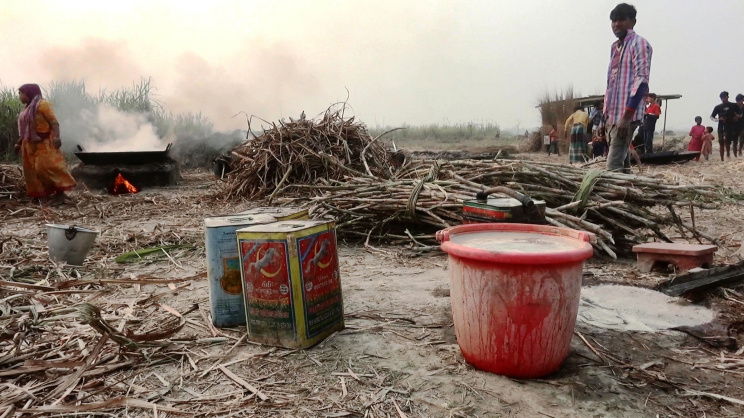
Farmer Jahir Uddin, 65, from Sardob in Kurigram Sadar upazila, said farmers earlier received incentives from local sugar mills and sold sugarcane directly to the mills.
“Now, with the mills closed and uncertainty over molasses prices, it has become difficult to sustain sugarcane cultivation,” he said.
Molasses trader Pratap Chandra Pal of Rangpur city’s municipal market said he buys molasses wholesale from farmers at Tk 110–120 per kg and sells it at Tk 140–150 per kg retail.
“There is high demand for chemical-free molasses, but due to low production, it is not always possible to meet the demand,” he said.
Sirajul Islam, additional director of the DAE in the Rangpur region, said while some sugarcane cultivation continues in shoal areas, it has almost ceased on plain lands.
“Sugarcane is a one-year crop, whereas farmers can now grow up to three crops a year. There is hardly any possibility of reviving sugarcane cultivation in the region unless the sugar mills are reopened,” he said.
 For all latest news, follow The Daily Star's Google News channel.
Comments