


Our lady with the lamp
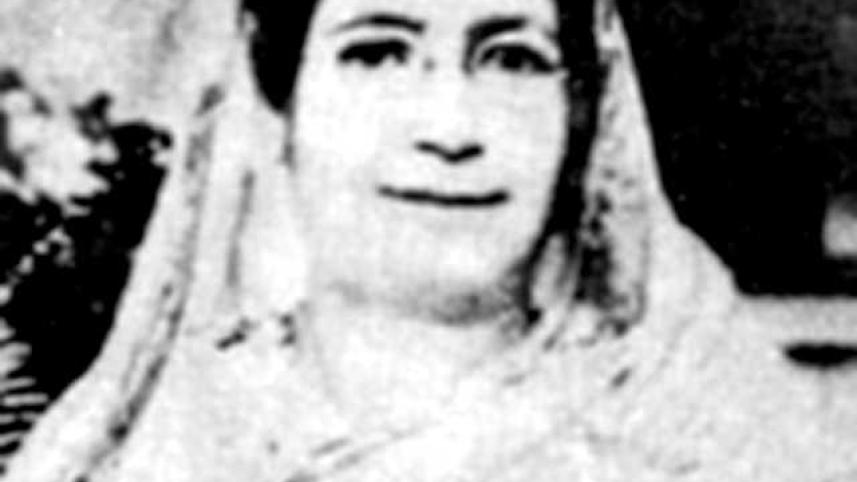
Roquia Sakhawat Hosen, commonly known as Begum Rokeya, is the vanguard of women's rights movement in the sub continent. Her guidance and leadership showed the path of freedom and enlightenment for millions of women of this part of the world. We remember this great social reformer on her 81st death anniversary (December 9, 1932).
-Rokeya was born in 1880 in the village of Pairabondh, Mithapukur, Rangpur. Her father, Jahiruddin Muhammad Abu Ali Haidar Saber, was a highly educated zamindar.

-Her elder sister Karimunnesa and eldest brother Ibrahim were important influences in her life. They both encouraged her to learn Bengali though it was not preferred in many upper class Muslim families.
-She married in 1896. Her Urdu speaking husband Khan Bahadur Sakhawat Hussain encouraged her to further her studies and taught her Bengali and English. He also encouraged her to practice literature in both languages.
-Rokeya established a girls's school primarily for the education of Muslim women, naming it Sakhawat Memorial Girls' High School in Bihar. Later the school was moved to Calcutta. It later became quite popular in the district and is now run by the state government of West Bengal.
-She also founded the Anjuman e Khawateen e Islam (Islamic Women's Association), which was active in holding debates and conferences regarding the status of women and education.
-She used traditional Islamic teaching to encourage women's education. She said, “The opponents of the female education say that women will be unruly...fie! They call themselves Muslims and yet go against the basic tenet of Islam which gives equal right to education. If, once educated, men are not led astray, why should women?”

-Rokeya embarked on her literary journey in 1902 with a Bengali essay entitled Pipasa (Thirst). National Poet Kazi Nazrul Islam was an admirer of her works and published many of her writings in his literary journal Dhumketu.
-Rokeya's epic short story Sultana's Dream is highly valued for its literary aspects and is considered the first feminist science fiction in the sub continent.
-Her other literary works such as Oborodhbashini (The Woman in Captivity), Motichur, Poddorag (Essence of the Lotus) and many essays played a vital role in the reformation of women's status in the society.
-She remained busy with the school, the association, and her writings in her life. She died of heart related problems on December 9, 1932. In Bangladesh, December 9 is ‘Rokeya Dibosh’ celebrating the life of this visionary.
 For all latest news, follow The Daily Star's Google News channel.
Comments