


Migrant welfare must be a priority
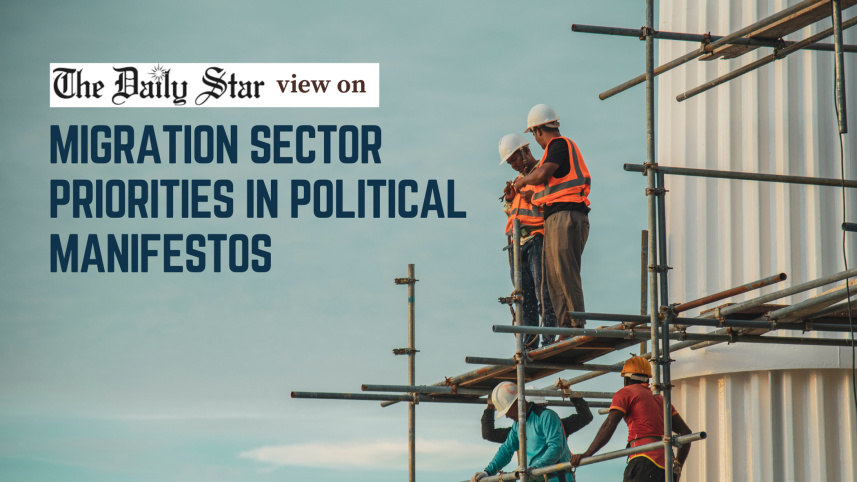
As political parties prepare to unveil their election manifestos, with the curtain on official campaigning set to rise today, experts have been sharing their thoughts on the priorities that should be reflected in political commitments. Migration experts have also joined the conversation, stressing the inclusion of clear and credible commitments to reform Bangladesh’s labour migration sector. This is only logical. Labour migration remains a major economic driver—with remittance inflows hitting a record $32.8 billion in 2025—yet the sector remains poorly governed. While talking to this daily, experts have laid out a case for why and where serious policy action is needed.
The numbers alone justify the urgency. Despite bringing in hefty remittances and shoring up forex reserves, the sector receives just 0.08 percent of the national budget, as one expert revealed. This mismatch exposes a long-standing policy contradiction where the state celebrates migrant workers as its economic lifelines but casts their welfare and protection as peripheral concerns. Calls for allocating at least one percent of the budget to migration, alongside the formulation of a 10-year national migration vision, therefore deserve serious consideration. Without a long-term framework, migration governance will continue to be reactive, fragmented, and ineffective.

Equally important is the emphasis on what another expert called “quality migration.” Sending unskilled workers through opaque recruitment systems not only limits remittance potential but also exposes the workers to abuse, debt, and exploitation. This must be addressed. To ensure quality migration, proposals such as reducing the role of middlemen, promoting digital registration for migrants, embedding skills development from school to university, upgrading Bureau of Manpower Employment and Training to a full directorate, and strengthening support services at embassies and upon return are well justified. Here, we must stress the importance of proper reintegration for returnee migrants. Returnees often find themselves deprived of state support and facing shrinking opportunities. A serious migration policy must see return as an integral phase of the migration cycle and plan accordingly.
Broader labour issues also demand political attention. Frequent calls from labour organisations for fair wages, democratic labour laws, and worker protections suggest that workers, whether at home or abroad, remain undervalued despite their central role in our economy. Any economic growth cannot be sustained without protecting those who produce it. The question is, can the parties move beyond rhetoric and signal seriousness through concrete, time-bound commitments? They do not have to come up with novel ideas; the proposals made by the Labour Reform Commission already provide much of the background on which they can build. What’s needed is strong political will. If parties are serious about inclusive growth and economic resilience, they must place workers, including migrant workers, at the centre of their future visions.
 For all latest news, follow The Daily Star's Google News channel.
Comments