


How AI can revolutionise healthcare in Global South

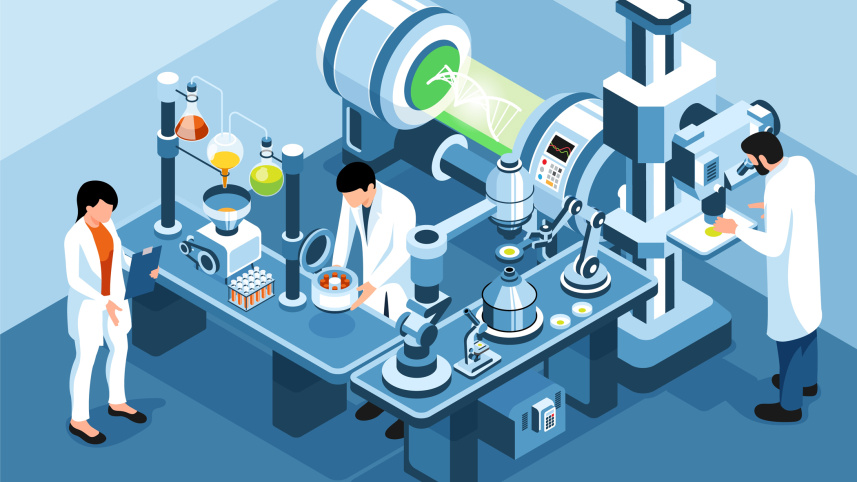
For decades, the global pharmaceutical industry has been impacted by a frustrating trend known as Eroom’s law. While computers become twice as powerful every two years, the cost of developing a new drug has doubled roughly every nine years. In the 1960s, $1 billion yielded 10 new drugs. Today, that same amount cannot produce even one. This trajectory has led to a crisis in developing nations, rendering life-saving innovations financially inaccessible to billions of people. However, artificial intelligence is disrupting this pattern and revolutionising healthcare, specifically in the Global South.
What AI offers in transforming healthcare lies primarily in its ability to accelerate the process and reduce the cost of drug discovery. Currently, it takes an average of 10 years and over $2 billion to bring a drug to market, with a failure rate higher than 90 percent. For a developing economy, these barriers are often insurmountable. AI changes this by streamlining the “pre-clinical stage,” the phase where researchers screen up to a million compounds to identify one or two candidates, which typically accounts for approximately one-third of all development costs. By using models like AlphaFold 3, which can predict the structure of nearly every molecule in a living organism, researchers can reduce months of trial and error to mere hours of computation.

We are already seeing the results of this. Recently, one AI startup identified a new drug target and designed a molecule for human trials in just 18 months, costing $2.7 million, which is a tiny fraction of the usual time and expense. For nations like Bangladesh, which boasts a robust domestic pharmaceutical sector, this represents a massive opportunity to move from generic manufacturing to genuine innovation. If AI can indeed double the productivity of research and development (R&D), the cost of medicine could eventually decrease, allowing overstretched budgets in Africa and Asia to cover a larger part of their populations.
Beyond traditional pills, AI is a pivotal moment for cancer vaccines. In 2025, the world witnessed breakthroughs in mRNA-based personalised vaccines. These personalised treatments leverage AI to predict the most effective molecular markers for stimulating the immune system, which adapt to the unique tumour mutations of each patient. While the current manufacturing process is complex and costly, parallel efforts are underway to develop off-the-shelf vaccines that target common markers across wider populations. For developing nations, these off-the-shelf versions could be the key to managing a growing non-communicable disease burden without the need for the hyper-expensive infrastructure required by personalised medicine.
However, this AI-led future is not guaranteed; it faces a significant infrastructure bottleneck. AI is not a weightless tool; it requires AI factories, which are massive data centres with outstanding energy requirements. The International Energy Agency (IEA) predicts that data centre power consumption is on track to double by the end of 2026. Consumption is reaching levels equivalent to the total electricity use of Japan. Many developing nations, already struggling with grid constraints and high public debt, may find it difficult to power the very technology intended to save them.
Furthermore, the Sino-American tech war poses a risk to global health equity. The backbone of the AI era is the high-powered semiconductor, like Nvidia’s Blackwell chip. Yet, the US is increasingly impeding the flow of Western technology to adversaries like China to maintain an upper hand in AI tech. If these restrictions expand, developing nations might find themselves caught in the crossfire, unable to access the hardware needed to run the latest medical models.
Still, there is a silver lining. Emerging markets are expected to see faster growth in the coming years, even as the rich world faces a “lost decade” of sluggish productivity. Some nations are already innovating around constraints; Chinese engineers, for example, have become adept at doing more with less due to export controls. Similarly, India is positioning itself as a hub for “global capability centres,” taking over high-end legal and HR work for multinationals. There is no reason why similar centres could not be established for AI-driven diagnostic services or drug screening.
To truly benefit, governments in the developing world must move beyond being mere consumers of Western tech. They should prioritise selective openness, wooing high-achieving talent, and investing in the green energy infrastructure, such as grid-scale battery storage, needed to power tomorrow’s data centres.
The year 2026 is expected to be a crunch year, during which the disparity between AI hype and reality will be put to the test. If we can navigate the geopolitical and infrastructural limitations, AI could be the tool that allows the Global South to bypass the high-cost barriers of the last century’s medicine. It is time to ensure that the “AI factory” produces not just wealth for Silicon Valley, but health for the world.
Benzir Ahammed Shawon is a graduate student in applied mathematics and computational science at North South University. He can be reached at write.benzir@gmail.com.
Views expressed in this article are the author's own.
Follow The Daily Star Opinion on Facebook for the latest opinions, commentaries, and analyses by experts and professionals. To contribute your article or letter to The Daily Star Opinion, see our guidelines for submission.
 For all latest news, follow The Daily Star's Google News channel.
Comments