


Govt salary hike questionable amid spending concerns
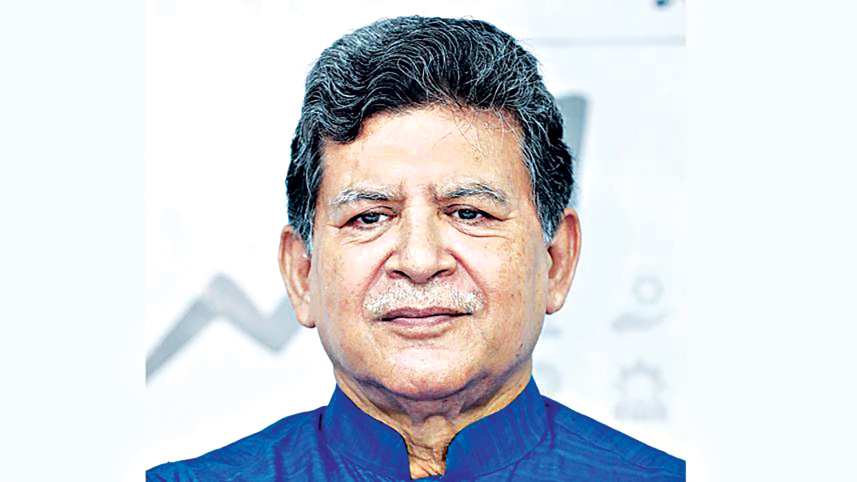
Hossain Zillur Rahman, a former adviser to the caretaker government, yesterday questioned the sharp increase in government employees’ salaries at a time when public spending efficiency remains questionable.
“A huge salary increase was announced for government officials. But where is the explanation of how much the implementation rate of the Annual Development Programme [ADP] has improved because of it?” he said at a policy dialogue titled “Economic Governance and Corruption Prevention,” organised by the Centre for Governance Studies (CGS) at the CIRDAP auditorium in Dhaka.

Zillur, also the executive chairman of the Power and Participation Research Centre and the president of CGS, said, “A comprehensive review is needed to determine where and how the effectiveness of government spending has actually improved. There is little discussion about wasteful government projects and administrative costs, and effective accountability for these expenses is largely absent.”
He said although salaries of government officials have increased significantly, there is no clear assessment of whether this has led to better performance, improved service delivery, or higher efficiency in development projects.
Pointing to the government flats for secretaries on the capital’s Minto Road, he said they are “more luxurious than many five-star hotels”.
“Bangladesh cannot move forward without proper management of public expenditure…. What is more concerning is the absence of strong and effective accountability mechanisms to monitor such spending.
“Several serious inefficiencies have taken root in the state system. One is the funding crisis. Another is the lack of transparency in decision-making. There are also projects driven by the ego of those in power.”
Referring to the recent appointment of three government officials to the Biman Bangladesh Airlines board, Zillur said, “What is the explanation for this? If there were valid reasons for the appointments, what is the problem with making them public? The lack of transparency in decision-making persists in this government as well. It existed before, and we must ensure it does not continue in the future.”
He alleged that mega projects lack proper prioritisation and transparency.
“Corruption is a major problem, but no research has so far been able to prove that corruption has decreased. People no longer want to hear promises; they want to see real work. Various reform initiatives, including in the Anti-Corruption Commission and the Media Commission, have not been effective in practice.”
Expressing doubt over the upcoming election, he said, “The government is talking about it being the best election in history, but in reality, there is a growing fear that it could become the worst election in history.”
Although the country is now moving towards the polls, the important decisions the government is taking every day do not fall under routine work, he said, adding, “Their real intentions remain unclear.”
Zillur said the government has spoken extensively about reforms and held many dialogues but has not been able to create a single visible example. “They have even failed to set an example in a basic area like traffic management.”
BNP Vice Chairman Asaduzzaman Ripon said members of parliament should have adequate benefits in principle. “However, being an MP should be a full-time responsibility, not a part-time job.
“Many people become MPs primarily to increase business or professional advantages. They often use their position to easily influence secretariat officials, ministers, or bureaucrats.”
Moderated by CGS Executive Director Parvez Karim Abbasi, the event featured speakers including Dhaka University (Administration) Pro-Vice-Chancellor Prof Syma Haque Bidisha; M Abu Yusuf, executive director of RAPID (Research and Policy Integration for Development); and Mahmudul Islam Chowdhury, former mayor of Chittagong City Corporation, among others.
 For all latest news, follow The Daily Star's Google News channel.
Comments