


EC bias allegations risk eroding public trust
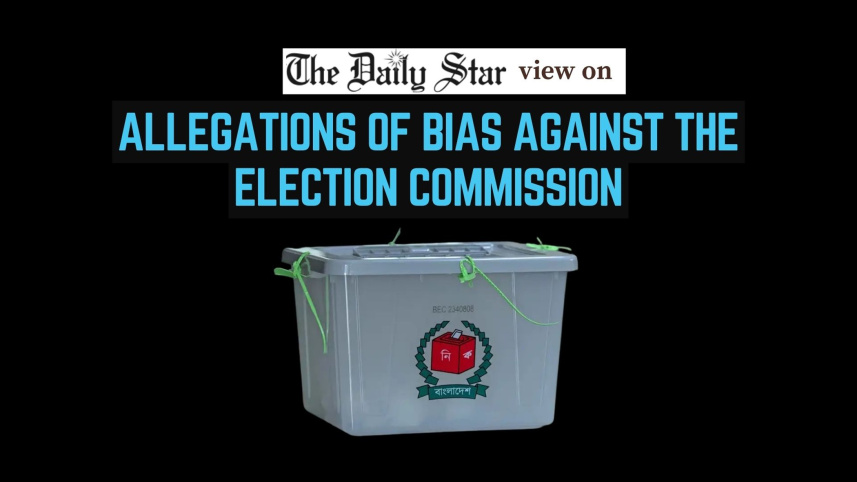
The allegations of administrative bias and the absence of a level playing field, as raised by three major political parties, are deeply concerning as these cast a shadow over the neutrality of the Election Commission. Such claims risk eroding public confidence in the electoral process as a whole and may discourage voters from turning up at polling centres on February 12. At the same time, it must be acknowledged that these allegations could also be part of the strategies of competing parties, aimed at pre-empting what they fear could be a lenient approach by the commission towards their opponents.
These allegations first surfaced on social media, where videos showed postal ballots being handled in bulk by groups of people in some Middle Eastern countries, despite the ballots being intended for delivery to individual voters. The postal ballots themselves have also sparked controversy for displaying only electoral symbols, without the names of candidates or parties. The Election Commission’s decision to take these complaints into cognisance and seek resolution through dialogue with all political parties is a welcome step, though it should have been taken earlier.

Other allegations are even more troubling. Reports of campaign workers collecting voters’ personal information, including mobile financial transaction identifiers such as bKash numbers, raise serious concerns. In addition, the conduct of some superintendents of police (SPs) and deputy commissioners (DCs) at the field level has been questioned, with accusations of bias towards certain candidates or parties. Notably, all three major parties—BNP, Jamaat-e-Islami, and NCP—have been trading accusations and counter-accusations, in some cases against the same election officials. Some observers view this as a positive sign, suggesting that when every party claims to be aggrieved, none is receiving undue favour from the officiating “umpire.” Nevertheless, the EC and its functionaries are expected to uphold the highest standards of neutrality and fairness.
It must be said that the recent appointment of a senior election official to the board of directors of Biman Bangladesh Airlines—interpreted by critics as the government rewarding loyalists—did not help EC’s image or credibility. It is therefore imperative that the EC doubles down on enforcing the electoral code of conduct strictly and evenly. There have been numerous reports of violations by political parties and individual candidates even before the start of the official campaign period, including the display of posters and festoons, the use of digital boards to convey thinly veiled campaign messages, the holding of rallies and public meetings under the guise of socio-cultural events, the exploitation of religious gatherings to promote individual candidates by seeking prayers and blessings, etc. Many of these actions constitute clear breaches of the commission’s guidelines. However, its failure to address them promptly has been notable.
According to a report by Prothom Alo, 73 incidents across 27 districts have resulted in show-cause notices, cautions, and in some cases, financial penalties for violations of the code of conduct. It is incumbent upon the political parties to cooperate fully with the EC and refrain from both rule-breaking and unfounded allegations of bias. The EC, too, must act decisively and transparently to demonstrate that it remains a credible guarantor of electoral fairness.
 For all latest news, follow The Daily Star's Google News channel.
Comments