


Celebrating women who redefine boundaries
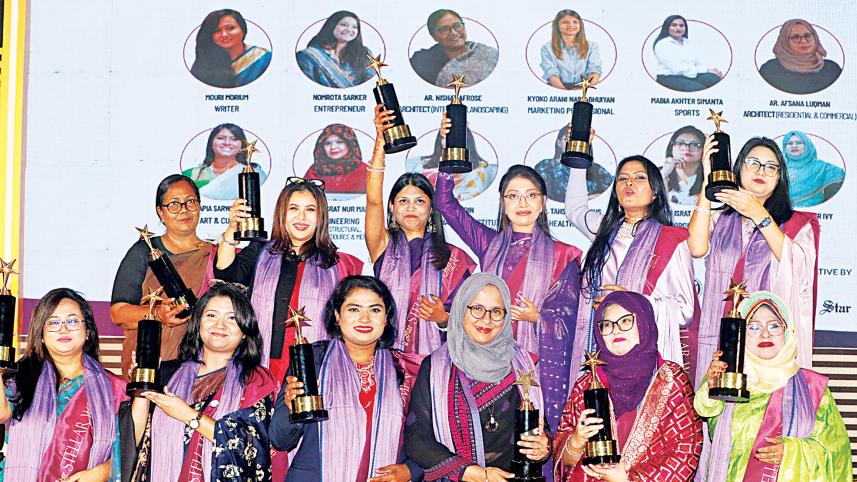
Twelve women from diverse backgrounds were honoured yesterday for their exceptional contributions to nation-building at the bti-The Daily Star Stellar Women 2025 Gala.
Organised by Building Technology and Ideas Ltd (bti) in association with The Daily Star, the second edition of the Stellar Women Award recognised women for their achievements across professional and social sectors at the banquet hall of Kurmitola Golf Club in Dhaka Cantonment.

The awardees -- selected in 12 categories, ranging from entrepreneurship and engineering to health, environment and agriculture -- are Nomrota Sarkar (entrepreneurship); Mouri Morium (writing); Kyoko Arani (marketing); Nishat Afrose (architecture -- interior and landscaping); Mabia Akter (sports); Afsana Louqman (architecture -- residential and commercial); Papia Sarwar Dithi (art and culture); Nusrat Nur Maisha (engineering); Shaila Abedin (finance and banking); Dr Tahsin Ferdous (health); Shah Israt Azmery (environment); and Nasrin Akter Ivy (agriculture).
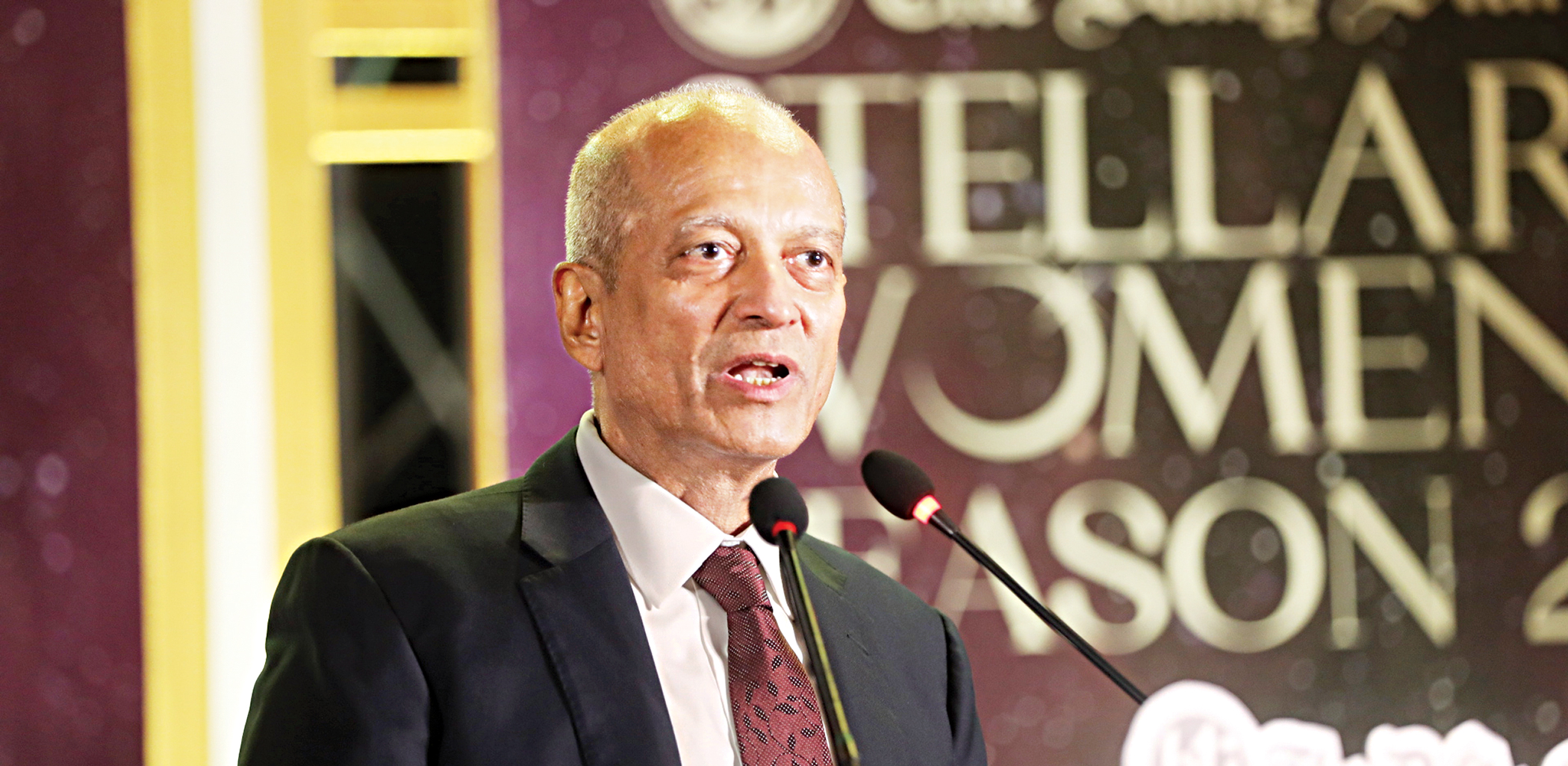
Speaking at the gala, bti Chairman Arshi Haider said the award initiative reflected the organisation’s commitment to promoting women’s leadership and empowerment. “In two years, the Stellar Women programme has received nationwide recognition.
“Through this, if we can make the smallest contribution towards bringing a change, I think it would be one of bti’s greatest achievements…. The woman is also the unsung hero of every home.
“…. A few years ago, we decided to have this programme, in partnership with the leading English newspaper of the country, the torchbearer of transparency and fearless journalism. Now, fearless journalism has a big price tag, a heavy price -- we all know what happened on the 18th and 19th of December…. I extend my sympathy to every member of The Daily Star team for the trauma that you have suffered.”
“Through this [award], if we can make the smallest contribution in bringing a change, I think it would be one of our bti’s greatest achievements…. The woman is also the unsung hero of every home.”
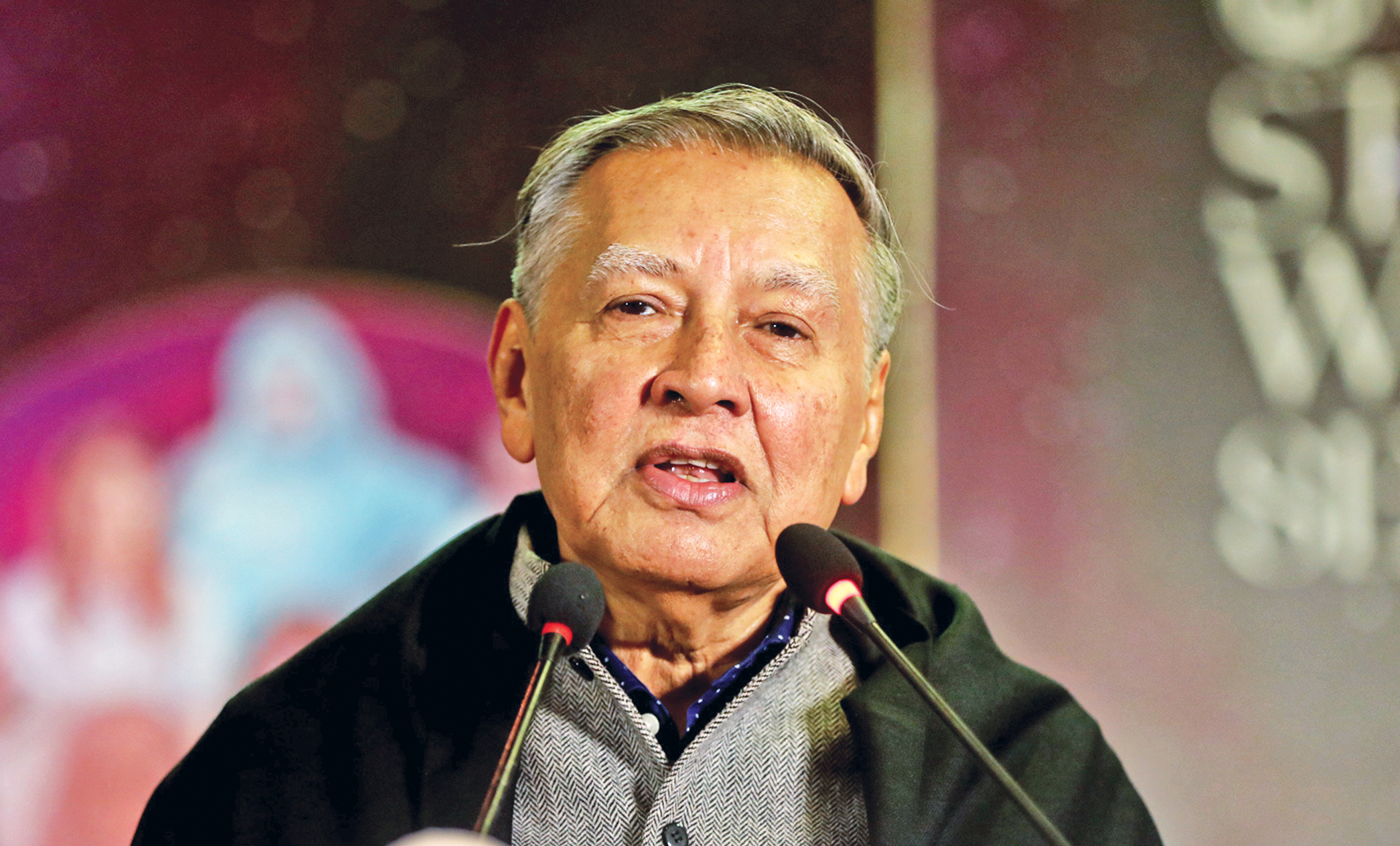
The Daily Star Editor and Publisher Mahfuz Anam said, “The Stellar Women Awards is one of the most crucial awards for women’s emancipation, and I, as a representative of The Daily Star, am very proud to be part of it.
“The Daily Star partners with many organisations and presents several awards each year, but the Stellar Women Award is unique. It recognises professional women for their skills, intelligence, academic achievements and personal courage.”
He added, “In our country, when a woman breaks through various obstacles, she is not only talented -- I would say she is super-talented -- because she has to constantly prove her worth. She must break the glass ceiling that prevents her from becoming what she truly is.
“The Stellar Women Award helps women gain recognition, be socially honoured, and, most importantly, build the self-confidence that is absolutely essential. Equally important, it sets an example for others.”
Pointing out that women make up half the country’s population, he highlighted women’s contributions across society and how they have excelled in microcredit, social enterprise, business and other professional fields.
“The Stellar Women Award is unique. It recognises professional women for their skills, intelligence, academic achievements, and personal courage.”
He also spoke about how the women in his newspaper are exceptional and resilient -- succeeding in a male-dominated environment.
Anam then thanked bti for joining hands in this venture.
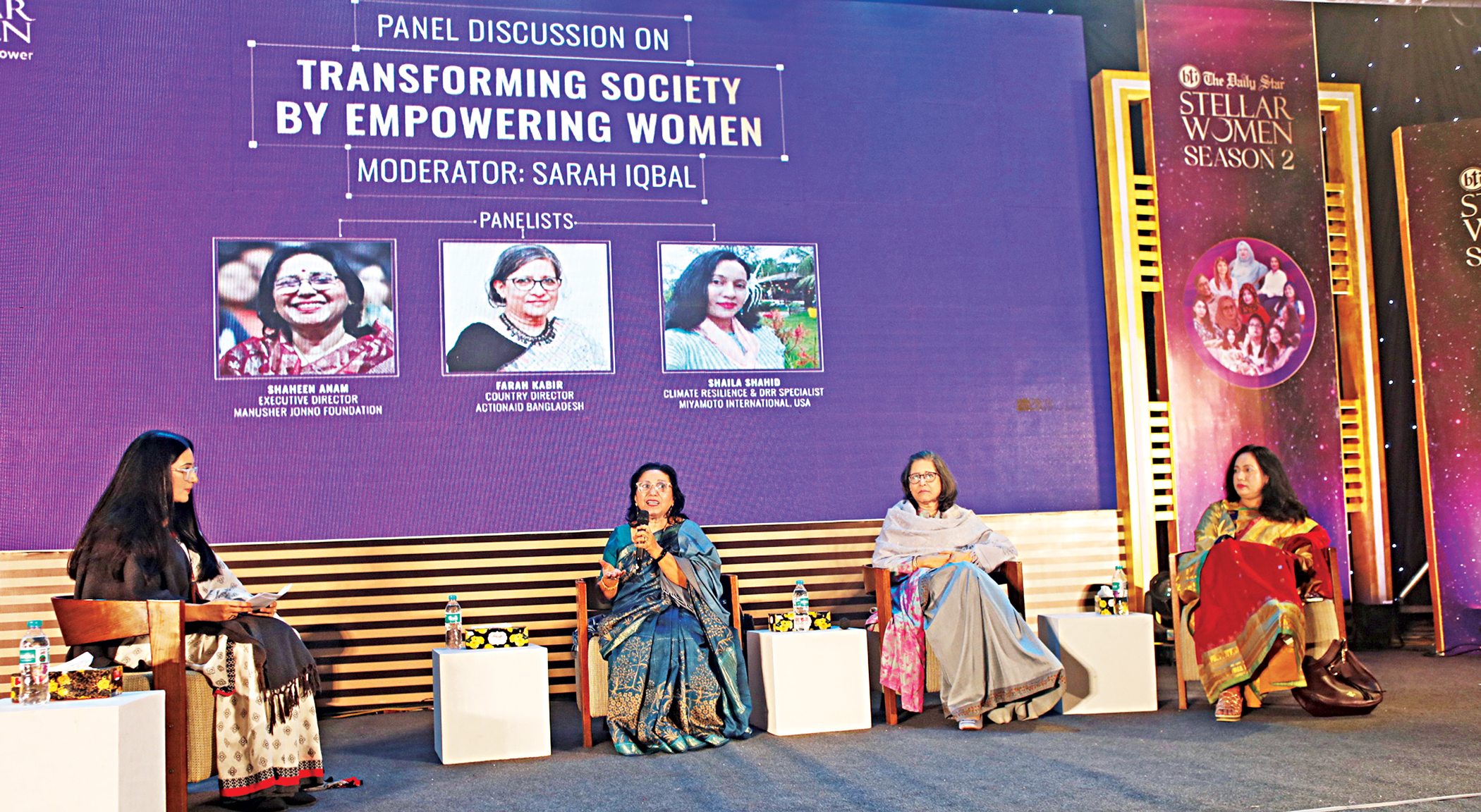
The event also featured a panel discussion titled “Transforming Society by Empowering Women”, joined by Shaheen Anam, executive director of Manusher Jonno Foundation; Farah Kabir, country director of ActionAid Bangladesh; and environmental lawyer Shaila Shahid, a WIN DRR award winner, as panellists.
Shaheen Anam said, “Women’s economic empowerment does not happen in a vacuum…. Nearly 50 percent of our girls are married before the age of 18, which cuts short education and employment opportunities.”
She also stressed the need for policy support such as childcare, safe hostels and security for working women, adding that unpaid care work must also be recognised.
 For all latest news, follow The Daily Star's Google News channel.
 “Empowerment starts from home…. In an environment where even demanding equal rights comes under attack, breaking stereotypes about what women can and cannot do has become extremely challenging.”
She further said women need support at home and better organisation, adding, “There is not a single woman who is not working, whether through paid or unpaid work”.
Referring to government data, Shaheen Anam said high levels of domestic violence show that women are still seen as less equal at home. “The only way to counter this is by showing evidence of what women do and what they are capable of…. Every woman has the potential to become a Stellar Woman if given the opportunity.
“Men should see women as partners, not adversaries, and women should see men as allies, not enemies. Both must work together for real change to happen.”
Farah Kabir said women’s empowerment must go beyond symbolism and address deep structural inequalities, stressing that women are not a homogeneous group.
“Empowerment is a process through which people who are denied voice and entitlements acquire the ability to make choices…. Every human being has agency, and that mindset has to change.”
Highlighting the rise in violence against women, she said Bangladesh must “move from impunity to accountability”, noting that justice remains far-fetched due to entrenched systemic failures.
Kabir also criticised the lack of political commitment, pointing out that “less than four percent of election candidates are women”, and questioned whether political actors are “really ready to be inclusive”.
She stressed the need to engage men and boys, reform education systems and adopt an intersectional, life-cycle-based approach to empowerment. “You cannot have selective justice. It has to be universal human rights.”
Shaila Shahid said women across Bangladesh are emerging as “invisible faces and forces of resilience” through grassroots leadership in climate and disaster management.
Sharing experiences from the Sundarbans and the Satkhira region, she said, “Women are playing key roles in water management groups, conservation committees and disaster preparedness, supported by government agencies and local communities…. Real transformation happens when women are organised and when we put our trust in women.”
She noted that women’s leadership is shifting power relations and influencing policy.
Calling on young women, she said, “You do not need permission to begin.”
Women and Children’s Affairs Adviser Sharmeen S Murshid was invited as the chief guest for the programme but could not attend due to a sudden illness.
The gala concluded with the presentation of crests, cheques and scarves to the awardees.


Comments