


‘First a trafficking victim, then a survivor, then a caregiver’
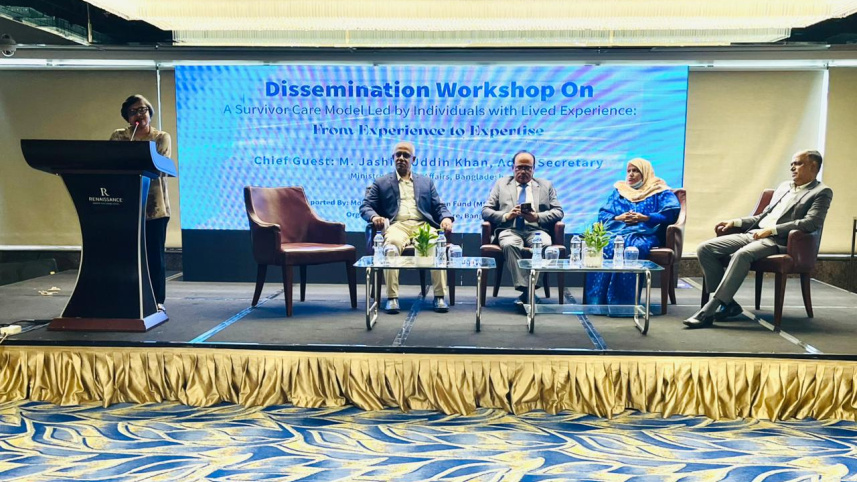
Ferdousi Akter, a survivor of human trafficking, recalls how it had taken her years to move from being rescued to rebuilding her life and supporting others with similar experiences.
She was recounting her experiences today at a workshop, titled “A Survivor Care Model Led by Individuals with Lived Experience: From Experience to Expertise,” organised by Justice and Care at a hotel in Dhaka.

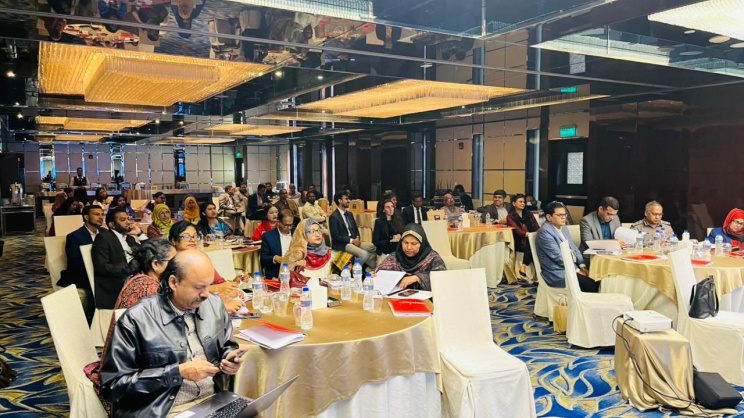
The event brought together practitioners, officials and development partners to discuss how lived experience can be professionalised to strengthen survivor care.
In her speech, Ferdousi traced what she described as a long and difficult journey: “First a victim, then a survivor, then a champion survivor, then taking responsibility as a caregiver.”
She said she had endured “countless shocks” along the way, but added that those same experiences now help her connect with survivors in ways outsiders often cannot.
According to Ferdousi, survivor-led care begins at the earliest stages and remains close to individuals as they attempt to restart their lives. The support spans rescue to repatriation, peer mentoring, family counselling, physical follow-up, rehabilitation assistance and development-oriented training.
“When a survivor plans to start life anew, we are not only caregivers. We become companions on the journey,” she said, adding that families often accept support workers more readily when they recognise shared experience and trust.
Her focus, she said, is on safety and dignity, while tailoring support to survivors’ individual situations, mental states and hopes. Many survivors, she added, struggle to share sensitive issues with family members or supervisors but are able to open up to peers who have lived through similar harm.
With steady support, Ferdousi said, survivors gradually recover, regain hope and confidence, and begin planning for the future.
The workshop concept note stated that aftercare for survivors of human trafficking has traditionally been delivered by professional social workers and service providers. However, growing evidence shows that models strengthened by people with lived experience improve trust, engagement, continuity of care and long-term reintegration outcomes.
It added that, in the absence of scalable best-practice models, rescued survivors have often faced dropouts, re-trafficking and displacement.
Under the model discussed, trained peer facilitators with lived experience work as skilled professionals delivering structured, trauma-informed aftercare, including counselling, peer mentoring, psychosocial support and life-skills development. The programme also offers leadership training, vocational skills and income-generating activities, alongside family counselling, and coordinates rescue, repatriation, rehabilitation and health services through local providers. It also introduced a Digital National Referral Mechanism in partnership with the Ministry of Home Affairs.
Chief guest M Jashim Uddin Khan, additional secretary of the home ministry, said the model matters because people with lived experience often understand problems in ways others cannot. While systems can produce many “experts”, he said, those who have lived through exploitation know precisely where the pain points lie.
Special guest Tahera Jabeen, social development adviser at the British High Commission, said the dialogue offered space to reflect on how the model could inform future policy and programme design. Citing global figures on modern slavery, she said survivor leadership makes services more practical, respectful and grounded in real needs.
Mohammed Tariqul Islam, country director of Justice and Care, delivered the closing remarks.
 For all latest news, follow The Daily Star's Google News channel.
Comments