
Feb 12 polls: US does not take sides: Says its ambassador
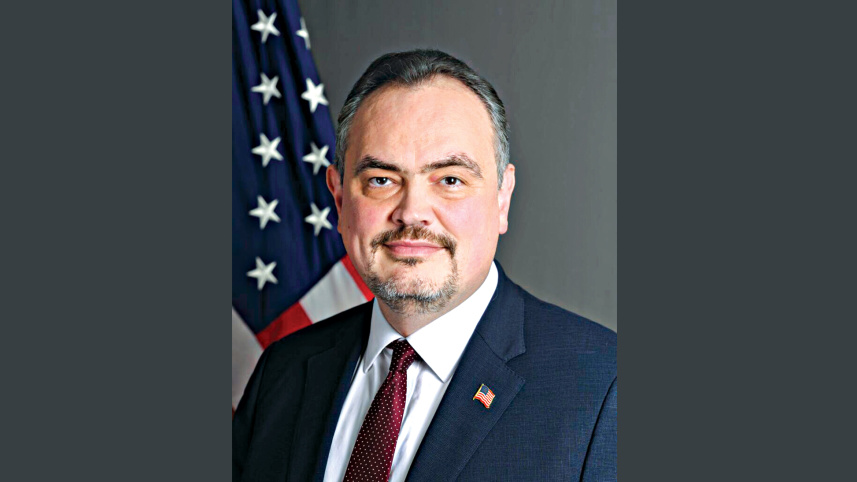
The United States does not take sides in Bangladesh’s elections, and the outcome is solely for the Bangladeshi people to decide, newly appointed US Ambassador Brent Christensen said yesterday.
“We are prepared to work with any government that the Bangladeshi people elect to represent them going forward,” Christensen said while speaking to reporters following a discussion with Chief Election Commissioner AMM Nasir Uddin at the Election Commission.
 For all latest news, follow The Daily Star's Google News channel.
 A three-member US delegation met the CEC and EC Senior Secretary Akhtar Ahmed at its Agargaon headquarters. After the meeting, the US diplomat said he had a “very good” discussion with the CEC about the upcoming February 12 polls.
“He [CEC] explained to me a great deal about all the policies, preparations, and procedures that the interim government has been undertaking in preparation for the February 12 elections.”
Christensen said he had expressed optimism about the polls during his confirmation hearing before the US Senate. “I am very excited about the upcoming elections. I am very much looking forward to them and to seeing the outcome of those elections.”
Referring to an earlier meeting with the chief adviser, the US envoy said he shared the hope that election day would be peaceful and participatory.
“I hope it is a festive election day, that the Bangladeshi people are able to go and express themselves, and that you have a very successful election.”
Christensen added that he felt reassured by the information shared by the CEC and said he was looking forward to the results on February 12.
After the meeting, EC Secretary Akhtar said the US delegation inquired about the code of conduct and how complaints are being handled.
“We informed them that we have a complaint management cell. At the constituency level, there are electoral inquiry committees, adjudication committees, and magistrates who coordinate these matters,” he said.
Asked whether the delegation raised any observations about violations of the code of conduct, Akhtar replied, “No, they did not. They mainly wanted to know how we manage such issues.”
He added that the EC receives information from electoral inquiry and identification committees, returning officers, and other sources, and takes necessary measures. “We try to resolve these matters promptly.”
Regarding the election-time security, Akhtar said the US also sought details of the EC’s arrangements. “We informed them that about 9,50,000 security personnel will be deployed at different levels.”
“... They were particularly curious about postal ballots -- how they will be managed and counted, where they will be sent, how many types of postal ballots are there, and the timeframe for counting alongside referendum ballots. We explained these matters to them,” he said.
The EC secretary added that samples of postal ballots were shown to the US delegation. “They said it is a complex and difficult process, and they wished us good luck.”
Akhtar also confirmed that the US would not send formal election observers. However, observers from their mission offices in Dhaka, Sylhet, Chattogram, and Khulna will monitor the voting.
Asked whether government officials can campaign for or against the referendum, and in reference to a Bangladesh Bank circular reportedly urging votes in favour of “yes”, the EC secretary said, “The issue has been brought before the court. As it is sub judice, I believe no government official has the jurisdiction to speak on it.”
Comments