


Gluten intolerance or modern stress? Understanding your digestive system


Gluten did not always live in fear. Once upon a time, it was a respected member of society. Not celebrated, not demonised, just quietly essential.
It existed in fields, grew in soil tended by people who actually touched the ground with their hands, not through supermarket loyalty cards. In its early years, gluten lived a slow life. Wheat was grown locally, harvested seasonally, milled crudely, and turned into bread with patience. Dough was kneaded and left to ferment because there was simply nothing else to do. No one was timing it. No one was rushing it. Gluten was given time to relax, soften, and behave itself.

The people who ate it were also different. They walked everywhere. They worked physically demanding jobs. They ate when they were hungry and stopped when the food ran out. News alerts and blue light did not permanently activate their nervous systems. Their guts were busy, diverse ecosystems, not fragile glass ornaments. Gluten thrived in this environment. It was digested without drama. It passed through bodies unnoticed, which is the highest compliment digestion can offer.
Then civilisation progressed. Farming changed first. Industrial agriculture arrived with promises of efficiency and abundance. Wheat fields expanded. Yield became king. Uniformity became the goal. Wheat was selectively bred to grow faster, taller, and more predictably. This did not turn wheat into a monster, but it did make it different. Gluten became stronger, better at holding bread together, more cooperative with machines and mass production. The genetic alterations slowly commenced.
At the same time, the soil changed. Fields were farmed repeatedly without rest. Microbial diversity declined. Crops survived, but they were no longer part of a balanced ecosystem.
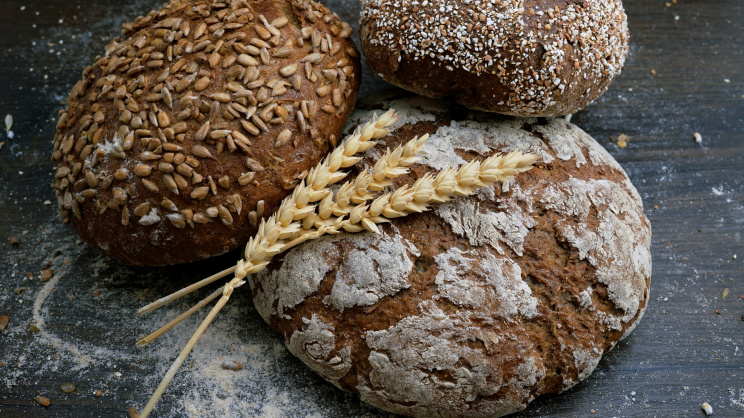
Gluten noticed the difference but kept doing its job. There was no litmus test in place for the environmental impacts, yet. Then, processing changed even more. Bread, once fermented slowly because time was available, was now rushed because time was money. Long fermentation was replaced by speed. Dough that once rested overnight was now expected to shape up in hours. Gluten was not given time to partially break down. It was pushed, stretched, baked, and shipped before it could catch its breath.
Still, gluten endured. Then people changed. Humans moved to cities. They sat down. A lot. They ate quickly. Often distracted and usually stressed. Meals became something to squeeze in between obligations. Chewing became optional. Coffee replaced breakfast. Lunch happened at desks. Dinner happened in front of screens. The gut, once robust, became overwhelmed. Microbial diversity shrank. Antibiotics wiped out entire populations of helpful bacteria. Fibre intake dropped. Stress hormones rose. Sleep declined. The digestive system, once a confident professional, became an exhausted intern.
Gluten walked into this environment and immediately became suspicious. People noticed bloating. Discomfort. Gas. Indigestion. They did not notice that their bodies were inflamed, dehydrated, sedentary, and surviving on adrenaline. They noticed bread.
Gluten, once invisible, was now under surveillance. The stories began to circulate. Gluten is different now. Gluten is thicker. Gluten is harder to digest. Gluten has evolved with malicious intent. Gluten, apparently, is plotting something. The irony is that gluten did evolve, but so did humans. Unfortunately, only one of them gets blamed.
Consider the people who consumed gluten before. They ate bread as part of meals rich in vegetables, legumes, and fats. They moved constantly. Their digestion was supported by lifestyle, not supplements. Bread was not eaten alone. It was part of a rhythm.
Now, consider the modern consumer. Gluten arrives wrapped in ultra-processed foods. It contains emulsifiers, preservatives, sugars, and stabilisers. It is eaten in cars, on trains, between meetings, and under stress. It is consumed by bodies already struggling to digest anything at all.
Wellness culture steps in confidently. Gluten is declared the villain. Gluten-free becomes a badge of discipline and virtue. Gluten-free products flood the market, many of them nutritionally inferior but morally superior by label alone.
Gluten watches this unfold with quiet disbelief. It remembers the fields. The fermentation. The people who worked hard and slept deeply. It remembers being tolerated effortlessly. It did not ask to be mass-produced. It did not ask to be rushed. It did not ask to be eaten by people running on caffeine, cortisol, and chronic exhaustion. It simply adapted to the system it was placed in.
Now, gluten lives in an age where it is feared more than stress, inactivity, and ultra-processed food combined. It is blamed for digestive distress that is far older and far more complex than a single protein. This is not to dismiss those who genuinely cannot tolerate gluten. Some bodies truly cannot process it and deserve care and clarity, not satire. But for the majority, gluten intolerance is not a story of an evil grain. It is a story of modern life asking ancient food to perform under impossible conditions. Gluten has evolved through the ages, yes. But so have humans, and not always for the better.
 For all latest news, follow The Daily Star's Google News channel.
Comments