


Do you know Alzheimer's?
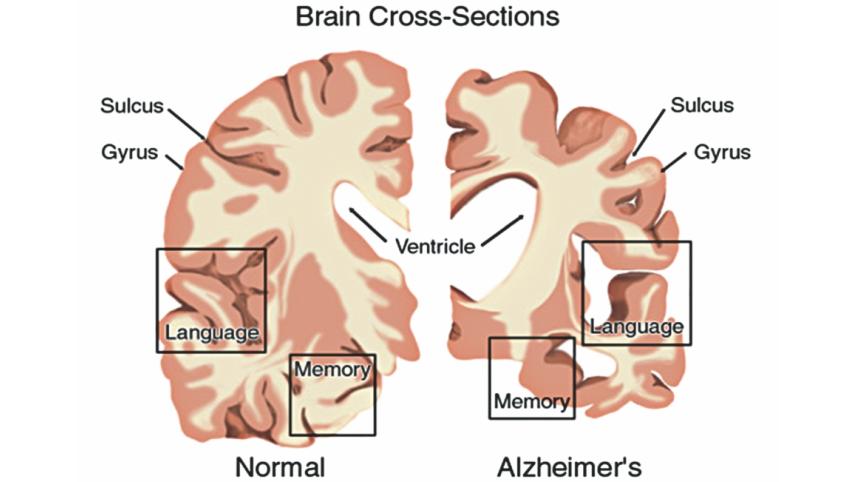
It is normal for people to become a bit forgetful as they age. So how can you differentiate a harmless memory problems from Alzheimer's disease? One in eight people 65 and older (in western country) have this devastating condition form of dementia. In its first stage, Alzheimer's may not be obvious to friends and family. But there are some early warning signs to watch for.
Warning signs

Memory and speech: In early Alzheimer's, long-term memories usually remain intact while short-term memories become sketchy. Affected person may forget conversations you had. S/he may repeat questions that were already answered, s/he cannot recall what s/he has taken at last night meal or to whom s/he has talked this morning. The disease also disrupts speech, so s/he might struggle to remember common words.
Behaviour: In addition to memory loss, Alzheimer's can cause confusion and behaviour changes. One may get lost in familiar places, in the morning s/he use to go to do bazaar but now s/he faces difficulty to find way back to own house. Mood swings and lapses in judgment are also common, sometimes for no reason s/he gets angry or s/he starts smiling for nothing. S/he may have poor hygiene, coming out of toilets s/he forgets washing hands or clothes may be soiled. People who were once stylish may start wearing stained clothes and forget to wash their hair, his/her clothes might be torn or dirty, s/he forgets to comb hair.
Lack of concentration: Alzheimer's affects concentration, so your loved one may not be able to do ordinary tasks like cooking or paying the bills. Trouble balancing the checkbook is often one of the first signs of the disease, s/he may not remember to whom s/he has given the last check or what was the amount. As symptoms worsen, s/he may not recognise familiar people or places, to get confuse to recognise own family members. S/he may get lost easily or use utensils improperly, like combing hair with a fork. Incontinence, balance problems, and loss of language are common in advanced stages.
How is it diagnosed?
There is no simple test for Alzheimer's, so the doctor will rely on you to describe the changes in your affected family member. A mental status test, sometimes called a "mini-mental test," or other screening tests can measure mental skills and short-term memory. Neurological exams and brain scans may be used to rule out other problems, like a stroke or tumour, and they can provide other information about the affected brain.
What happens to the brain?
Alzheimer's causes nerve cell death and tissue loss throughout the brain. As the disease gets worse, brain tissue shrinks and areas that contain cerebrospinal fluid become larger. The damage harms memory, speech, and comprehension.
How does it progress?
Alzheimer's takes a different path in every person. Sometimes the symptoms get worse quickly and lead to severe memory loss and confusion within a few years. For other people the changes are gradual. It could take 20 years for the disease to run its course. Most people live 3 to 9 years after diagnosis.
How is it treated?
There is no cure for Alzheimer's and no way to slow the nerve damage it causes to the brain. But there are medications that appear to help maintain mental skills and slow the disease's effects. If your loved one gets treatment early on, s/he may be able to stay independent and do the daily tasks for a longer period of time.
Many people want to stay in their own home as long as possible. That is not easy if they have trouble getting dressed or using the bathroom on their own. A home health aide can help with personal hygiene and other daily tasks.
People with advance level of Alzheimer's may lose their ability to walk, talk or respond to others. Eventually, the disease can hinder vital functions, like the ability to swallow. This may be the time to switch to hospice care, which provides pain relief and comfort for people with terminal illnesses.
Can you prevent it?
Is there anything you can do to lower your chances of getting this disease? Research in this area is ongoing, but diet and exercise appear to be important. Studies show people who eat a Mediterranean diet rich in vegetables, fish and nuts and get plenty of physical activity are the least likely to get Alzheimer's.
However don't neglect your parents, grandparents who has suffering from these type of problems, talk to a doctor.
The article is compiled by Dr Golam Nabi, Assistant Professor of Medicine at Z H Sikder Women's Medical College & Hospital.
 For all latest news, follow The Daily Star's Google News channel.
Comments