


Verdicts come thru' hurdles

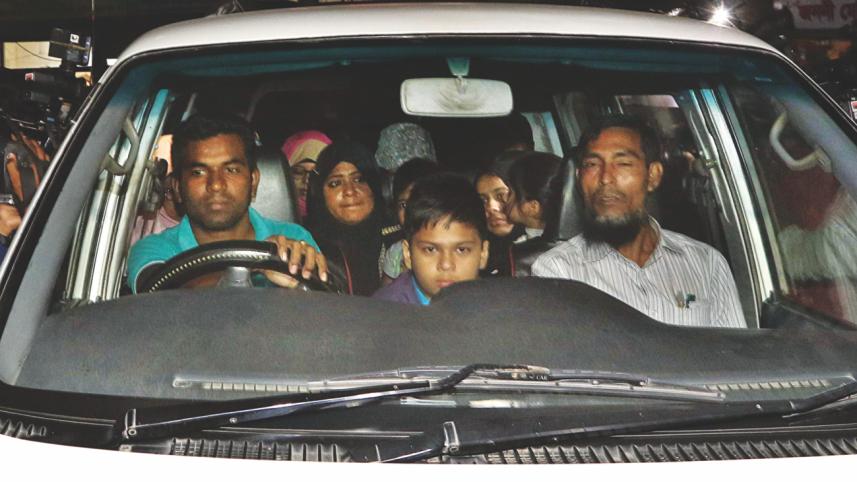
With the Supreme Court's dismissal of Muhammad Kamaruzzaman's review petition yesterday, trial of three war criminals has completed in the last five years amid different hurdles, including violence and a Skype scandal.
The apex court affirmed its previous verdict that upheld the death penalty, rejecting the Jamaat leader's plea for reviewing the sentence for his crimes against humanity committed during the Liberation War in 1971.

Earlier on December 12, 2013, the SC upheld the death penalty of Abdul Quader Mollah for his wartime offences.
He was executed the same day.
The SC on September 17 last year commuted death penalty of Jamaat leader Delawar Hossain Sayedee and sentenced him to imprisonment till death.
The SC verdicts on Kamaruzzaman and Quader Mollah satisfied family members of the war crimes victims, justice seekers and war crimes trial campaigners, state counsels and investigators, but the judgement on Sayedee has frustrated them.
However, the convicts' families, defence counsels and the party they belong to were dissatisfied with the trial and verdicts.
Kamaruzzaman, assistant secretary general of Jamaat and a key organiser of the infamous Al-Badr force that was responsible for abducting, torturing and killing freedom fighters, intellectuals and pro-liberation people in 1971, is now in Dhaka Central Jail.
He was arrested in connection with a criminal case on July 13, 2010 and shown arrested in the war crimes case on August 2.
The prosecution pressed formal charges against him incorporating nine charges of crimes against humanity on January 15, 2012 and the International Crimes Tribunal-1 took the charges into cognisance on January 31.
Kamaruzzaman's case was transferred to the International Crimes Tribunal-2 on April 16, 2012 for expeditious trial.
On June 4, 2012, the tribunal indicted Kamaruzzaman on seven charges of crimes against humanity including murder and torture of unarmed civilians and complicity in other crimes during the nine-month-long war.
On May 9, 2013, the ICT-2 sentenced Kamaruzzaman to death for his crimes against humanity.
He submitted his appeal to the SC challenging the tribunal's judgement on June 6, 2013.
On November 3 last year, the SC upheld the tribunal verdict dismissing his appeal.
On February 19, the prison authorities read out the death warrant to him after the ICT-2 had issued it the same day.
Kamaruzzaman filed the review petition on March 5, praying to the SC to scrap his conviction and acquit him of the charges.
Eminent jurist Shahdeen Malik yesterday told The Daily Star that it was satisfactory that trial of three war criminals had finally concluded and 14 had seen judgements at both the ICTs.
This was certainly a very important achievement, he added.
“However, the trial and appeal process have taken a very long time, which is symbolic of delay in our judicial system,” Shahdeen Malik observed.
 For all latest news, follow The Daily Star's Google News channel.
 He also said it would have been much better if the war crimes trial along with other judicial process would have been much more efficient and justice was delivered faster.
Attorney General Mahbubey Alam told The Daily Star that different countries had put pressure on the government for not holding the trial of war criminals and also tried to stop the proceedings.
Many people, both at home and abroad, had criticised the trial proceedings and expressed their confusion, although international standards were maintained, he said, adding, the Skype scandal was hatched to stop the trial.
He added disposal of three war crimes cases had successfully taken place due to sincerity of the government and its lawyers, judges and witnesses.
Expected judgement in the case against Sayedee could not be achieved due to neglect of investigators, he added.
Law Minister Anisul Huq expressed satisfaction with the SC verdict on Kamaruzzaman, saying justice had been delivered through it.
Following the ICT-2 verdict of death sentence on Sayedee in 2013, activists of Jamaat and its student body Islami Chhatra Shibir resorted to violence across the country, leaving 65 people dead and several hundred injured in just a week.
Amid controversy over the leak of his Skype conversation with an expatriate Bangladeshi legal expert, the then chairman of ICT-1 Justice Md Nizamul Huq resigned on December 11, 1012.
Following Justice Nizamul's resignation, Kamaruzzaman on January 2, 2013 sought retrial of the war crimes case against him.
Bangla daily Amar Desh also published “transcript of the Skype conversation” of Justice Huq with Ahmed Ziauddin, a law expert on international crimes.
According to the attorney general, those incidents were aimed at hampering the trial.
Appeals filed by eight convicted war criminals against their death sentences handed down by the two ICTs are now pending with the Appellate Division.
The appellants are Jamaat Secretary General Ali Ahsan Mohammad Mojaheed, BNP leader Salauddin Quader Chowdhury, Jamaat chief Motiur Rahman Nizami and its leaders Mir Quasem Ali, ATM Azharul Islam and Abdus Subhan, expelled Awami League leader of Brahmanbaria Mobarak Hossain and former state minister of HM Ershad's government Syed Mohammad Qaisar.
The attorney general expressed the hope that the SC would dispose of the eight appeals within one year.
Comments