


Street agitation with a difference
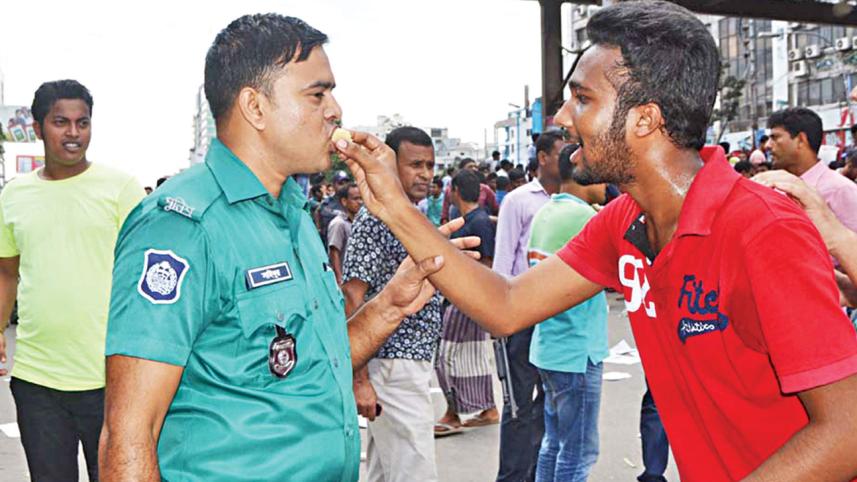
It was indeed a different street agitation, something we have rarely seen.
Unlike any other street agitation, which creates panic and chaos, the protests of the private university students were peaceful.

These students have shown a culture of protest on the streets different from the existing form of street agitation.
Yes, they took over the streets of Dhaka for three days, blocked traffic and caused immense sufferings to the commuters.
But what made it different is that they did not turn violent to realise their demand of scrapping the 7.5 percent VAT imposed on them.
They neither set tyres on fire, nor did they throw a single stone or brickbat to any vehicle. Not a single windshield of a vehicle was smashed either.
They caused indescribable grief to commuters by blocking the key points and stalling the city. But they helped many people, who came across their protest spots pass through. The students were also seen helping vehicles and ambulances pass.
The peaceful nature of the protest drew the people's sympathy. Despite the sufferings, many people expressed support for their cause.
In the eyes of the law, their demonstration was unlawful. It is illegal to block traffic movements to stage demonstration on the streets under the speedy trial act.
Under this law, police were supposed to take actions against them to keep traffic movements smooth. But they did not apply any force.
In a rare gesture of humanity, police members on duty on Sunday in Dhanmondi area even shared their drinking water with the agitating students.
The movement of the students was also different in other ways.
During the agitation, some students even offered flowers to on duty police and took selfies with them to post them on social media pages.
Just one incident took place on Wednesday, the first day of the agitation, when there was a clash between the students and the police in Rampura area. Students of only one university were on the streets that day.
Widespread student protests began Thursday and no untoward incident was reported since then.
In the past, street agitation always meant violence. Protestors resorted to violent means to press home their demands, causing damages to public properties and paralysing economic activities. Sometimes they succeeded, sometimes they failed.
We have the fairly recent violent street agitations as example.
In the first three months of this year, the country had to go through violent street agitation waged by the BNP-led alliance to force the government to call for an early parliamentary election under a non-partisan administration.
More than 90 people were killed in the violence; most of them were burnt alive as arsonists set buses on fire or petrol bombed vehicles. Panic overshadowed daily life.
The unprecedented scale of violence has given the government all justifications to come down heavily on the opposition leaders and activists.
 For all latest news, follow The Daily Star's Google News channel.
 In the end, the agitation failed leaving many dead and wounded in its trail.
Lauding the students' peaceful movement, Prof Emajuddin Ahmed, a pro-BNP intellectual, on Saturday said they have set an example before BNP that there is no need to attack anyone or setting fire to vehicles to wage a movement.
It seems the government could have resolved the crisis earlier. Yet Prime Minister Sheikh Hasina deserves praise for her government's restraint on dealing with the agitation and for withdrawing the VAT, thus reaching a peaceful resolution.
The students who left the streets yesterday with victory have set an example that peaceful street agitations can also bring results.
Barrister Shafayat Ullah, a Supreme Court lawyer and also a teacher of London College of Legal Studies (South) took no time to write a status in his Facebook page: "A successful ending of a united and peaceful movement by our next generation. Very Well done! There is hope in the Future."
Comments