


A lesson in Aam Aadmi
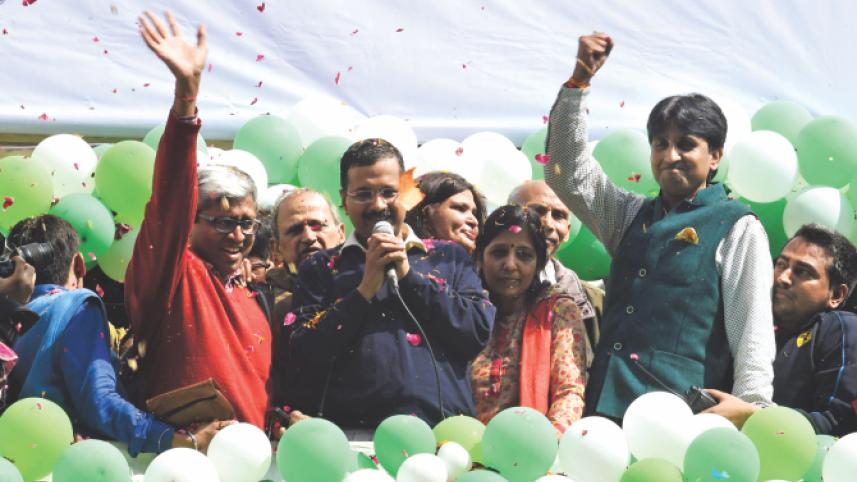
The Delhi wave confirms lessons the Lok Sabha elections had offered. In a limited setting, Arvind Kejriwal has done precisely what Narendra Modi and the BJP had done to beat them at their game.
Here are five big takeaways.

Indian democracy is alive and kicking.
Modi won the general elections with a resounding 282 seats using the vibrancy of Indian democracy, the disillusionment with the establishment, and every conceivable technique of reaching out to the electorate. But the overwhelming verdict left many worried. Was India heading towards political hegemony?
The impact of the Aam Aadmi Party victory in a city state like Delhi should not be over-estimated, but it shows both the impermanence of politics and resilience of Indian democracy. The AAP used precisely the open nature of Indian polity to mount a similar campaign. Voters like having checks – and anecdotal evidence suggests many were uncomfortable with the concentration of power in one man, one party.
No substitute for organisational resilience
In 2014, Modi's success was in galvanising the cadre and bringing back energy to the organisation. Last May also spelt an almost existential crisis for the AAP. Kejriwal had walked out of the Delhi government; the AAP had over-reached in the general polls and 96% of their candidates lost their deposits.
But they stayed the course. Kejriwal kept his flock together; stayed away from other states, including Haryana; kept nibbling away at BJP's claims; exposed the Lieutenant-Governor's willingness to toe the Centre's line; urged his party MLAs to remain connected with their constituencies.
In a recent piece, Ajaz Ashraf highlighted how 11 men and a woman constituted their Delhi Election Campaign Committee and made several innovations like jansabhas and Delhi dialogue. The AAP's organisation remained resilient.
Creating a multi-class, multi-caste alliance is the future
Before 2014, many predicted while the BJP may win the elites, they had little traction among the disadvantaged. Modi proved them wrong. In the run-up to the Delhi polls, many had billed it as a battle of classes, where the underclass would prefer the AAP while the middle class and upper middle classes would stick to the BJP. This view missed the larger trend of Indian politics. Parties which are able to bridge the class, caste, regional divide will flourish; those who are not able to do so may remain significant but will not cross the threshold.
Modi won urban and rural India; he won the middle class and upper castes of north India but also won the lower middle class, sections of the poor and backward castes and Dalits. Kejriwal's success was being able to carve out a wide social alliance. The AAP focused on the slum clusters, Muslims, workers and marginalised groups. They also spent time in middle-class localities, fought in TV newsrooms, and drew out specific campaigns for the diverse communities. The future is in adding to your core vote.
 For all latest news, follow The Daily Star's Google News channel.
Comments