


For farmers, but it's too late
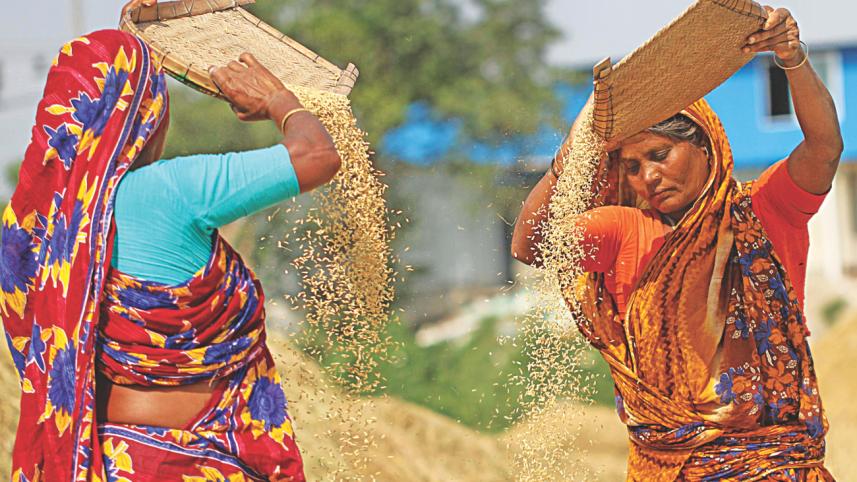
The government is going to impose 10 percent duty on rice import from Sunday to curb import of the staple food.
The decision comes at a time when farmers across the country have been incurring heavy losses from sale of paddy way below its production cost this Boro harvest season.

Finance Minister AMA Muhith unveiled the plan yesterday at a pre-budget meeting with chairmen of different parliamentary standing committees at the National Economic Council Auditorium in the capital.
He said farmers would benefit from the decision.
But rice millers and experts said it was already "too late" as almost half the Boro output had already been harvested and many growers sold their crops as low as Tk 450 a maund (40kg) -- almost half the production cost.
Farmers spent Tk 800 to grow a maund of Boro paddy this season, according to government estimates.
"This is already late. All the Boro paddy farmers would have been benefited had the government made the decision earlier," said Bappy Saha, a rice miller from Netrokona.
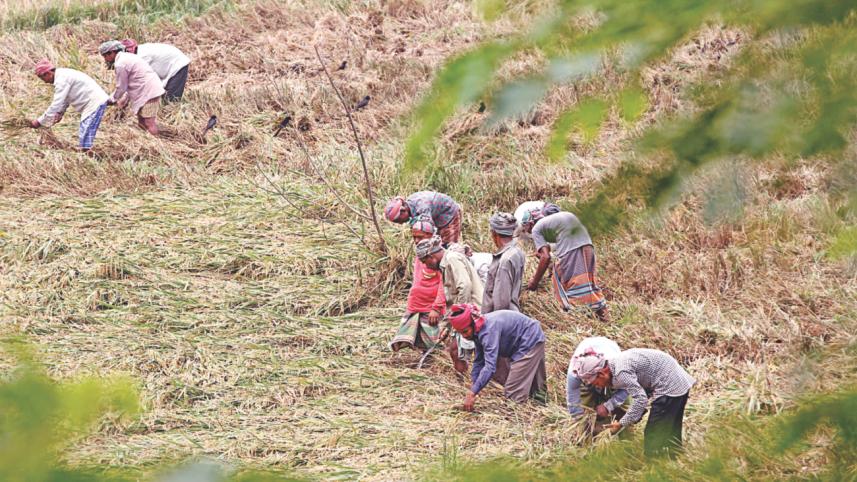
He said many farmers incurred big losses as the market was flooded with low-price rice, imported mainly from India.
Farmers, especially those in the haor-region, have started harvesting Boro paddy in the third week of last month. But many of them failed to reap the benefit of their investment and labour, thanks to the growing imports by private sector. The price of imported rice is lower than that grown in the country.
Rice imports increased threefold to 13 lakh tonnes between July 1 and May 6 of the current fiscal year, compared with last year's, according to food ministry data.
Private traders found rice imports from India profitable in the absence of duty on its imports. As a result, imports continued to soar despite adequate production to meet the domestic demand.
After a record Boro production last year, Aus and Aman output also rose year-on-year.
Production of Aman, for example, rose by 1.28 percent to nearly 1.32 crore tonnes in the immediate past harvest season compared with the previous season.
Aman output is the second highest next to Boro that accounts for 55 percent of the annual rice production.
Because of growing local production and rising import, rice supply is increasing on the domestic market and many millers are finding it difficult to clear stocks of coarse and medium quality rice.
To remain in the competition, millers on several occasions urged the government to slap duty on rice imports to save growers and millers.
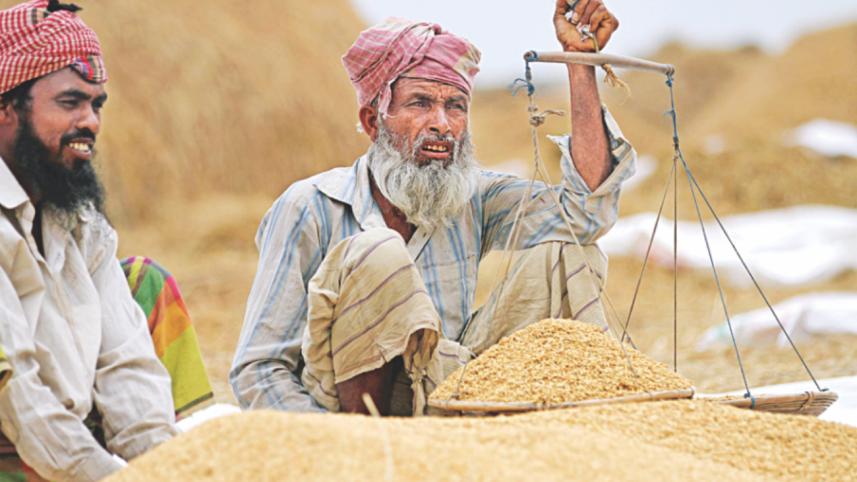
But the government continued to ignore this. Some top officials maintained that the imported low-quality rice was meant for cattle.
Things took a turn for the worse for millers and farmers after the Boro harvest began.
 For all latest news, follow The Daily Star's Google News channel.
 Rice prices fell below those of last year due to soaring supply and prospects of a good Boro harvest this season.
Farmers have grown Boro paddy on more than 48 lakh hectares of land this season, said a senior official of the Department of Agricultural Extension (DAE).
DAE officials and a report of the Food and Agriculture Organisation forecast a high Boro yield.
"On several occasions, we urged the government to restrict rice imports. It is good that the government has made the decision, even though it is late," Layek Ali, general secretary of Bangladesh Auto, Major and Husking Mills Association, told The Daily Star.
M Asaduzzaman, a fellow at Bangladesh Institute of Development Studies, said the government should have imposed duty on rice imports earlier to ensure a fair price for the growers.
"It is too late. The damage has already been done," he said.
Comments