


They called her Lalu, and she stayed
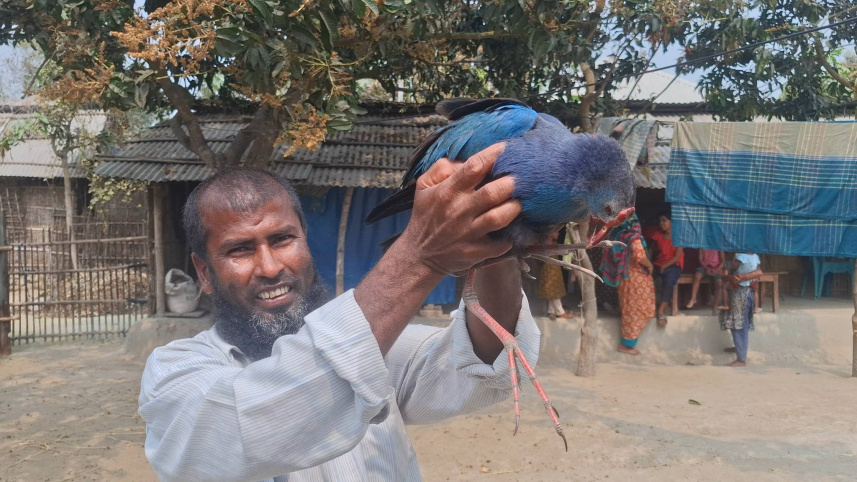
A wetland bird locally known as Kalim has become an unusual member of a family in Bhondagram village of Thakurgaon’s Ranisankail upazila after it was found in a weakened condition several months ago.
The bird, now affectionately called “Lalu,” has been living for the past five months at the home of Shams Uddin, where the family took it in.
 For all latest news, follow The Daily Star's Google News channel.
 Now moving freely around the homestead, Lalu often comes down from the roof to peck at scattered food grains in the yard before returning to its nest, drawing the curiosity of neighbours and visitors alike.
Family members said the bird frequently walks into their home, eats the grains they offer and then flies back to the roof, where it usually stays hidden among bean vines.
According to the family and locals, the bird was first found on a stormy night in the courtyard of Faruk Ahmed, a neighbour of Shams Uddin. It was injured and unable to fly at the time.
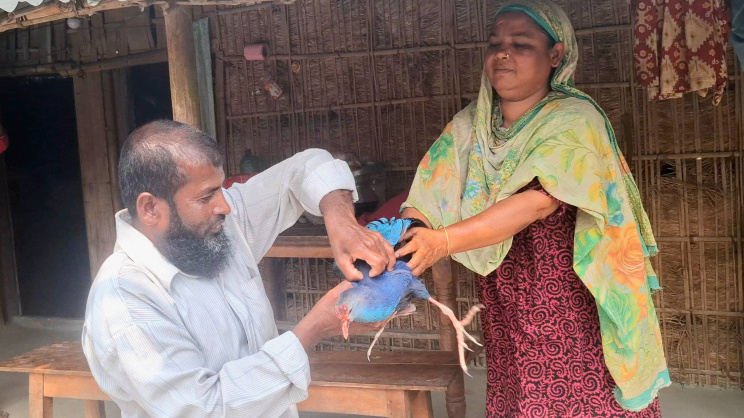
Faruk and his family took care of the bird until it recovered. Although it regained its strength, the bird did not leave the area.
After about four months, it flew to the neighbouring house of Shams Uddin and has been staying there since.
“Once the bird became seriously ill, we took it to the upazila livestock office and veterinary hospital for treatment. There we came to know that the bird is called Kalim,” Faruk said.
Although the bird now nests at Shams Uddin’s house, it still visits Faruk’s home every day for food, he added.
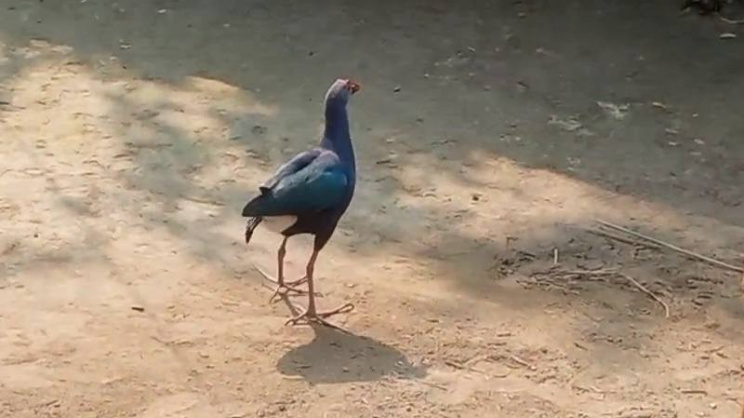
Researchers have identified the bird as the purple swamphen, also known as the purple moorhen, a wetland species scientifically named Porphyrio porphyrio. The bird typically measures about 45 centimetres in length and weighs around 650 grammes.
It has glossy bluish-purple plumage, reddish legs, and a distinctive red frontal shield on its forehead, while the underside of its tail is white.
Known for its bold and aggressive behaviour, the bird is often seen defending itself or its food.
Its diet mainly consists of aquatic plants, tender shoots, parts of lotus, tadpoles, insects and small fish.
Experts said such birds were common in wetlands across Bangladesh several decades ago, but their numbers have declined over the years due to habitat loss and hunting.
During a recent visit to Shams Uddin's house, this correspondent saw the bird sitting under bean vines on the roof. It briefly flew around the homestead before returning shortly afterwards.
Residents of the house said that if Lalu notices strangers nearby, it often charges at them, apparently thinking they might harm it.
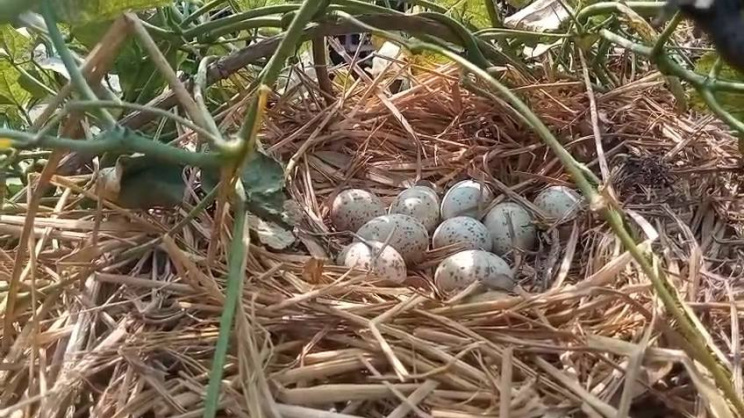
The bird recently laid nine eggs and now spends most of its time incubating them.
“It comes down only during feeding time. If anyone goes near the eggs, it tries to attack,” they said.
When Shams Uddin’s wife, Parul Akter, calls out “Lalu”, the bird quickly comes closer, eats rice from her hand, and returns to its nest.
“We heard Kalim birds are usually aggressive, but with affection it even sits on our lap and roams around the house,” Parul said, adding that they feed it the same food as their ducks and chickens.
Majed Jahangir, a former zoology teacher at Thakurgaon Government College, said the bird is a native wetland species. Naturally bold and sometimes aggressive, it is wild by nature but can become tame when it finds food and safety, he said.
He added that animals often develop attachments to places where they feel secure and well-fed.
Rupom Chandra Mahanta, livestock officer of Ranisankail upazila, said the bird likely nested at Shams Uddin’s house because it feels safe.
Female swamphens can lay unfertilised eggs, and though the species is not globally threatened, its numbers in Bangladesh are declining.
Under the Wildlife Conservation and Security Act 2012, the bird is protected, and anyone wishing to keep one should consult the forest department.
Comments