


Family keeps alive the late philanthropist's legacy
Sometimes hopes and dreams should outlast a single lifetime. Sometimes it's a worthy endeavour for family and future generations to build upon the noble ambitions of those who've gone before. Such is the case in Pabna, where the late Professor Zia Hyder's determination to build a better world has been taken up, since his passing, by his family. Through the works of the Zia Hyder Trust they established, Hyder's relatives hope to ensure his philanthropic dreams live on.
Hyder was a founding professor of drama at the University of Chittagong who, in 2004, after his retirement, used his own pension benefits to fund a scholarship for students from ultra poor backgrounds. Hyder passed away in 2008. His family established the trust in his memory a year later.

"My elder brother worked for people's betterment," says Makid Hyder, the founding president of the trust. "He sought especially to help disadvantaged students and to make women from struggling families self-reliant."
Guided by Professor Hyder's vision, the trust decided to pursue the development of schools in remote areas of Pabna in order to spread the light of education among disadvantaged children. As a result of their activities 13 pre-primary schools have opened in remote areas of Pabna Sadar upazila, with more than 400 students in attendance.
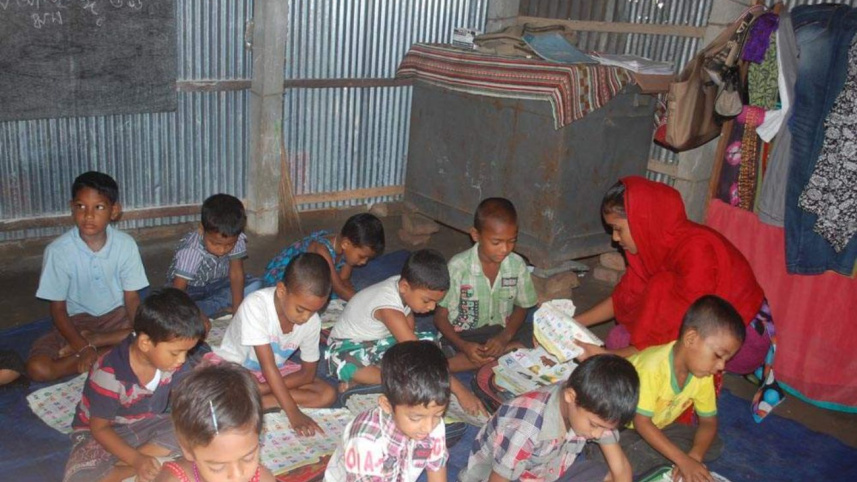
"My father works in the field," says Eva Khatun, a student of one of the schools in Tingasa of Maligasa union. "I'm fortunate that the Zia Hyder Progoti School has a campus near my house because it's the only chance I have to go to school." There are many others like her who have, because of the trust's efforts, learnt to read.
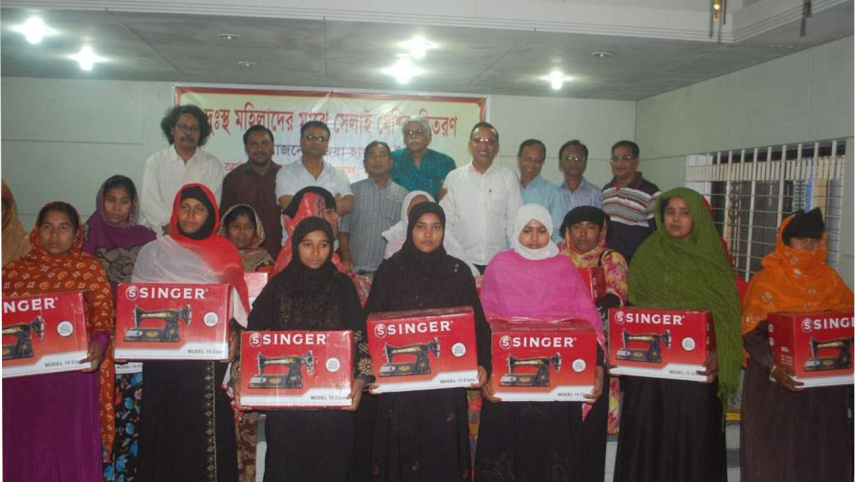
The trust undertakes other social projects. Recently it organised for dozens of sewing machines to be distributed to economically disadvantaged women, with the sewing machines handed over by the deputy commissioner Rekha Rani Balo at a 10 March ceremony at Pabna Press Club auditorium.
"If more people stepped up to assist our underprivileged citizens," observes the deputy commissioner, "then real development would be possible." She hopes the activities of the Zia Hyder Trust can inspire other families to pursue a similar course.
Without any political ambitions and although the Hyder family are hardly tycoons, they manage the trust from family funding, consisting of the initial deposit of a retirement sum by the professor and donations from other family members thereafter. "Some of our family friends also contribute these days," says Makid Hyder. It's a promising sign.
Of particular assistance recently has been the donation by German businessman and family friend Saban Yeoskep which funded the sewing machine distribution.
Freedom fighter and leading social activist in Pabna, Baby Islam, believes the efforts of the Hyder family set an outstanding example. "They have been implementing initiatives for the betterment of society on their own," she says, "and we really feel proud of Professor Hyder not only as a pioneer of modern drama but because of this wonderful ongoing legacy."
Mostafizur Rahman Russel, a leading cultural organiser, agrees. "These kinds of projects, where a family gets involved and manages achievements with their own steam, must produce real development for our society."
 For all latest news, follow The Daily Star's Google News channel.
Comments