


Birds unimpressed by Nilsagar sanctuary
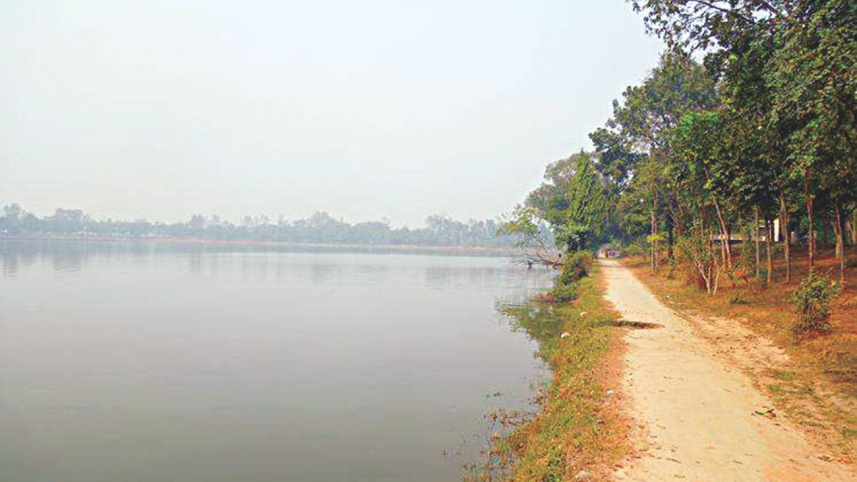
Octogenarian Bishumuddin Mia of Nilphamari's Dhopadanga village isn't old enough to recall when the large tank once called Binna Dighi was constructed. What he does remember is that until a few years ago the picturesque water body 16 kilometres northwest of Nilphamari town hosted a multitude of migratory birds each winter, of at least eight to ten species. But this winter there are very few birds to be seen.
"There were all sorts of trees," says Mia, "banyans, blackberries, kadams, mangoes, jackfruits, dumurs and others, many over a century old. The birds used to eat the fruit and roost in them of a night."

The tank, which features a temple on one side and a Muslim shrine on the other and is considered sacred by both Muslims and Hindus, suffered the major misfortune of being declared a bird sanctuary.
Where once the chirping of thousands of birds from as far away as Siberia used to entertain visitors, who were equally enchanted by the large flocks circling in the sky, after the sanctuary was declared the birds stopped coming.
The plan for a sanctuary was initiated after a visit to Binna Dighi by then state minister for land Rashed Mosharraf in 1999. The state minister was impressed by the spectacle of the birds and the reasonable accessibility to the site by road, such that after his visit a project was undertaken to develop a bird sanctuary to include the 33 acres including the waterhole with an additional 20.9 acres of surrounding land. About Tk one crore was made available for this purpose, with the tank's name changed to Nilsagar, literally 'The Blue Sea.'
"It was then the environmental disaster began," says local journalist Shamsul Islam who resides nearby. The decisions to construct roads around the tank and a rest house that clutters the tank shore; and to fell indigenous trees, upset the ecological balance.
Disregarding the advice of ornithologists, authorities planted saplings of foreign species like shishu, mahogany and eucalyptus. Not only were saplings no substitute for the century-old trees that had been felled, but the birds do not like trees they are unused to. The new trees could provide neither shelter nor food for the birds, Islam says.
Indeed, ornithologists warned that the migratory birds, which used to arrive in early November and stay until the start of April, favour local fruit and will not even perch or rest on unfamiliar tree species. But the warning was unheeded.
Nirmal Chakraborty, current Nilsagar caretaker, says the few migratory birds that do arrive these days, shelter in local-variety trees situated in neighbouring villages, rather than in the planted species at the tank.
Head of the zoology department of Nilphamari Government College, Professor Abdul Latif, who is also a prominent bird watcher, says a recent survey also identified the use of insecticides in surrounding croplands as a problem. With many insects eliminated a food source for many birds has been thus reduced.
Nilsagar now has a pretty name but the site is less serene than ever. The concrete structures and the rumbling of vehicles leave not only the birds but many visitors and locals unimpressed.
Although Rafiqul Islam, the then chairman of Grogram union in which the pond lies, claims that only dead trees were felled on the directive of the district administration, what was once a busy winter habitat for birds has been lost. On a recent visit it was observed that the number of birds swimming, flying and scavenging around the pond was very low.
Current District Commissioner Zakir Hossain, who is also head of the Nilsagar development committee, says that the importance of local tree varieties has been realised, and the government arranged a few years ago to plant those. It is hoped these replacement local trees will encourage the birds back sometime in the future.
He also says the Nilsagar development committee has sent a project proposal to Dhaka with a proposed expenditure of Tk 11.70 crore to turn Nilsagar into a unique tourist site, with 2016 being the United Nations declared world tourism year. Let's hope that this time around, the migratory birds agree.
 For all latest news, follow The Daily Star's Google News channel.
Comments