


Mobile phones: A portal to better health
The healthcare industry has made significant leaps since Bangladesh's independence. What is more encouraging is that many organisations, both public and private, emphasise technology to improve healthcare delivery. A significant contributing factor is the push from the current government's Digital Bangladesh campaign. It is safe to say that such a welcoming market will motivate more players to enter the space with innovative solutions.
More digital health services are needed to improve the healthcare experience, especially when dealing with rising non-communicable diseases. The opportunities to explore are immense as there are many gaps to be filled through digital inclusion. Two areas where digital service providers like Telenor Health make a difference are accessibility and affordability of quality care. Bangladeshis are quickly realising that their mobile phones are a valuable channel to access services.

At Telenor Health, four technologies enhance the care and efficiency our services promise to its consumers.
Algorithms and recommendation engines
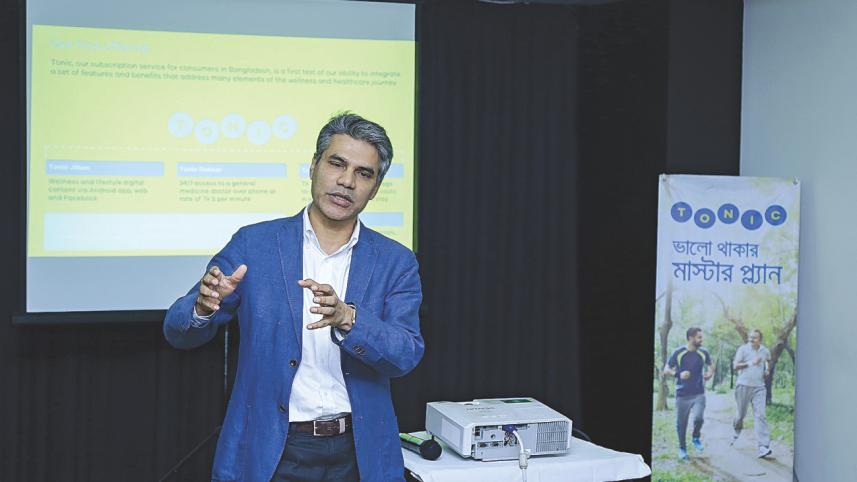
Recommendation engines have become increasingly popular over recent years, and are used by various digital content sites. Many might have experienced the recommended content from Netflix and YouTube. The new Tonic App leverages artificial/contextual intelligence by pushing notifications to users when inside or around a specific hospital with information on available discounts and coverage plans. The algorithms put together recommendations based on the data collected. This content is then made available to people, helping them make better healthcare decisions for a healthier life.
Chat and AI
Facebook has done phenomenal work with artificial intelligence, like recommending tagging a friend in a picture or suggesting pages based on your interest. The Tonic app uses AI to send personalised content to its members. The app also allows live chat where people can engage with the services of a healthcare provider. This comes in handy during off-hour emergencies. The in-app doctor consultation that Tonic has introduced will thus save people time and money while providing access to the best.
Paperless processing
The first step to build a digital health business is to digitise the experience for consumers. Telenor Health has started this process by creating electronic medical records, and digitising a part of appointment booking and processing of insurance claims. As the digitisation expands to other areas, it will help scale the service in an affordable way.
Design at the core
Despite the growth of technology, customer experience remains at the centre of all offerings. Whether it is the user design or clinical quality, Telenor Health embraces this learning and has built all its propositions around customers. It has developed a technology backbone that supports the analytics and design to build scalable digital healthcare.
Looking forward, Telenor Health has plans to expand its services to at least ten other countries with over a hundred million users by 2020. The future is certainly very promising for Telenor Health in Bangladesh. However, one entity alone cannot solve all the problems. To achieve a more sustainable impact, we are working to promote a collaborative ecosystem with other service providers.
The writer is CEO of Telenor Health
 For all latest news, follow The Daily Star's Google News channel.
Comments