


Fruits, now always in season

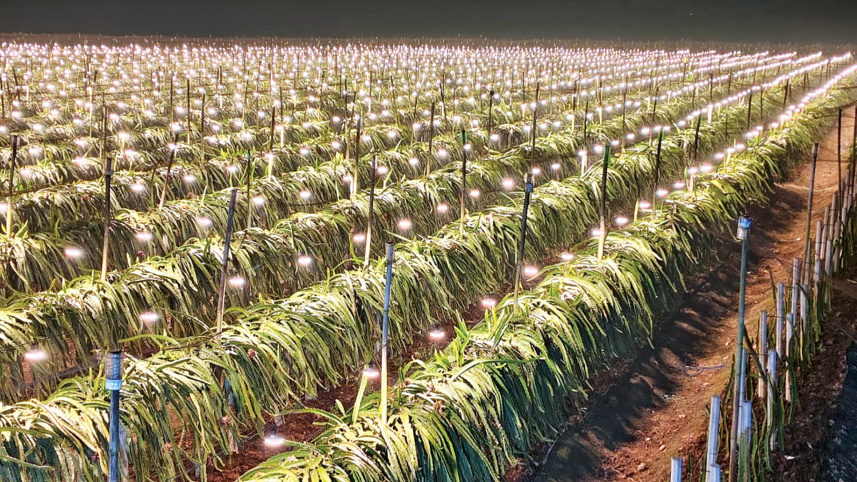
At night along the Bangladesh-India border, a glow emanates from the darkness in Adalpur village of Naogaon, resembling numerous candles flickering in the wind. On closer inspection, one finds 10,000 LED lights bathing dragon fruit plants in artificial daylight, their crimson crops hanging heavy on green vines.
This is the work of Abul Kalam Azad, a former rural electrification engineer who decided that electricity could do more than power homes.

His three orchards in Sapahar upazila, with an estimated minimum market value of Tk 4 crore, sprawl across 45 bighas, where the lights burn through the night to trick the plants into producing year-round.
The technique works. Azad harvests 300 tonnes annually, earning profits exceeding Tk 2 crore. Not bad for a fruit that barely existed in Bangladesh a decade ago.
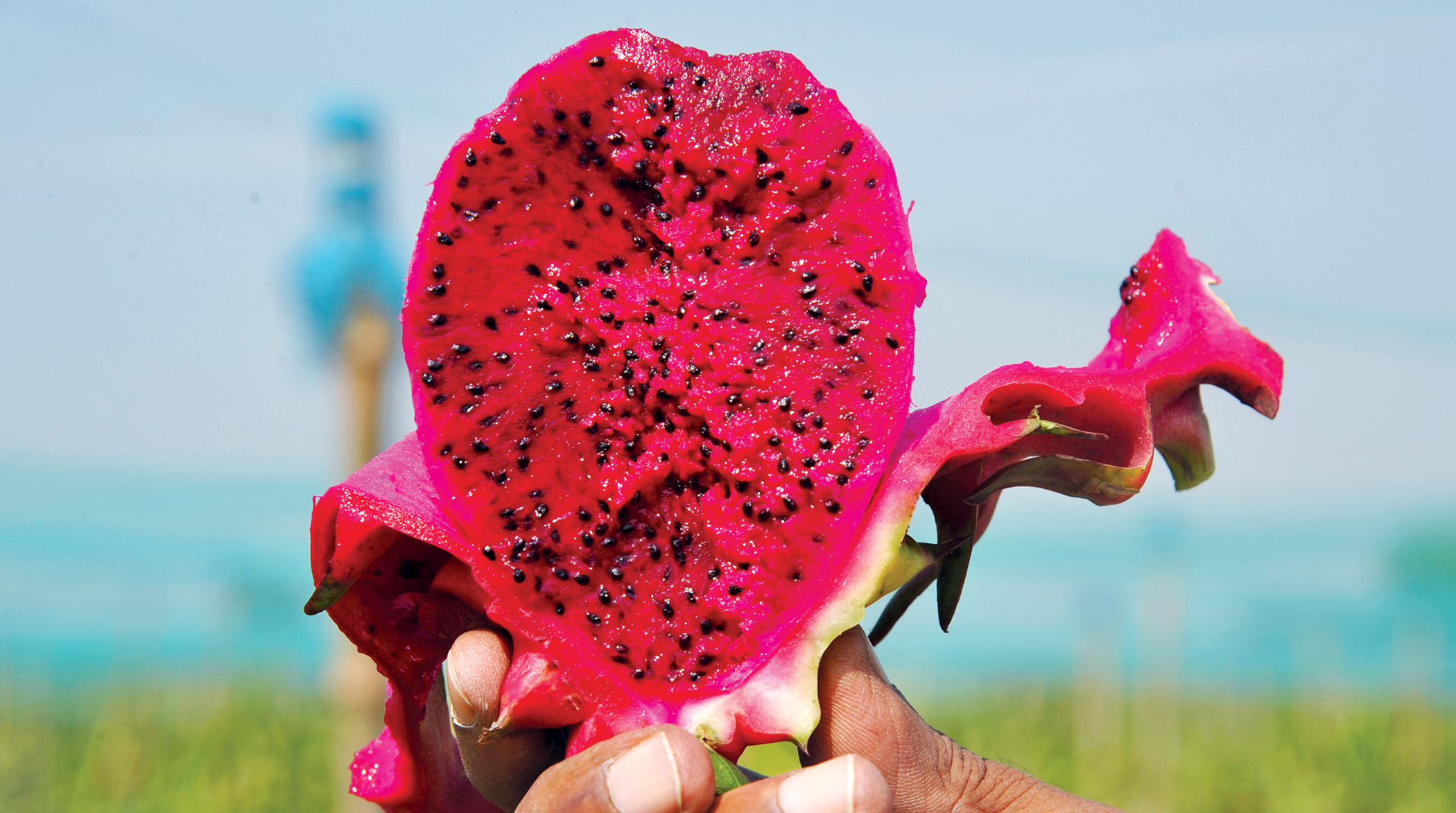
Azad’s success with dragon fruit, also known as pitaya, is merely the most dramatic example of a broader transformation. Across Bangladesh, a nation of some 17 crore people is rethinking what it grows and eats.
Exotic fruits – Dragon fruit, avocado, Thai guava and many more – once found only in upscale Dhaka supermarkets now thrive in local soil. Local fruits such as papaya and pineapple are now available year-round.
The economics are compelling enough that farmers are abandoning traditional crops for fruit orchards.
THE PARADIGM SHIFT
The shift can largely be attributed to a 10-year project by the Department of Agricultural Extension (DAE). Between 2015 and 2025, it ran the “Year-Round Fruit Production for Nutrition Improvement Project”, aiming to make fruits available all year round, not just during brief harvest seasons. A decade later, the results speak for themselves.
DAE data shows that national fruit production has surged from 1.03 crore tonnes in fiscal year 2008-09 (FY09) to 1.51 crore in FY25, even as the land devoted to fruit cultivation shrank from 9.35 lakh hectares to 7.79 lakh.
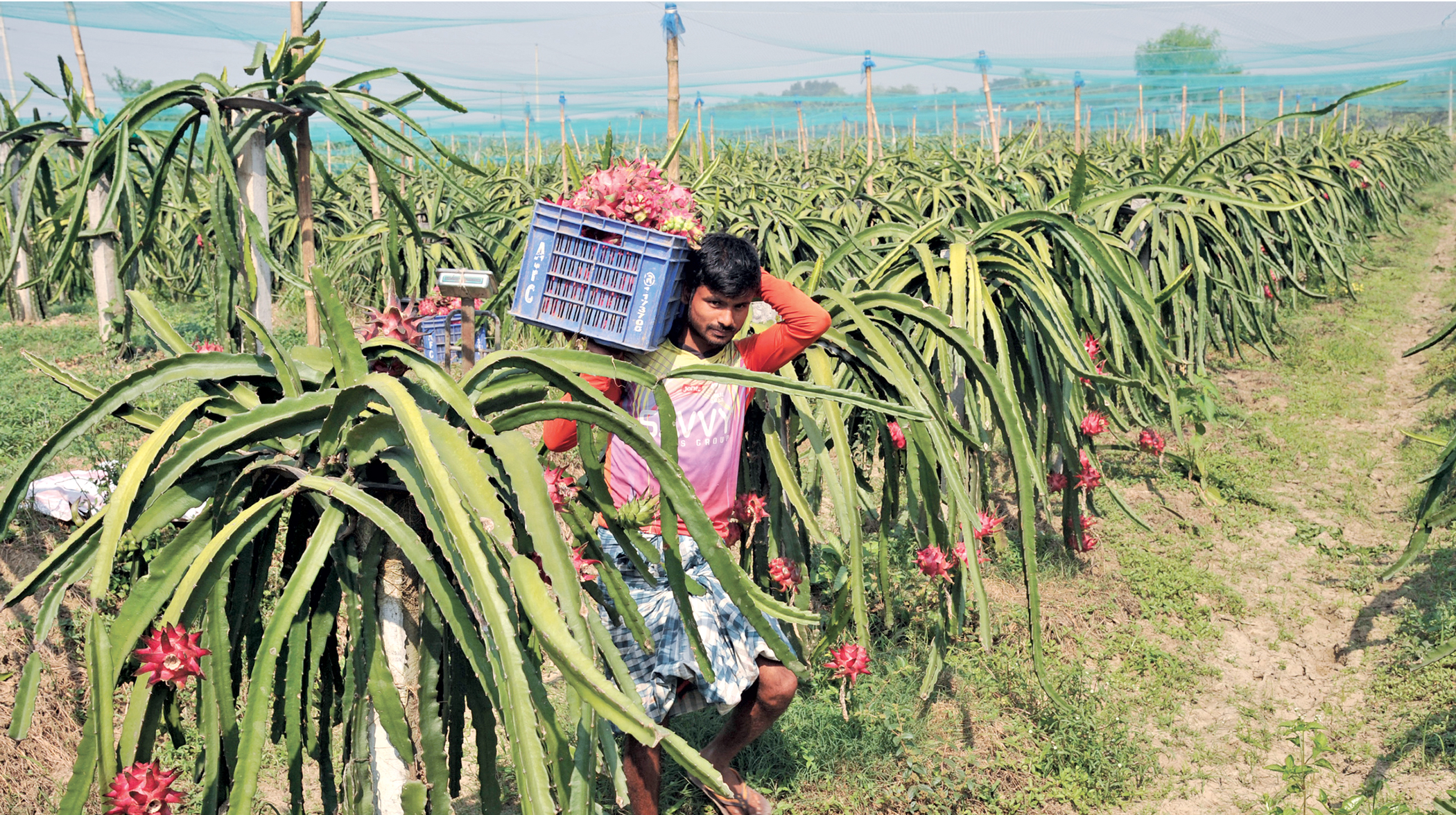
Productivity gains explain the paradox.
Mango output nearly doubled from 15 lakh in FY13 to nearly 27 lakh tonnes in FY25. Guava production more than doubled from 3.14 lakh tonnes to 6.64 lakh tonnes. Pineapples increased from 2.39 lakh tonnes to 6.07 lakh tonnes.
Litchi increased from 1.19 lakh tonnes to 2.32 lakh tonnes, Banana increased from 15 lakh tonnes to 25 lakh tonnes, Papaya increased from 4.5 lakh tonnes to 7.75 lakh tonnes
Dragon fruit, virtually non-existent in 2012, now yields one lakh tonnes annually.
Perhaps more telling than production figures is what happened to imports. Fruit brought from abroad fell from 8.22 lakh tonnes in FY22 to 5.25 lakh tonnes in FY25, a drop of 36 percent.
Serajul Islam, president of the Bangladesh Fresh Fruits Importers Association, attributes much of this decline to import duties rising from Tk 25 to Tk 40 per kilogramme in 2023.
But duties alone cannot explain the trend. Local fruit is simply becoming more competitive.
 For all latest news, follow The Daily Star's Google News channel.
 THE KATIMON CONQUEST
In the Rajshahi region (including Natore, Chapainawabganj, and Naogaon), famous for mangoes, a new variety has brought about a silent revolution.
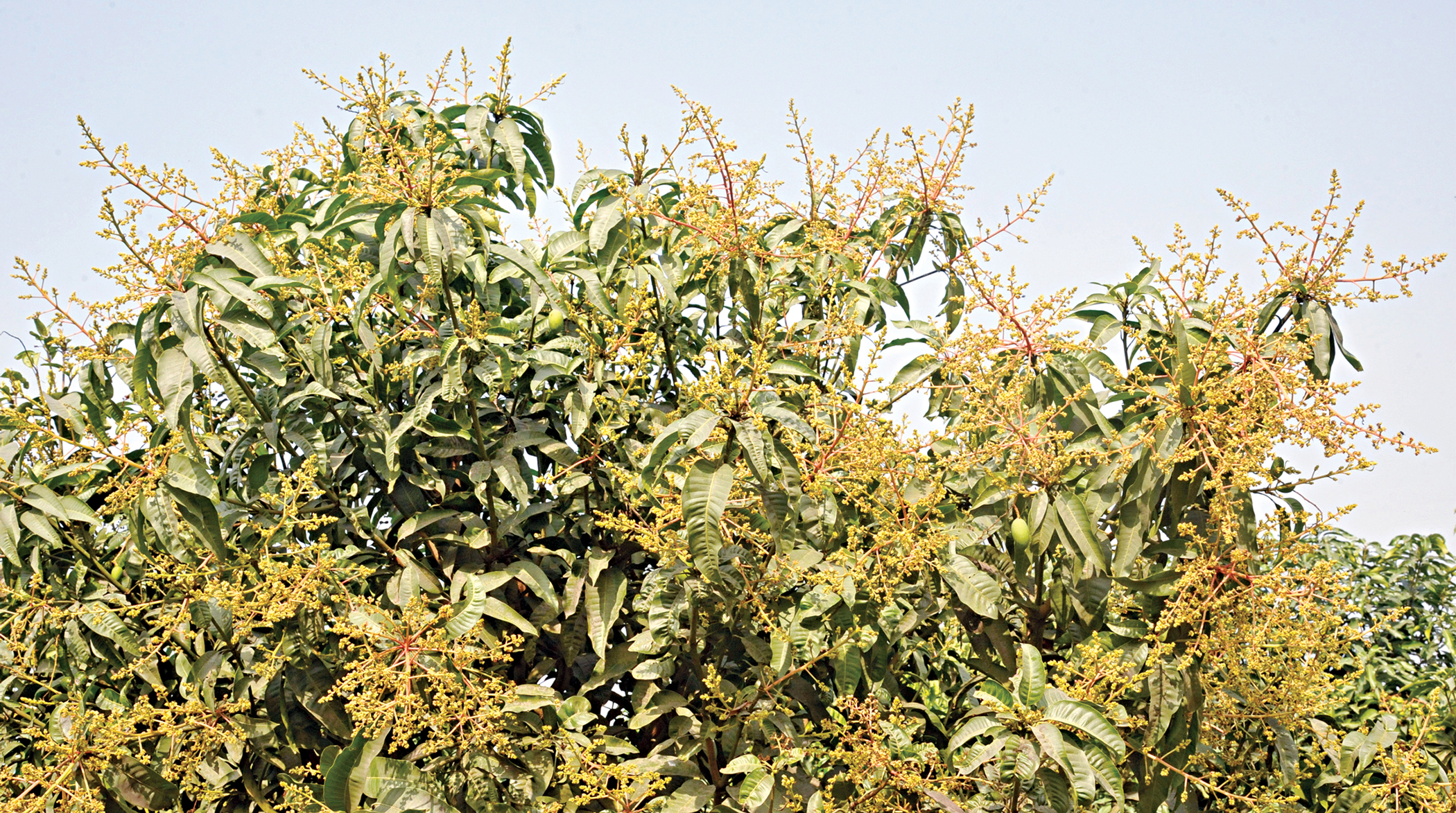
The Katimon mango variety, introduced recently, produces fruit outside the traditional summer season. This matters because off-season mangoes fetch three to five times the normal price.
Raihan Siddique understood the opportunity.
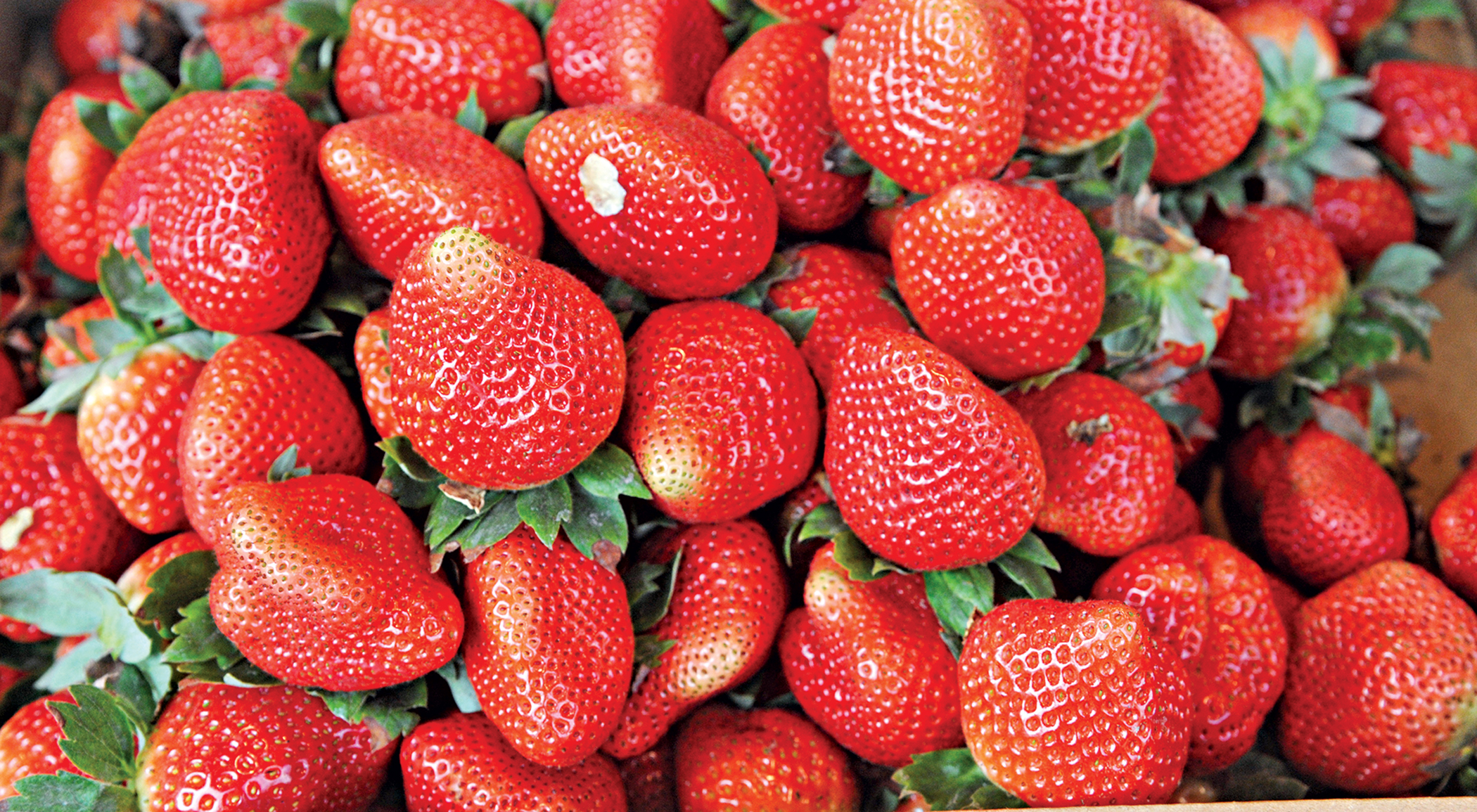
He now grows mangoes on 500 bighas. Despite now being the off-season, his eight bighas of BARI-11 mango trees are laden with fruit as if it were peak summer. Nearby, two bighas of Katimon mangoes also hang from the branches.
He times his Katimon harvest to coincide with Ramadan when demand peaks and consumers are willing to pay premium prices.
“These mangoes will ripen during the upcoming Ramadan,” he told The Daily Star. “We expect to get a high price in the market.”
The numbers bear this out. Katimon cultivation exploded from a single hectare in FY21 to 4,757 hectares by FY25, producing over 55,600 tonnes, according to Rajshahi DAE.
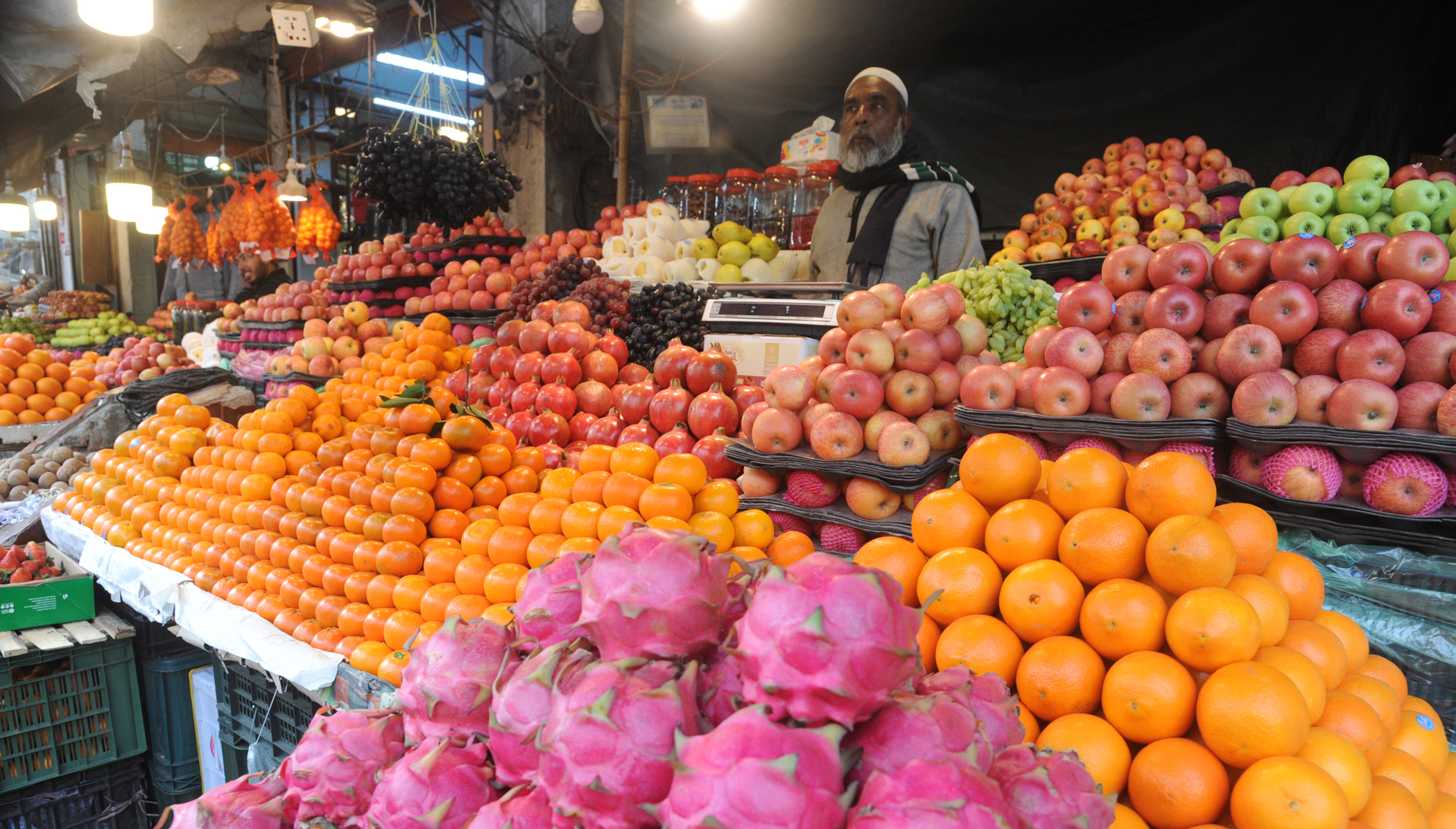
Md Shamsuddhoha, a horticulturist in Chapainawabganj, confirms that farmers are abandoning traditional varieties wholesale.
He said, “Mango farmers are opting to grow the Katimon variety because they produce year-round fruit. Selling these in Dhaka and premium super shops during the off-season is proving highly profitable.”
Naogaon district stands as a prime example of the country-wide transformation. Traditionally known for rice cultivation, it now boasts 30,000 hectares of mango orchards, a fivefold increase from 6,000 hectares a decade ago.
TECHNOLOGY AND HORMONES
Technology is also rewriting the rules of cultivation.
In the Rajshahi region, improved guava varieties, mostly Thai imports like Golden-8 and various numbered Thai strains, pushed productivity from 12 tonnes per hectare to 33 tonnes in just five years since FY22.
Farmers now cultivate across 3,512 hectares in four districts, producing 1.15 lakh tonnes.
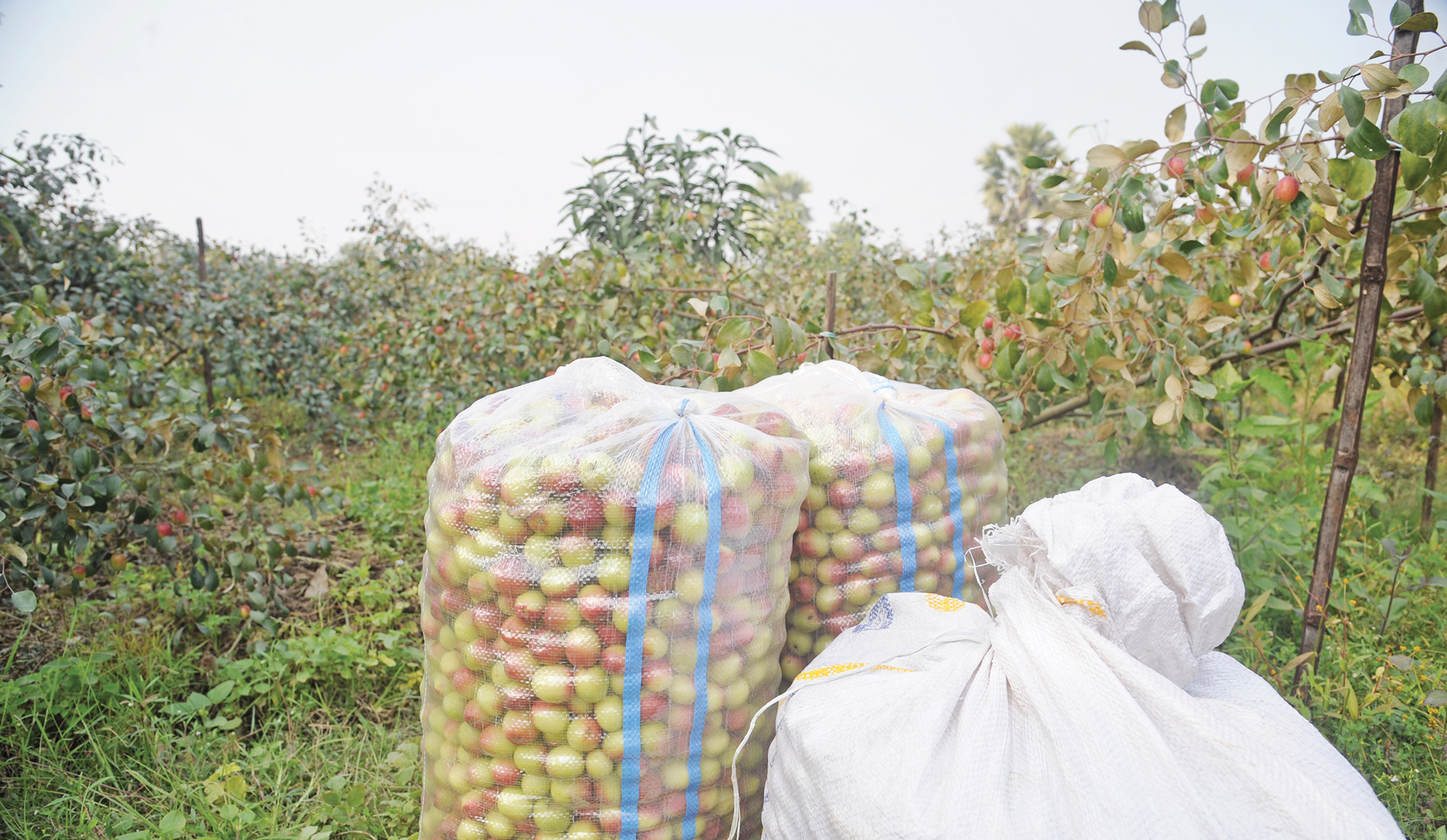
Mehedi Masood, the former project director who oversaw the decade-long DAE initiative, attributes the success to the project.
“We initially launched the project focusing on Thai guavas with a budget of only Tk 195 crore. Today, the market value of the annual guava production across the country stands at a staggering Tk 6,000 crore,” he said.
Md Selim Reza, a guava farmer who won an “Agriculturally Important Person” award in 2020, notes that Thai varieties dominate the market.
“Guava is a highly profitable yet capital-intensive crop,” he says. The timing of harvest depends entirely on the farmer’s management skills, more specifically, understanding when markets will pay premium prices.
Pineapple production reveals another technological shift, one that makes some purists uncomfortable.
Output nearly tripled between FY13 and FY25, jumping from 2.39 lakh tonnes to 6.07 lakh tonnes, despite the cultivation area expanding only modestly from 19,465 to 21,676 hectares, shows DAE data.
The secret component behind the explanation is growth hormones.
Rakib Al Rana, agriculture officer of Madhupur upazila in Tangail, the heart of pineapple production, is frank about the change. “Ten to twelve years ago, the use of hormones in pineapple farming was non-existent.”
Now they are standard practice in Madhupur region, the heart of Bangladeshi pineapple production, where 7,000 hectares are devoted to varieties like Honey Queen, Giant Q, and the Philippine MD-2.
THE DEMOCRATISATION OF FRUIT
Urban Bangladesh is experiencing a dietary shift thanks to the improvements in fruit cultivation. At busy Dhaka intersections, makeshift stalls sell ready-to-eat bowls of seasoned pineapple and papaya for Tk 20-30. Vendors weave between buses offering guava slices for Tk 10. This is fruit as fast food, accessible to people who once considered fresh fruit a luxury.
Matin Mollah, a rickshaw-puller from Gaibandha, captures the change. “I cannot afford expensive fruits such as apples or oranges for children. I buy guava for them as it is much more affordable.”
Majid Mondal, who works at a government office in Bogura, said, “Local fruits like guavas, bananas, and seasonal fruits like litchi, plums have become popular official refreshment options alongside imported fruits.
The economics favour local options. Guavas and bananas cost a fraction of imported apples and oranges. Year-round availability means no seasonal price spikes.
For a country where roughly 20 percent of the population lives below the poverty line, this matters.
BEYOND THE BORDER
Azad, the dragon fruit pioneer, is not resting on his LED-lit laurels. He has moved into cultivating Baikonur grapes across 25 bighas and Bhagwa pomegranates across 20 bighas after successful pilot projects.
In Chuadanga, farmers are cultivating grapes, oranges, malta, and avocados across thousands of hectares, district DAE Deputy Director Masudur Rahman said.
“The soil here is exceptionally suited for fruit farming. Moreover, our farmers are willing to invest crores of money, which is driving the success of high-value crops,” he said.
Patuakhali saw 30,000 hectares devoted to watermelon this year alone, mostly hybrid varieties, said Mohammad Amanul Islam, deputy director of the district DAE.
Masood, the former DAE project director, believes Bangladesh is approaching a tipping point.
He now consults on a tissue culture laboratory project and predicts domestic production will hit 3 crore tonnes within five years, meeting all national demand.
“At that point, we will be able to export, particularly papaya and jackfruit, which are grown without pesticides,” he says.
The comparison he reaches for is Vietnam, which built a multi-billion-dollar fruit export industry.
Bangladesh could follow a similar path, Masood argues, if it addresses one major problem: waste.
Roughly 30 percent of fruit spoils due to inadequate post-harvest processing. “If we can curb these losses through processing, we can earn billions of dollars from exports like Vietnam.”
The Year-Round Fruit Production project has ended, but its infrastructure persists.
Abdur Rahim, the DAE’s director general, notes that horticulture centres continue distributing saplings nationwide.
“To further strengthen these centres, we are working on a similar subsequent project,” he says.
Masood predicts that grapes, oranges, malta, pomegranates, rambutans, longans, and Vietnamese jackfruit will become commonplace in the coming years, driving prices down further.
Comments