


Buying houses want continuation of duty-free yarn import facility
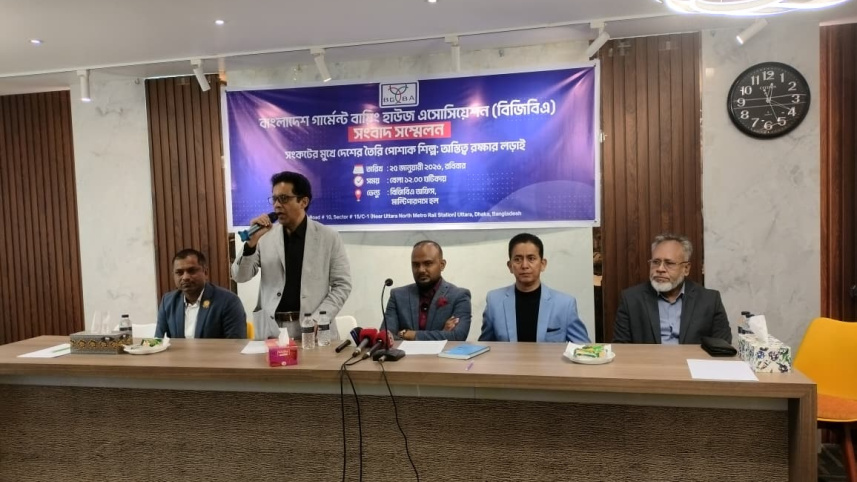
The leaders of the Bangladesh Garment Buying House Association (BGBA) today urged the government not to withdraw the facility for the duty-free import of 10 to 30 count yarn, saying such a decision will impact the country’s apparel exports.
The association made the call at a press conference titled “The country’s readymade garment industry in crisis: a struggle for survival”, held at the trade body’s office in Dhaka.

At the event, BGBA President Mohammad Mofazzal Hosen Pabel urged the government to continue the bonded warehouse facility for importing 10-30 count yarn and to ensure that policy decisions are made in consultation with all stakeholders of the garment sector, along with appropriate incentives.
Among other major recommendations, the BGBA president called for visible initiatives to ensure safe and confident travel for foreign buyers, maintaining a stable and industry-friendly environment during the election period, and providing special industrial support in the electricity, gas, and energy sectors.
He also recommended that the government announce new and effective incentives for exporters, direct the banking sector to ensure timely letter of credit (L/C) financing and payment clearance, and introduce special financial assistance packages for small and medium factories.
He further suggested establishing a Ministry of Garment Industry to ensure focused policy-making for export and employment growth, as well as introducing special financial assistance packages for small and medium factories.
The BGBA chief also demanded increased opportunities for participation in international trade fairs in both traditional and emerging markets.
At present, BGBA has approximately 1,800 registered members, who together contribute $12–15 billion annually to the national economy through foreign exchange earnings, playing a significant role in strengthening Bangladesh’s economic development.
He also outlined some major ongoing challenges in the garment sector, such as the withdrawal of bonded warehouse facilities for importing 10–30 count yarn, security concerns, and uncertainty over foreign buyers’ visits. Political instability and safety concerns before and after the national election have discouraged foreign buyers from visiting Bangladesh, causing a significant drop in new orders.
The lack of visible measures to ensure buyers’ safety and maintain production continuity is damaging Bangladesh’s image in the global market and may obstruct long-term export growth plans.
Erosion of competitiveness in the international market, continuous increases in electricity, gas, and energy prices, along with inadequate infrastructure and a lack of effective incentives, have made garment production increasingly costly. Consequently, Bangladesh is losing competitiveness against its regional competitors in apparel exports.
Banking sector inefficiency and investment crises, such as delays in processing L/Cs and insufficient access to working capital, are preventing timely payments to suppliers, particularly affecting small and medium factories.
This disruption in the supply chain is causing delivery delays, resulting in financial losses and reputational damage in the international market.
In the last six months, a visible decline has been observed in both traditional and non-traditional export markets. Without immediate, well-coordinated, and rational policy intervention, Bangladesh risks losing further market share to neighboring countries, the BGBA president added.
 For all latest news, follow The Daily Star's Google News channel.
Comments