


Hungary eyes Russian oil ban exemption
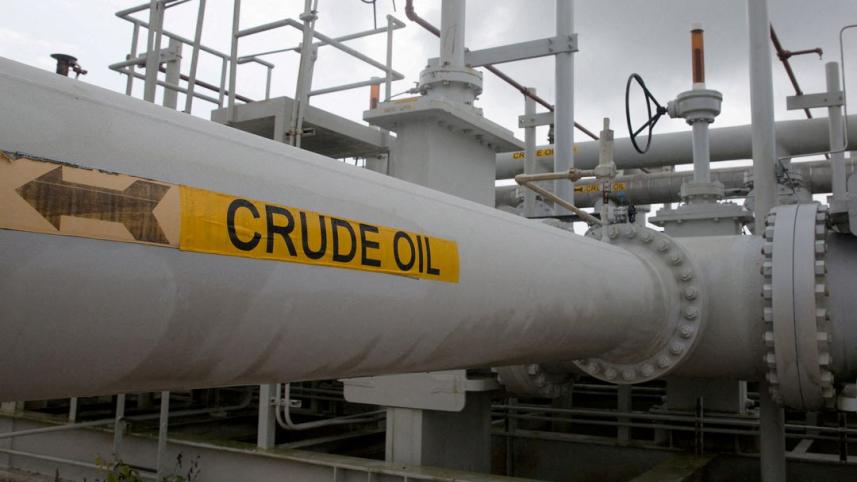
With EU leaders set to meet Monday to try to seal a sixth Russia sanctions package that includes an oil embargo, Hungarian Prime Minister Viktor Orban has mounted his latest show of defiance.
The package proposed earlier this month by the European Commission, the bloc's executive arm, requires unanimous backing from all 27 EU member states.

But the combative Orban, elected for a fourth straight term last month, has described an embargo as "a red line" and an "atomic bomb" that would destroy the central European country's economy.
Budapest -- which under Orban sought close ties to Moscow until the invasion of Ukraine -- insists a ban would spark recession, shortages and rocketing prices, and undermine Hungary's energy security.
In a letter last week, Orban told EU chief Charles Michel that bringing up the embargo at the leaders' summit would be pointless.
"Solutions must come before sanctions," said Orban, who has often been the odd-man-out in EU decision-making and currently is at loggerheads with the bloc over rule-of-law issues.
Orban has dismissed the EU's compromise offer of a short exemption of a few years, and insists that the package exempts imports through pipelines like the "Druzhba" (Friendship) which delivers the Urals crude brand that meets around 65 percent of landlocked Hungary's oil demand.
Alternatively it wants a longer exemption and transition period of at least three and half to four years, and at least 800 million euros ($860 million) in EU funds to re-tool refineries for non-Russian crude oil processing and boost the capacity of a pipeline to neighbouring Croatia.
Faced with the stand-off, voices abroad, including German economy minister Robert Habeck, have called for the EU to launch the embargo regardless.
 For all latest news, follow The Daily Star's Google News channel.
Comments