


Europe scores tentative trade deal win over India
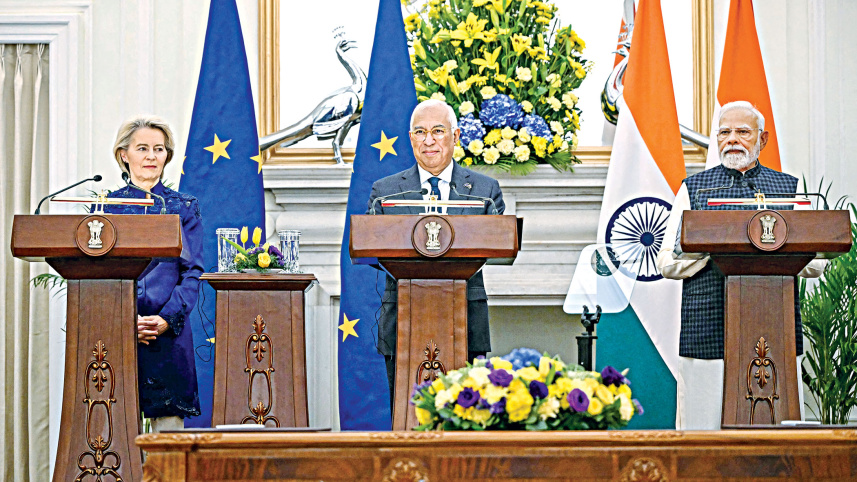
Adversity sometimes moves things along like nothing else. Under pressure from the threat of Washington’s tariffs, India and the European Union on Tuesday agreed the contours of a trade deal after muddling through stop-start negotiations for nearly 19 years. The deal could significantly ease market access for both partners sharing a 180 billion euro ($214 billion) trade relationship. Yet the handicaps that the South Asian country is trying to overcome by easing protectionism are precisely what skews the terms in Brussels’ favour.
India agreed to lower duties on high-end cars and liquor, which could improve the presence of European companies from Volkswagen to Renault that have so far found the world’s fifth largest economy difficult to tap. In exchange, it secured in one shot a major market for goods from shrimps to textiles that might get locked out of the US due to a punitive 50 percent tariff. Indian services firms will also gain steadier access to sectors from information technology to education.

The benefits seem lopsided, though. Most Indian goods only faced an average EU duty of only 3.3 percent, data by the World Trade Organization shows. Also, Brussels hasn’t acceded to easing its carbon tax rules. By contrast, European industries were subject to tariffs above 10 percent on average, with machinery and car makers facing duties of 44 percent and 110 percent, respectively. Those will now be slashed to zero and 10 percent.
The EU’s overall gains are still small, but the comparison with the less advantageous trade deal that Britain signed with India last year drives home the importance of having a big domestic market. Brussels could sell small concessions as big boons because it only exports 2 percent of its goods to India, while being home to 18 percent of Indian sales.
To be sure, New Delhi takes on limited risks. Indian farmers and dairy producers will remain protected even as import levies on less sensitive goods like olive oil and fruit juices gradually drop to zero. Car tariffs will come down slowly, buying time for local manufacturers like Tata Motors Passenger Vehicles and Mahindra & Mahindra to adjust, and will still apply to marques priced above 15,000 euros ($17,832).
For India, this is a long-term gamble to further its ambition of becoming an export powerhouse, which requires reversing weak foreign direct investment and bringing in superior technical knowhow in industries from car manufacturing to medical equipment. Exposure to the discipline of foreign markets, namely the EU’s strict health and safety rules, is a necessary step to ape the development experience of Japan, South Korea and China.
In the meantime, however, the poor quality of Indian products could make it hard to penetrate new markets. It’s one reason India’s trade deficit with the Association of South East Asian Nations has been growing despite safeguards from a deal signed in 2009. At least for now, Brussels seems to have gained the better end of the deal.
India and the European Union on January 27 announced the completion of a long-pending trade deal. The agreement is expected to double the EU’s goods exports to India by 2032 by eliminating or reducing tariffs in 96.6 percent of goods by value and save around 4 billion euros ($4.75 billion) per year in duties, the EU said.
The 27-nation bloc will cut duties on 99.5 percent of goods traded over seven years, with tariffs on Indian marine goods, leather and textile products, chemicals, rubber, base metals and gems and jewellery falling to zero on entry, India’s trade ministry said in a statement.
New Delhi will slash tariffs on cars to 10 percent over five years from as high as 110 percent, according to an EU statement. Levies on alcoholic beverages like wines will drop to 75 percent immediately from 150 percent, and will be lowered to 20 percent gradually, while those on spirits will be lowered to 40 percent, the statement added.
 For all latest news, follow The Daily Star's Google News channel.
Comments