
China’s Covid curbs threaten global supply chain paralysis
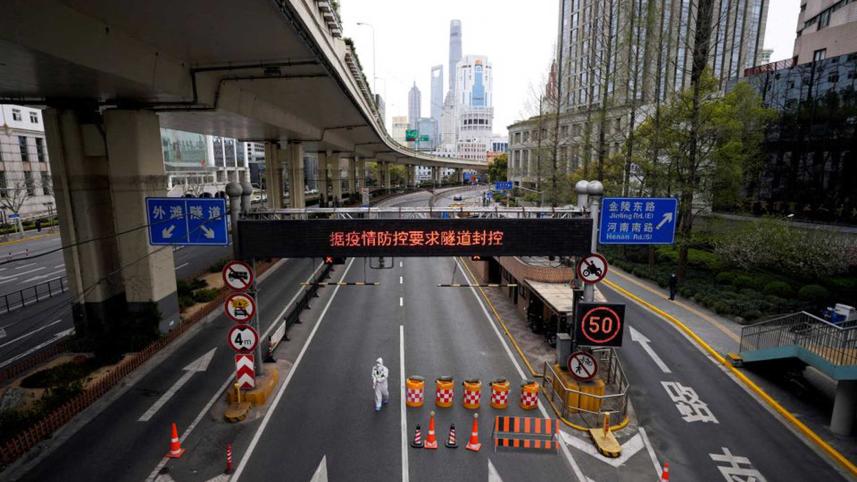
China's race to stop the spread of Covid-19 is clogging highways and ports, stranding workers and shutting countless factories - disruptions that are rippling through global supply chains for goods ranging from electric vehicles to iPhones.
While some factory owners try to tough it out through "closed loop" management that keeps workers isolated inside, some said that is becoming harder to sustain given the extent of local Covid-19 curbs aimed at heading off the Omicron variant, complicating efforts to procure materials or ship products.
 For all latest news, follow The Daily Star's Google News channel.
 Foxconn Interconnect Technology, a unit of Taiwan-based Foxconn that makes data transmission equipment and connectors, has kept a plant open in Kunshan, which borders Shanghai, in a closed loop but is only able to run at 60 per cent of capacity, a person familiar with the matter said.
Foxconn did not respond to a request for comment.
On Wednesday, more than 30 Taiwan companies, many making electronics parts, said that Covid-19 measures in eastern China had led them to suspend production until at least next week.
A day earlier, German auto parts giant Bosch said it suspended output at sites in Shanghai and Changchun, while putting two other plants under "closed-loop" operation. Also on Tuesday, Taiwan's Pegatron Corp, which assembles Apple Inc iPhones, halted operations in Shanghai and Kunshan.
Sven Agten, Asia Pacific CEO of Rheinzink, a German maker of zinc construction materials, said logistical challenges make a closed-loop unworkable at his Shanghai warehouse and manufacturing facilities, and expects to have zero sales during April and possibly May.
"We need somebody in the warehouse and the manufacturing facility to do the work, and we need a truck and a driver. These are the two key components, and both are impossible," he told Reuters.
China's zero-tolerance approach to Covid-19, despite low case numbers and even as the rest of the world tries to live with the coronavirus, is proving unwieldy given the extreme infectiousness of the less-deadly Omicron variant.
The zeal to cut-off virus transmission chains means localised curbs extend far beyond virus hotspots Shanghai and Jilin province in the northeast. An April 7 study by Gavekal Dragonomics found that 87 of China's 100 largest cities by GDP have imposed some form of quarantine curbs.
On Saturday, electric vehicle maker Nio said it had to suspend production at its Hefei factory - even though there were no local-level curbs - because suppliers from other areas had stopped work.
Truck transport has been especially hard hit, causing long queues and delays and driving up prices. The normal rate to book a truck from Shandong province to Shanghai had more than quadrupled from 7,000 yuan ($1,100) to 30,000 yuan, said an executive at a trucking firm who declined to be identified.
Comments