
Will take long to recover losses from wide gap in USD buying-selling rate
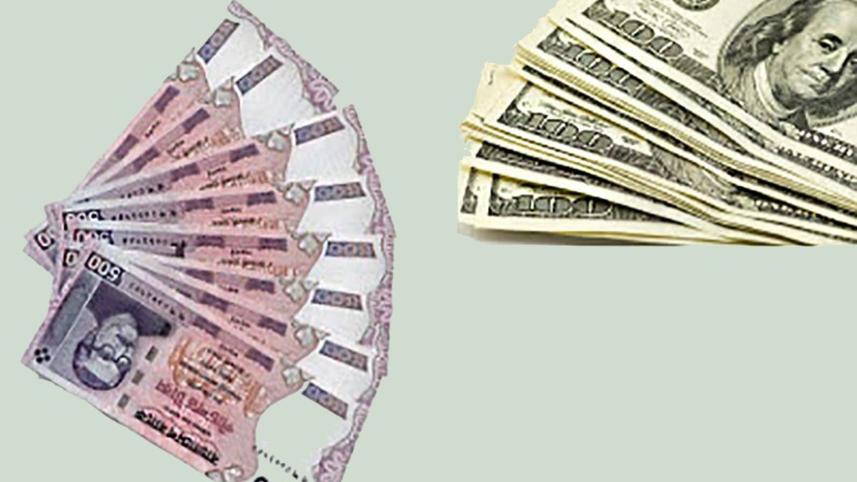
Exporters will struggle many months before they overcome from the losses they had suffered for buying the US dollar at a much higher rate to clear import bills for the raw materials to make goods for western markets, said manufacturers yesterday.
The apparel sector alone incurred losses of nearly Tk 40 billion in the past four months because of a nearly Tk 10 gap in buying and selling the US dollar.
 For all latest news, follow The Daily Star's Google News channel.
 For example, exporters received Tk 98 or Tk 98.50 per US dollar against export receipts but they would have to buy the greenback for Tk 107 or Tk 108 when opening letters of credit for importing raw materials.
And after a recent intervention by Bangladesh Bank, the gap has been minimised to the about Tk 2.
"But we want the gap to be Tk 1 when buying and selling the greenback with banks," said Mohammad Hatem, executive president of the Bangladesh Knitwear Manufacturers and Exporters Association.
"We are now struggling to recover the losses incurred from the gap," Hatem said, adding that 2023 is a challenging time for the garment sector as international clothing retailers and brands placed nearly 30 per cent fewer work orders for the current season.
Hatem was speaking at a roundtable on monetary policy, jointly organised by the Institute of Chartered Accountants of Bangladesh (ICAB) and Economic Reporters' Forum (ERF), at the former's office in Dhaka yesterday.
Md Humayun Kabir, former ICAB president, moderated and presented the keynote paper.
At the discussion, manufacturers expressed concerns about the availability of energy as they are not getting gas with adequate pressure even though the price was doubled last year.
Various businesses also suggested introducing payments to Chinese exporters either in rupee or Chinese yuan instead of the US dollar.
The government should formulate the next monetary policy with the aim of attracting investment in the primary textile sector as the current policy is hardly effective to this end, said Mohammad Ali Khokon, president of the Bangladesh Textile Mills Association.
Last year, Bangladesh spent $8.2 billion for energy purposes and the amount will be $10 billion this year, he said, adding that the amount will be $15 billion if the government wants to supply energy to industrial units at full capacity.
Currently, the textile sector needs 3,300 million cubic feet of gas each day but they are getting 2,550 million cubic feet.
The government has also reduced the EDF limit at a time when sector is facing challenges, Khokon said.
"If the government takes away Tk 1.32 lakh crore from the banking sector, the industrial sector will suffer from the shortage of funds," he added.
Even the 9 per cent interest rate on borrowing was high for the garment sector but now, the SMART interest with 3 per cent spread is a burden for the sector, said Faruque Hassan, president of the Bangladesh Garment Manufacturers and Exporters Association (BGMEA).
"Why isn't the spread 1.5 per cent instead of 3 per cent over SMART?" Hassan asked.
Shawkat Hossain Masum, online chief of The Daily Prothom Alo, said the taka was devalued by 25 per cent at a bad time as the devaluation was denied earlier.
He also urged for energy security.
Jamal Uddin, former ICAB president, said the government's operating cost should be downsized to 50 per cent from 70 per cent.
Ferdaus Ara Begum, chief executive officer of Business Initiative Leading Development (BUILD), said sufficient research and discussions should have been held before introducing trade in Indian rupee.
She suggested for introducing a single exchange rate instead of four different exchange rates.
Mahbub Ahmed, a director of Bangladesh Bank, urged for easing the sales of treasury bonds so that regular people can buy such financial instruments.
Atiur Rahman, former governor of the central bank, said only the inflow of US dollar can resolve the current crisis.
So, the government should hunt the greenback not only from exports or remittance, but also from other areas like foreign development projects.
"Moreover, the government can earn a handsome amount of US dollar if the rules are eased for the nearly 7 lakh freelancers in the country as they also earn money from abroad," he added.
In the current scenario, private sector entrepreneurs are most worried about the US dollar crisis, said Md Moniruzzaman, president ICAB.
Shubhashish Bose, CEO of ICAB, and Mohammad Refayet Ullah Mirdha, president of the ERF also spoke.
Comments