


Tea refiners fear production loss for power cuts

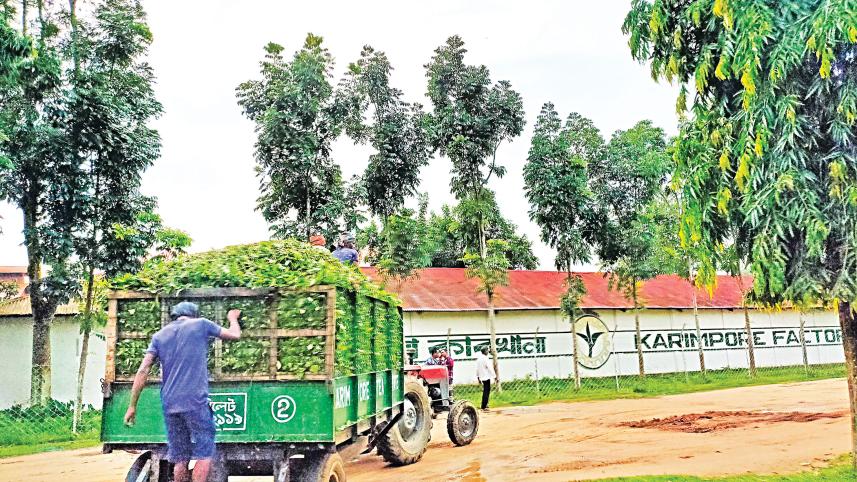
Tea refiners in Moulvibazar, the largest tea producing district of Bangladesh, are worried about being able to achieve this year's collective production target of 10 crore kilogrammes as the recent load-shedding has thrown a spanner in the works, according to market players.
Besides, concerns have risen about the quality of tea being produced and this will affect the export market as well, they said.

The government recently issued a directive to instate countrywide rolling blackouts for between one and two hours a day in a bid to lower energy consumption as a precautionary measure against any potential fuel shortage.
As per the directive, authorities were supposed to inform locals in advance of when, where and how long the load-shedding would take place.
However, the Palli Bidyut Samiti and Bangladesh Power Development Board (PDB) are enforcing load-shedding for several hours a day without prior notice, leaving thousands to suffer in the process.
Mohammad Ali Khan, manager of the New Samanbagh tea garden of the Bangladesh Tea Board, said power outages have been occurring for an average of 10 to 12 hours per day for the past four days and as a result, significant amounts of unrefined tea are going bad.
"If this continues, the tea industry will collapse," he added.
Echoing the same, Shakil Ahmad, manager of Chotalekha tea garden, said the abnormal power cuts are making it impossible to smoothly continue production as lakhs worth of raw tea leaves are being wasted each day.
In addition to disruptions in the production process, the rampant load-shedding also puts factory machinery at risk of being damaged, said Masum Ahmad, manager of the Keramatnagar tea garden.
When asked to explain the reason behind load-shedding for 10 to 12 hours daily, an official of the Rural Electrification Board said the government directive is in word only.
GM Shibli, chairman of the Bangladesh Tea Association's Sylhet branch, said they have to use 100 to 150 litres of oil to run the generators during power outages, which is increasing the production cost.
Jahar Tarafder, member secretary of the Tea Planters and Traders Association of Bangladesh, said if there is a disruption in the tea making process for even 10 to 15 minutes, the quality of the tea being produced is completely destroyed.
Habibul Bahar, executive engineer of the District Power Development Board in Moulvibazar, said maintaining the daily schedule for load-shedding is not possible under the current circumstances.
"Electricity distribution is controlled from Dhaka so if the line is cut, we have nothing to do," he added.
Sakhawat Hossain, general manager of the Moulvibazar Palli Bidyut Samiti, said the situation will be resolved only once the situation stabilises in the global market.
At present, the demand for electricity is 90 megawatts during peak hours, when the supply is 60 megawatts. During the off-peak hours, demand is 55 megawatts against a supply of 40 megawatts, he added.
 For all latest news, follow The Daily Star's Google News channel.
Comments