


Strong public-private ties needed to fight disaster risks
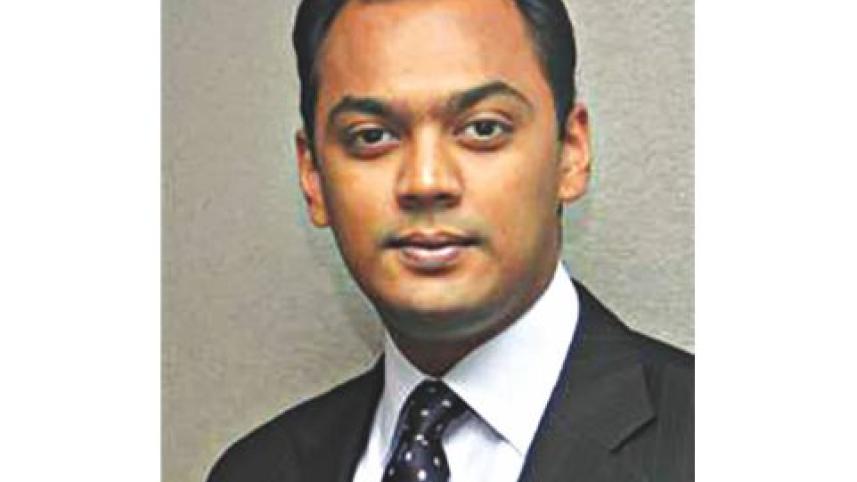
Strong public and private sector collaboration is essential for effective disaster risk management alongside formulation of a long-term master plan to safeguard industries, said Sameer Sattar, president of the Dhaka Chamber of Commerce and Industry (DCCI), yesterday.
Disaster risk has broad socioeconomic and developmental implications crippling the sustenance of businesses and industries. Industry is the lifeline of the Bangladesh economy, accounting for 36 per cent of gross domestic product, he said.

Disaster risk has far-reaching consequences on sustainability of business. Bangladesh can offer a wide range of financial tools as disaster control measures to enhance the financial resilience of the private sector, said Sattar.
Raising of awareness, compliance to rules, presence of a central disaster management fund, easy access to low-cost funds and other tax advantages can ensure an effective and result-oriented disaster risk management ecosystem, he added.
Bangladesh can offer a wide range of financial tools as disaster control measures to enhance financial resilience of the private sector, says DCCI chief
Sattar was addressing a conference on "private sector's participation in disaster risk management: towards Smart Bangladesh" jointly organised by the DCCI and Strengthening Urban Public-Private Programming for Earthquake Resilience (SUPER) Project at Radisson Blu Dhaka Water Garden.
The SUPER Project is being implemented by the DCCI, ActionAid Bangladesh, United Purpose and World Vision and supported by European Union Civil Protection and Humanitarian Aid.
Disaster risk management strategies should be implemented through public-private partnerships to make them more sustainable, said Sheikh Fazle Noor Taposh, mayor of Dhaka South City Corporation.
He also suggested maintaining effective private sector emergency operation centres.
Fire drills should be mandatory in offices, homes and markets for greater awareness, said Dhaka North City Corporation Mayor Md Atiqul Islam.
"We do not have underground utility service mapping and due to a lack of proper geographic information and mapping system, sometimes it becomes risky to carry out infrastructure-related work, especially on the roads," he said.
Technology is a strong tool in the fight against disasters, said Lokman Hossain Miah, executive chairman of Bangladesh Investment Development Authority, stressing on easy financing mechanisms for tackling disasters.
"In terms of business, we are in a competitive world. Any disaster may harm our competitiveness in the international market," said Jashim Uddin, president of the Federation of Bangladesh Chambers of Commerce and Industry.
Capacity of the fire service and civil defence should be further strengthened and there is no alternative to maintaining compliance with regulations in industries, he said.
In this regard, the private sector has a big role to play along with the public sector, he added.
Disaster risk management should be inclusive, said Mizanur Rahman, director general of the Department of Disaster Management.
"Since Bangladesh is situated in a disaster-prone zone, we have to be ready with adequate equipment. Technology can play a pivotal role in facing disaster risks," he added.
He urged the young generation to engage in disaster risk management.
 For all latest news, follow The Daily Star's Google News channel.
Comments