


Rice output may rise in MY26
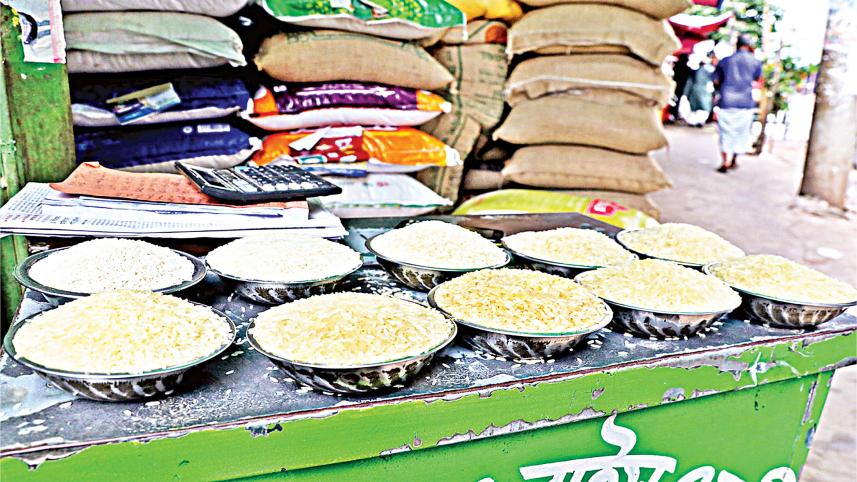
Bangladesh is likely to harvest more rice in the marketing year (MY) 2025-26, ending with the Aman paddy harvest, which is currently underway in the southern region, due to increased acreage and production.
The overall rice output, the country's staple crop, may rise to 3.76 crore tonnes in MY26 from 3.66 crore tonnes in MY25, the US Department of Agriculture (USDA) said in its grain and feed update on Bangladesh released last week.

The USDA said Aman season rice is the last crop of MY26. Transplanted in July-August 2025, the harvest has been completed in the northern, northwestern, and central regions. The southern regions are expected to finish harvesting by the end of December 2025.
"Farmers in the northern districts of Bangladesh reported a good harvest of Aman season rice despite higher production costs," the report said.
Citing its contacts and the latest crop production data from the Department of Agricultural Extension (DAE), the USDA estimated Aman season rice acreage and production at 58 lakh hectares and 1.48 crore tonnes, respectively.
"Agriculture offices from various field locations reported good harvests this season," it added.
The US agency expects the cultivated area of Boro rice, the first crop of the marketing year, to remain unchanged in MY26, with production forecast at 2.05 crore tonnes.
However, it has raised Aus rice production forecasts to 23.5 lakh tonnes from 21 lakh tonnes in the previous year.
Despite higher domestic production and imports, prices of all types of rice in Bangladesh have risen.
Citing Trading Corporation of Bangladesh (TCB) data, the report said the average retail price of coarse rice in November 2025 rose to Tk 57.03 per kg, up about 7 percent from the same period last year.
In November 2025, the average retail price of high-quality non-aromatic or fine rice reached Tk 78.3 per kg, up 5.7 percent from the same period last year.
"The price increase is primarily due to higher input costs, milling costs, overall price inflation, and an inefficient supply chain. Like many other agricultural commodities, the rice supply chain involves multiple market actors, ultimately leading to higher costs for consumers," the USDA said.
 For all latest news, follow The Daily Star's Google News channel.
Comments