


Imported goods push up inflation in Oct-Dec
The contribution of imported goods to inflation rose in the October-December quarter of the ongoing fiscal year 2025-26 (FY26), reflecting higher prices of items brought from abroad.
In contrast, the contribution of domestically produced food and non-food items to inflation declined during the same period, according to a Bangladesh Bank (BB) report on inflation dynamics published yesterday.

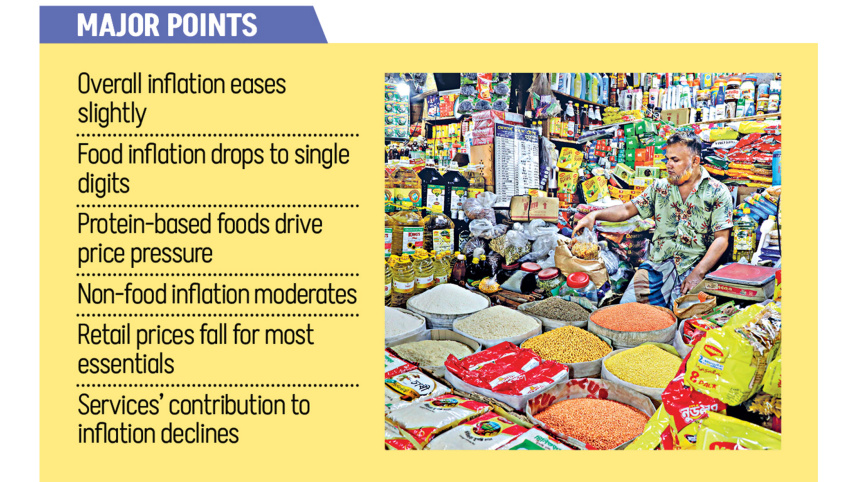
Overall inflation, measured by the consumer price index, eased slightly, averaging 8.3 percent in the October-December quarter, down from 8.4 percent in the July-September quarter of FY26.
The average contribution of import-dependent items to inflation increased to 30 percent in the October-December quarter, up from 24 percent in the previous quarter, while the share of domestically produced items declined to 70 percent from 76 percent.
BB said that the country faced historically high inflation in the first two quarters of FY25, which began to ease in the third quarter and continued moderating through the second quarter of the current fiscal year.
Food inflation, which stayed in double digits in the first half of FY25, dropped to single digits in the second half and fell further to an average of 7.4 percent in the October-December quarter.
Retail and wholesale prices of most selected commodities declined, except for soybeans and onions.
“Notable price increases were seen in chicken and onions in both retail and wholesale markets compared to the previous quarter,” the report said.
Non-food inflation remained high but broadly stable, averaging about 9.5 percent in FY25. It began to ease slightly in the second quarter of FY26, falling to an average of 9.1 percent.
The report identified protein-based foods, cereals, and spices as the main drivers of food inflation.
Protein-based products remained the largest contributor, accounting for 62.8 percent of overall food inflation in the October-December quarter.
Cereals accounted for 1.4 percent of food inflation, while vegetables’ contribution dropped by 13.38 percent compared to the previous quarter.
The share of perishable goods fell to 32.8 percent in the October-December quarter from 34.1 percent in the first quarter, while non-perishable goods’ share rose to 48.9 percent from 46.7 percent, reflecting slight price pressures.
Services contributed 18.3 percent to inflation in the second quarter, down from 19.2 percent in the July-September period a year ago.
 For all latest news, follow The Daily Star's Google News channel.
Comments