


Govt forced to borrow from banks to plug budget deficit
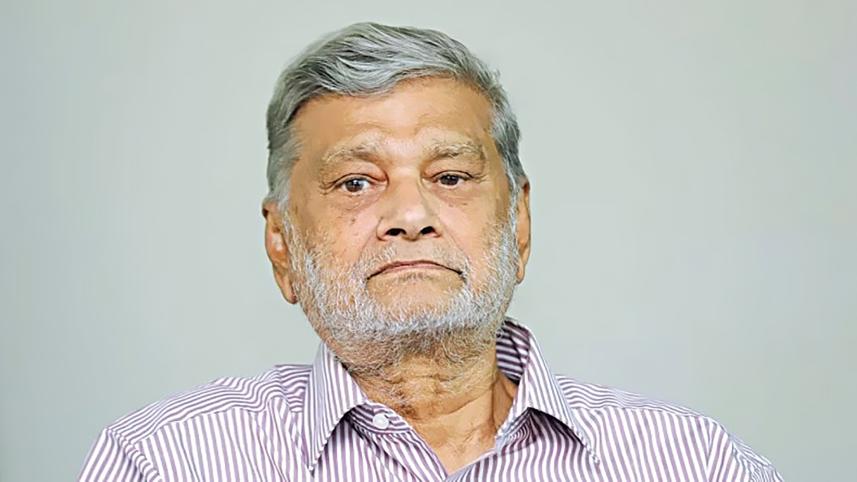
The government has no other alternative but to borrow from the banking sector to meet the budget deficit, Planning Minister MA Mannan said yesterday.
"Many countries, including the United States, Saudi Arabia and Japan, take loans from the banking sector when they need. Bangladesh will do the same," he said.

The minister made the comments at a seminar on "Budget 2023-24: education and employment", at the Professor Muzaffar Ahmed Chowdhury Auditorium in the University of Dhaka.
The Centre on Budget and Policy, a research institute affiliated with the university, organised the event.
The government will depend heavily on borrowing from the Bangladesh Bank to manage its budget deficit in the next fiscal year, like in the current year, amid the tax authority's continuous failure to generate adequate revenues, a reliance that may stoke inflationary pressures, worsen the current economic volatility and crowd out the private sector.
The government has set a deficit financing target of Tk 261,785 crore for 2023-24. Of the amount, Tk 132,395 crore will come from the banking system.
"Many people say that if the government borrows more from banks, businessmen will get fewer loans. But we are forced to borrow," said Mannan.
The government will borrow Tk 1,55,395 crore from the internal source and Tk 1,02,490 crore from the external sector in FY24.
"If the weakness in revenue collection is not overcome, the pressure of this debt will continue to increase," said M Abu Eusuf, a professor of the development studies department at the DU.
Although tax collection by the National Board of Revenue shot up in May, powered by buoyancy in value-added tax collection from domestic economic activities and increased income tax receipts, the tax administration is set to miss its target for the entire financial year. If so, this would be the 11th consecutive year the NBR would fall short of the collection target.
Eusuf, also the director of the Centre on Budget and Policy, said the main challenge in the budget will be to rein in inflation.
"We will have to move forward carefully by combining the monetary policy and the fiscal policy."
He said if the allocation for any sector increases in the budget, the spending has to be ensured.
"At the same time, attention should be given to ensure that there is no corruption and irregularities in the implementation."
He said more allocations are needed for the social safety net sector to help the fixed-income groups and the poor cope with rising inflation, which stood at 8.95 per cent on average in May, way above the target of 7.5 per cent for FY23.
"In particular, food assistance programmes need to be strengthened."
Prof Md Akhtaruzzaman, vice-chancellor of the DU, said education and employment can't exist without each other.
"Therefore, the government has to pay more attention to this issue while allocating the budget."
Rashed Al Mahmud Titumir, chairman of the development studies department, said if the value of the dollar increases further, the suffering for most of the people in the country will be exacerbated.
"So, the government will have to do what it needs to do."
 For all latest news, follow The Daily Star's Google News channel.
Comments