


Fruits of stellar growth not shared equally
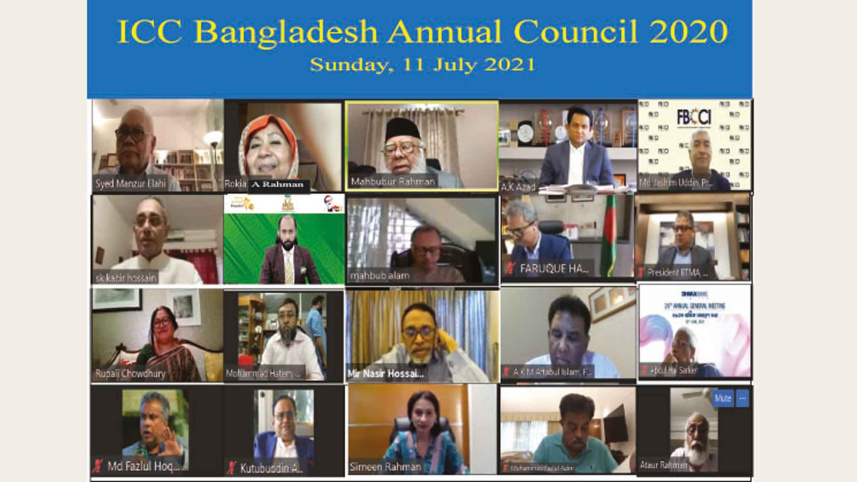
The impressive economic growth of Bangladesh has not benefited everyone equally because of rising income and wealth inequality, said the International Chamber of Commerce Bangladesh (ICCB) yesterday.
"Besides, a heavy concentration of economic activity in big cities like Dhaka and Chattogram results in a huge rural-urban divide and increased urban poverty," said ICCB President Mahbubur Rahman at the chamber annual council held virtually.

"The biggest challenge for Bangladesh is how the country can ensure that the fruits of growth and development reach people at the bottom of the economic pyramid."
In a press release, the ICCB said Covid-19 had, with alarming speed, created a global economic crisis and caused death to millions of people.
This has led to steep recessions in many countries. It has also had devastating effects on women, the young, the poor, and the informal workers, said Rahman.
Referring to a recent study, the chamber said a staggering 96 per cent of micro, small and medium enterprises (MSMEs) in Bangladesh lost income during the Covid-19 pandemic.
MSMEs reported a median loss in business of 82 per cent during the period.
However, Bangladesh, which weathered the pandemic better than most economies in the sub-region, would continue to grow strongly as exports picked up, said Rahman, citing the Asian Development Outlook.
Vaccine-producing countries were reluctant to allow the manufacturing of jabs in other countries, he said, adding the International Chamber of Commerce in Paris is trying to persuade the G-7 countries to make vaccines available free of cost for poorer countries in Asia and Africa.
The ICCB also talked about the severe disruption caused to education worldwide due to the pandemic.
Schools were closed to varying degrees across developing Asia. In a quarter of the region's economies, schools were closed for 200–300 days, and in another fifth for a year or more.
Only a handful of economies managed to keep schools open.
Remote learning strategies were deployed in most economies to ensure education for students. But many students are constrained by access to resources like computers and the internet.
"This has limited their ability to learn when at home," said the ICCB.
Learning and earning losses will rise if the closure of educational institutions extends, it said.
 For all latest news, follow The Daily Star's Google News channel.
Comments