


Farm mechanisation crucial for food sufficiency: minister
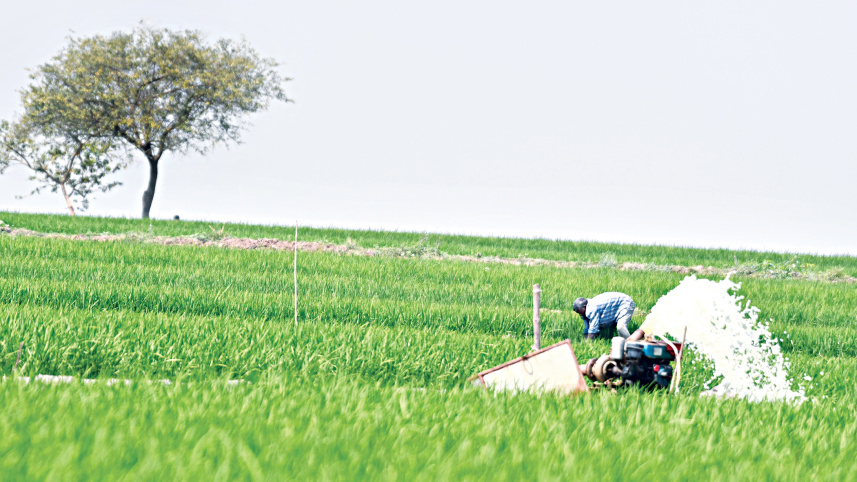
Mechanisation in agriculture is very crucial for Bangladesh to maintain food sufficiency as the government aims to ensure that no one goes hungry, said Agriculture Minister Muhammad Abdur Razzaque yesterday.
The government is now bearing 50 per cent to 70 per cent of the cost of farm machinery through subsidies to expedite mechanisation. "We have already modernised agriculture significantly," he said.

Razzaque was addressing a two-day workshop on "Agricultural Mechanisation in Bangladesh-The Future" organised by USAID-funded Feed the Future Bangladesh Cereal Systems Initiative for South Asia-Mechanization and Extension Activity (CSISA-MEA) and Bangladesh Agricultural University at Pan Pacific Sonargaon, Dhaka.
"Private banks and financial institutions should come forward to facilitate farmers with modern machinery and development organisations can play a role to teach proper use and maintenance of modern tools," he said.
He said the country has also made great strides in the food processing sector which would enable smooth commercialisation of agriculture and increase profitability.
In the workshop, experts said Bangladesh mechanised many aspects of agricultural production since the early 1980s when use of manual labour and animal power were common.
There is, though, still a long way to go before agriculture in Bangladesh is appropriately mechanised, they said.
For example, almost all of the rice transplanted on 11.5 million hectares of land and the 50 million tonnes of rice harvested each year are done manually.
They said farmers however find it challenging to find and afford labour for this purpose.
The private sector has responded to this through the aggressive promotion and sale of mini combine harvesters and rice transplanters while the government provides subsidies to enable their purchase, they added.
The workshop also addressed constraints to accelerating the pace of mechanisation and the required changes in government and private sector policies that would make that happen.
The experts said farm machinery can foster employment and enable establishing related businesses with the participation of rural women and youth.
Highlighting the success in Bangladesh's agriculture sector, Md Benojir Alam, director general at the Department of Agricultural Extension (DAE), said the country now holds a dominant position in the world in agricultural production.
This includes ranking third in rice production, second in jute production, first in jute export, third in vegetable and onion production and fourth in tea production, he said.
He said the existing labour shortage resulted from a shift of manpower to the industrial sector and future generations were unwilling to get involved in agriculture.
"Daily agricultural wages and per capita income are getting higher and at the farmers' end, output price has not increased that much," he said.
During the peak season, daily wages of farm hands increased by 3.5 times in the past 10 years. Against this backdrop, the government undertook mechanisation activities through the DAE in 2010, he said.
Between 2010 and 2012, the 1st phase of a pilot project on mechanisation was implemented at 25 districts. Between 2013 and 2019, the 2nd phase was implemented at 64 districts.
Now the government has taken up a "Farm Mechanisation through Integrated Management Project'' to supply and use modern agricultural machinery.
The project also aims to prevent crop wastage by 10 per cent to 15 per cent and save time in crop cultivation by 50 per cent and money by 20 per cent.
 For all latest news, follow The Daily Star's Google News channel.
 Md Sayedul Islam, agriculture secretary, Shaikh Mohammad Bokhtiar, executive chairman at Bangladesh Agricultural Research Council, Muhammad Khan, acting director, Office of Economic Growth (USAID); Timothy J Krupnik, country representative, International Maize and Wheat Improvement Center Bangladesh; and Md Monjurul Alam, Department of Farm Power and Machinery, BAU, were present.
Comments