


SC to deliver judgment on review today

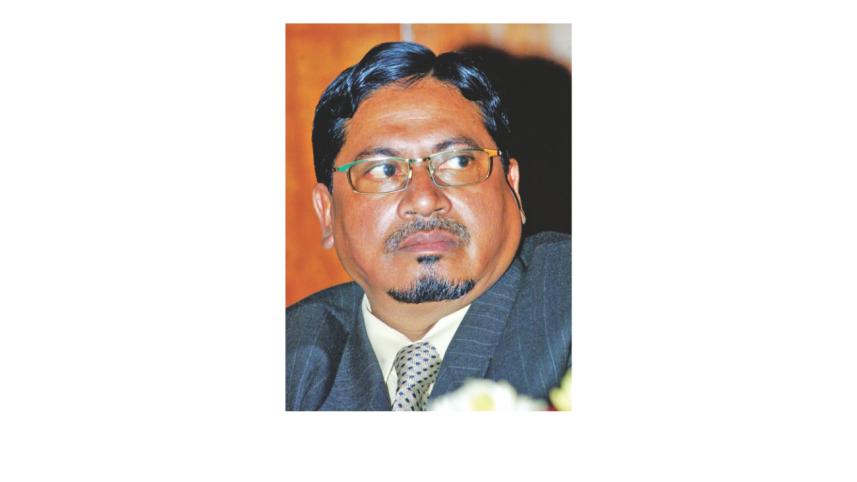
This morning the Supreme Court would deliver the judgment on the review petition of Muhammad Kamaruzzaman, deciding whether the condemned war criminal would be executed.
The Appellate Division of the SC yesterday fixed today for issuing the order after hearing arguments on the petition. The SC would deal with the petition first thing in the morning today. It usually convenes at 9:00am.

Attorney General Mahbubey Alam hoped that the apex court would dismiss the review petition of the Jamaat-e-Islami assistant secretary general, a key organiser of the infamous Al-Badr force in greater Mymensingh.
Al-Badr, the auxiliary force of the Pakistan army, was responsible for abducting, torturing and killing freedom fighters, intellectuals and pro-liberation people during the Liberation War in 1971.
Kamaruzzaman's counsels, however, hoped the SC would commute his punishment.
If the apex court rejects the petition, the government could initiate the process of executing him under the International Crimes (Tribunals) Act, 1973, said Mahbubey while talking to The Daily Star.
The top law officer of the state said Kamaruzzaman could seek presidential mercy, if the SC dismissed his petition.
As per the jail code, a convict gets seven days' time to seek presidential mercy after the jail authority receives the death warrant and communicates it to the convict. The death row inmate is executed between 21 days and 28 days of receiving the SC order.
But the jail code would not be applicable for Kamaruzzaman, said Mahbubey Alam, adding that the mercy petition should not be granted considering the brutal crimes he had committed during the war.
International Crimes Tribunal-2, where the trial of Kamaruzzaman was held, issued the death warrant on February 19.
During the hearing yesterday, Kamaruzzaman's lawyer Khandker Mahbub Hossain urged the four-member bench of the Appellate Division, headed by Chief Justice Surendra Kumar Sinha, to reduce the punishment of his client.
He said the Tribunal-2 had sentenced Kamaruzzaman to death for the mass killing at Sohagpur in Sherpur on July 25, 1971, mainly on the basis of “hearsay statements” of three prosecution witnesses.
Prosecution witnesses 11, 12 and 13, three rape victims who lost their husbands in the horrendous massacre, told the tribunal behind closed doors that Kamaruzzaman was involved in the mass killing.
Mahbub yesterday placed a book as evidence before the Appellate Division. He said the author had interviewed prosecution witness-13 and in the interview the woman told the writer that the Pakistan army, not Kamaruzzaman, had killed her husband.
The witness, however, stated before the tribunal that two Pakistan army men accompanied by Boga Bura, Nasa, and Kamaruzzaman went to her home and asked if her husband was a freedom fighter. They then gunned down her husband.
Mahbub argued that the SC had commuted Kamaruzzaman's death sentence to life term imprisonment in the charge for killing Golam Mostafa at Gridda Narayanpur village of Sherpur.
The apex court might reassess Kamaruzzaman's death penalty considering the probative value of the hearsay statements of the three witnesses, like it considered while commuting the sentence for Golam Mostafa's killing, he argued.
The counsel said only the war criminals from the military forces had been tried and punished in the Nuremburg trials, held for the war criminals of the World War II.
At this stage, Justice AHM Shamsuddin Choudhury Manik told the defence counsel that it was not true and that civil and military offenders were tried and punished in the Nuremburg trials.
Mahbub then claimed Bangabandhu Sheikh Mujibur Rahman had pardoned the original war criminals and assisted them to leave the country.
 For all latest news, follow The Daily Star's Google News channel.
 Justice Manik then said Bangabandhu had pardoned only the collaborators, not the criminals who committed crimes against humanity.
Mahbub claimed that the whole world was now against the death penalty.
Attorney General Mahbubey Alam said the tribunal had rightly sentenced Kamaruzzaman to death based on the statements of prosecution eyewitness 11, 12 and 13. He said they had seen Kamaruzzaman there while the massacre was going on.
Mahbubey said the SC had rightly upheld the tribunal verdict.
Kamaruzzaman, as the leader of the Al-Badr force, planned the Sohagpur massacre and took part in the killings and he could not get any mercy, he said.
The attorney general also raised questions about the authenticity of the interview in the book placed before the court.
On April 1, a defence lawyer had asked the bench for continuance on the review petition hearing because chief defence counsel Khandker Mahbub Hossain was ill.
Before the hearing began yesterday, Mahbub told the bench that a judge (Justice Manik) of the bench had questioned his physical illness on that day and had commented that he was making a mockery of the court.
Justice Manik then told Mahbub that he had seen him on TV addressing the press. Justice Manik said he even had the footage.
Without elaborating, Mahbub replied that he too had some footage and that he had information that a judge did not sign a judgment even seven months after delivering a judgment.
The chief justice then intervened and asked Mahbub to proceed with his arguments on the petition.
On May 9, 2013, the Tribunal-2 found Kamaruzzaman guilty in five of the seven charges brought against him and sentenced him to death in two charges, life term in two and 10 years' imprisonment in another.
Kamaruzzaman appealed to the apex court on June 6, 2013, and the SC upheld the tribunal verdict on November 3, 2014, but commuted one death sentence to life term imprisonment.
Kamaruzzaman filed the review petition on March 5.
Comments